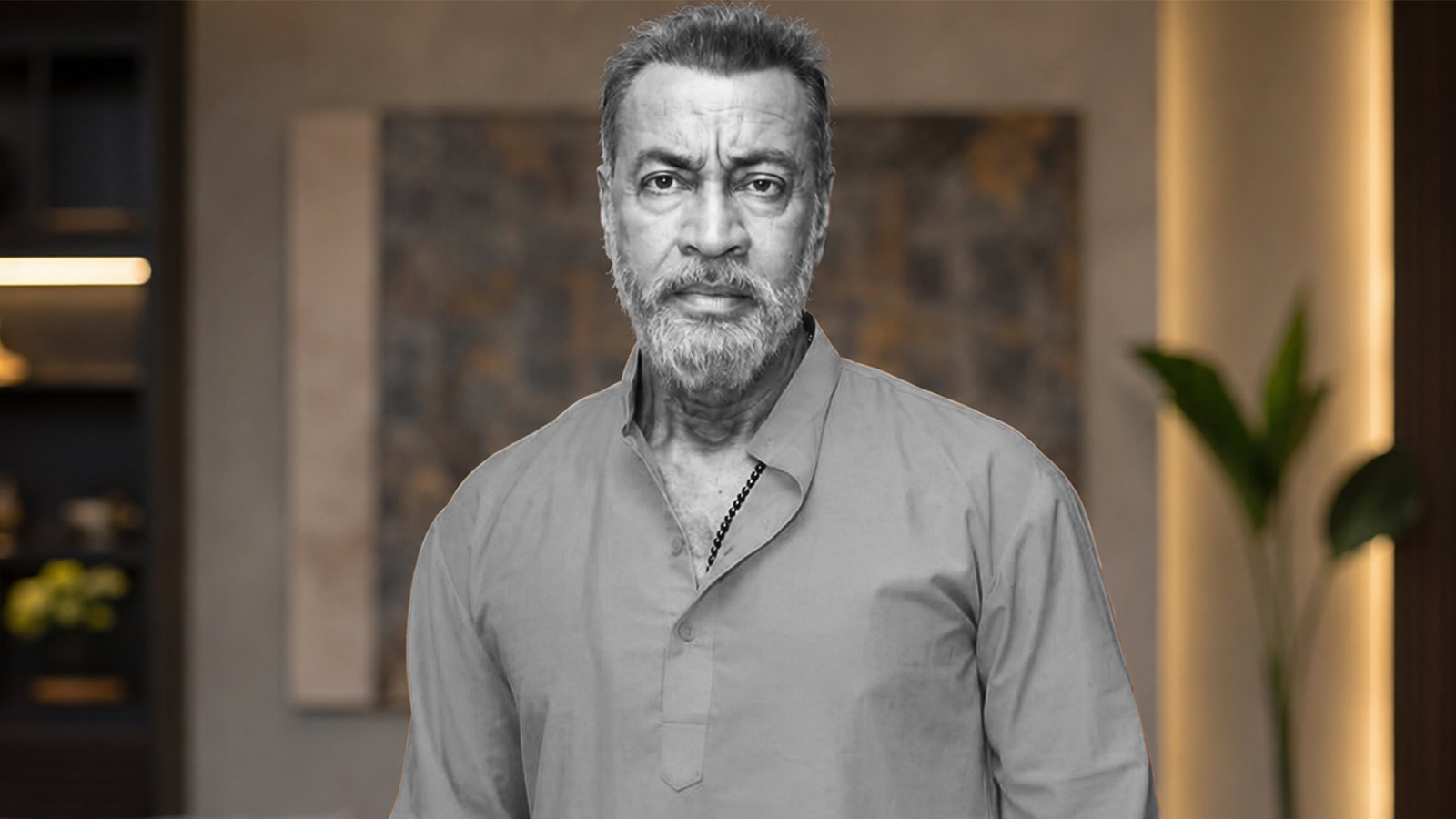
Veteran actor Pradeep Rawat, known for his memorable roles in Ghajini, Lagaan and Mahabharat, died on August 4 at the age of 74 after a prolonged battle with cancer. His death marks the loss of one of Indian cinema’s most recognisable character actors, whose career spanned more than four decades and several film industries.
Rawat died on Tuesday evening while undergoing treatment at a hospital in Bhiwandi, Maharashtra. His business manager Siddharth Tiwari said the actor had been battling blood cancer for around five years. He had initially recovered, but the disease returned a few months ago. Rawat had been hospitalised for nearly two months and his condition had deteriorated in the days leading up to his death.
The news prompted an outpouring of grief from actors and colleagues who had worked with him over the years. Actor Yashpal Sharma, Rawat’s co-star in Lagaan, paid an emotional tribute, remembering him for his performances and the strong impression he left on those around him.
Rawat’s acting journey began on television, where his portrayal of Ashwatthama in B.R. Chopra’s Mahabharat brought him widespread recognition. The role showcased his ability to bring intensity and authority to complex characters and became an early milestone in his career.
He subsequently moved into films and established himself as a versatile character actor. His work extended across Hindi, Telugu and Tamil cinema, while he also appeared in Kannada, Malayalam, Bengali and Bhojpuri productions. His film credits included Meri Jung, Sarfarosh, The Hero: Love Story of a Spy, Sye, Lagaan, Ghajini, China Town and Chhaava.
One of his most widely remembered performances came in Ashutosh Gowariker’s Lagaan. Rawat played Deva Singh Sodhi, a member of the cricket team led by Aamir Khan’s Bhuvan. The film went on to become a landmark in Hindi cinema and received an Academy Award nomination for Best Foreign Language Film.
Rawat later became closely associated with the Ghajini franchise. He played the antagonist in the original Tamil film and reprised the role in the 2008 Hindi remake, again starring alongside Aamir Khan. His portrayal of the ruthless character added considerable weight to the film’s conflict and remains one of his best-known performances.
Telugu cinema also played an important role in Rawat’s career. His performance as Bikshu Yadav in S.S. Rajamouli’s Sye earned him the Filmfare Award for Best Villain in 2004. The role further established him as an actor who could bring menace and intensity to negative characters without making them one-dimensional.
Even after spending decades in the industry, Rawat continued to take on acting assignments. His later credits included films such as Waltair Veerayya and Chhaava, along with projects released in 2026. His continued presence on screen reflected the longevity of a career built largely on character-driven performances.
Rawat’s death has also renewed attention around cancer and the role that age can play in cancer risk. Medical experts say the risk of developing many cancers increases as people grow older, largely because cells accumulate genetic changes over time. The body’s ability to repair damaged DNA and eliminate abnormal cells can also become less efficient with ageing.
Rawat’s passing closes a long chapter in Indian entertainment. His four-decade career forms part of the wider film and entertainment stories that have shaped Indian popular culture across generations. His career moved effortlessly between television and cinema, mainstream Hindi films and regional productions, and positive as well as negative characters. With his death, Indian cinema has lost a performer whose face and voice became familiar to generations of viewers. His characters may have often been on the darker side of the story, but his performances ensured they were rarely forgotten.
Ashwatthama in Mahabharat, Deva Singh Sodhi in Lagaan and the antagonist in Ghajini remain among the roles that defined his screen journey. Yet his body of work extended far beyond these characters.
What made Rawat stand out was his ability to give supporting roles a strong identity. Even when he was not the central character, his presence often added tension, authority or depth to a film.
Beyond his most popular roles, Rawat remained a dependable performer who could adapt to different genres and industries. He worked with several prominent filmmakers and actors during his career and was particularly recognised for bringing authority to villainous and intense characters. His ability to make supporting roles memorable helped him build a lasting place in Indian cinema.