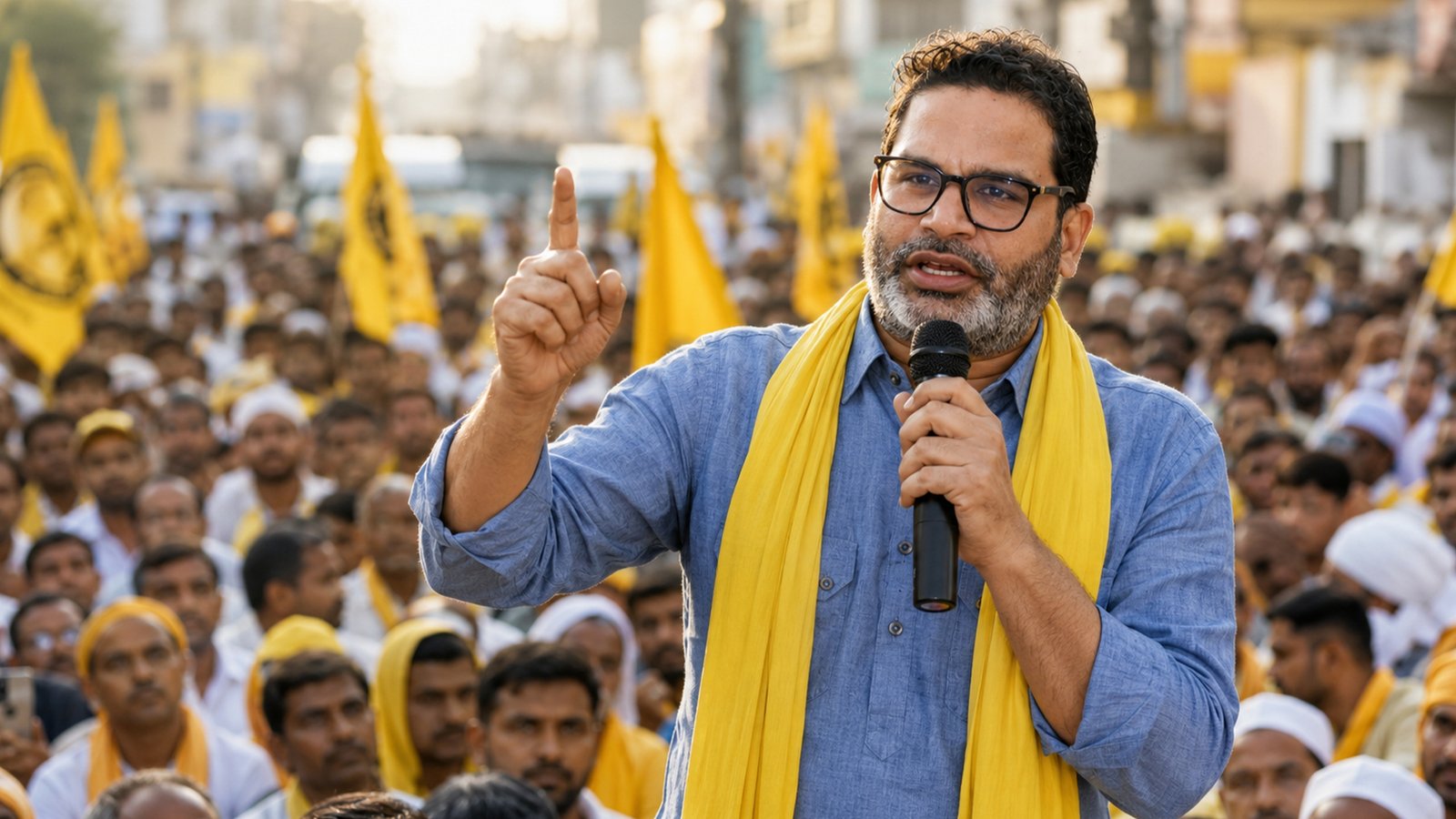
The Bihar bypoll result on Monday has put Prashant Kishor at the centre of attention as the Jan Suraaj Party founder leads BJP candidate Neeraj Kumar Sinha in the Bankipur Assembly constituency. The contest is Kishor’s first direct electoral battle and has emerged as the most closely watched of the three Assembly bypolls being counted on August 3.
Bypoll results are also being declared for Datia in Madhya Pradesh and Manjalpur in Gujarat. While each constituency has its own political equations, the Bankipur result carries added significance because the seat has traditionally been a stronghold of the BJP. Kishor’s lead has therefore turned the contest into a test of both the BJP’s local strength and Jan Suraaj’s emerging electoral appeal.
Kishor, a former political strategist who has worked with several major political parties and leaders, founded the Jan Suraaj Party after spending years building a grassroots political campaign in Bihar. His decision to contest from Bankipur marked a shift from political strategist to electoral candidate.
The BJP has fielded Neeraj Kumar Sinha against Kishor, while the RJD has nominated Rekha Gupta. As counting progressed, Kishor remained ahead of the BJP candidate, with Gupta trailing the two leading contenders.
The Bankipur Assembly seat fell vacant after BJP leader Nitin Nabin moved to the Rajya Sabha. The BJP had initially nominated Abhishek Kumar Sinha, but he withdrew his nomination, citing family reasons. Neeraj Kumar Sinha was subsequently chosen as the BJP candidate.
The BJP’s strong history in Bankipur makes Kishor’s performance particularly important. A win for Jan Suraaj would give the relatively new party a major electoral boost and strengthen Kishor’s position in Bihar politics ahead of future elections. It would also challenge the established BJP-RJD political contest in the state.
The Bankipur bypoll also recorded a lower turnout than the previous Assembly election. Around 34.24% of voters cast their ballots, compared with 41.45% during the 2025 Bihar Assembly election. The relatively low turnout could influence the final outcome and makes it difficult to draw a wider conclusion about voter sentiment from the result alone.
The bypoll results are also being watched against the backdrop of student protests over alleged irregularities in competitive and recruitment examinations. Students have raised concerns over paper leaks, examination delays, recruitment processes and alleged discrepancies in government job examinations. These issues have become increasingly important in political discussions, particularly among young voters.
The key question is whether the anger visible during student protests has translated into electoral support against ruling parties. However, the bypoll results will need to be interpreted cautiously. Local candidates, caste equations, voter turnout, party organisation and constituency-specific issues can have a greater impact on a small-seat contest than broader political narratives.
In Madhya Pradesh, the Datia Assembly bypoll is witnessing a close contest between BJP candidate Ashutosh Tiwari and Congress nominee Ghanshyam Singh. The seat has added political significance because it was earlier represented by senior BJP leader Narottam Mishra.
The counting trends in Datia have seen the lead change during the day, keeping the BJP-Congress contest closely watched. A Congress victory would provide the opposition party with a boost in the BJP-ruled state, while a BJP win would reinforce the party’s position in the constituency.
In Gujarat, the BJP has maintained an advantage in the Manjalpur Assembly bypoll, where its candidate Satish Patel is contesting against Congress nominee Bhikhbhai Rabari. The seat became vacant following the death of BJP MLA Yogeshbhai Narandas Patel.
The BJP’s position in Gujarat remains considerably stronger than that of Congress. The party won 156 of the state’s 182 Assembly seats in the 2022 election, making Manjalpur another contest where the BJP is looking to retain its established political dominance.
Taken together, the three Assembly bypoll results offer different political signals. Gujarat is testing the BJP’s continued dominance, Datia is witnessing a direct BJP-Congress battle, while Bankipur has become a test of whether Prashant Kishor can convert the Jan Suraaj campaign into electoral success.
For Kishor, the Bankipur result could have consequences well beyond one Assembly seat. A victory would give Jan Suraaj its first significant electoral breakthrough and strengthen Kishor’s claim as a political leader in his own right. It could also encourage the party to expand its organisational network and prepare for larger electoral battles in Bihar.