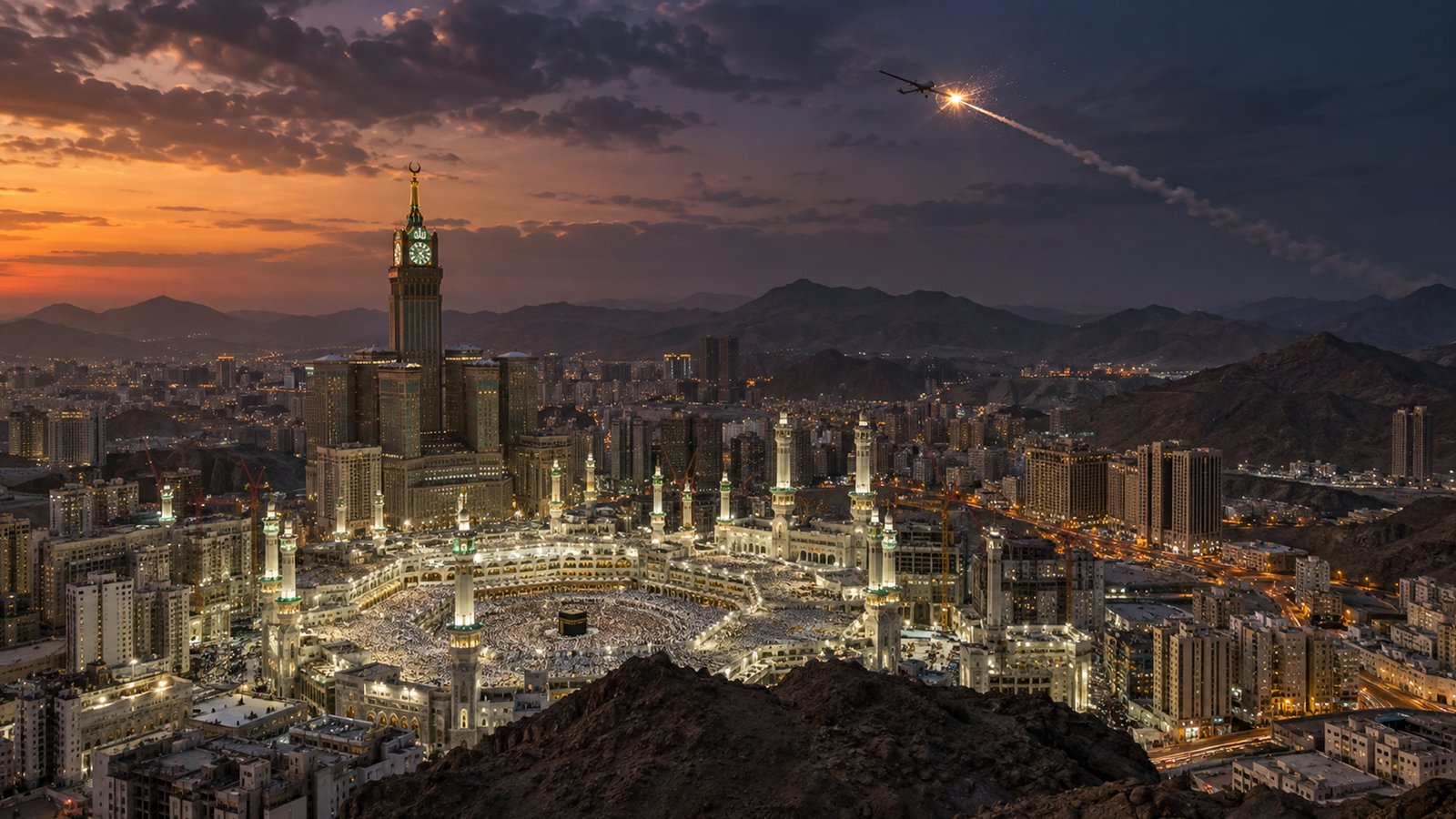
Saudi Arabia has intercepted and destroyed a drone south of Mecca, saying it was launched by Yemen’s Houthi group and was heading towards the holy city. The incident has triggered a sharp warning from Riyadh, with the Saudi-led coalition declaring the security of Mecca and the Islamic holy sites a “red line”.
The drone was brought down at around 6:50 pm local time on Tuesday, before it entered the restricted airspace over Mecca, according to coalition spokesperson Major General Turki al-Malki. Saudi air defence forces carried out the interception south of the city.
Al-Malki described the incident as the second alleged Houthi attempt to target Mecca. He referred to an earlier ballistic missile launch in July 2017, which Saudi Arabia had also said was aimed towards the holy city.
The latest incident comes as attacks involving the Houthis have intensified across Saudi Arabia and the wider Middle East. The Houthi group has increased its military activity in recent days, while Saudi Arabia has stepped up security measures around several cities and strategic sites.
Mecca holds particular significance for Muslims around the world. The city is home to the Grand Mosque and the Kaaba and is the destination for millions of Muslims who travel there for Hajj and Umrah.
The Saudi coalition said protecting the Two Holy Mosques, pilgrims, residents and visitors would remain a top priority. Al-Malki warned that the coalition would take necessary measures to deter further attacks.
Houthis deny targeting Mecca
The Houthi group has rejected Saudi Arabia’s claim that the drone was intended to target Mecca.
A Houthi official dismissed the allegation as false and said the group had not targeted Mecca or other Islamic holy sites. The competing claims have made it difficult to independently establish the intended destination of the drone.
The disagreement comes at a time when Saudi Arabia and the Houthis are once again facing direct military tensions after a period of relative calm.
The Houthis control large parts of Yemen and have expanded their presence along the country’s Red Sea coastline. Their recent military advances and attacks have added another dangerous dimension to the wider regional conflict.
Saudi Arabia has accused the Iran-aligned group of carrying out a series of attacks against its territory. The Houthis, meanwhile, have said some of their recent strikes were carried out in response to Saudi military operations in Yemen.
Security alerts across Saudi Arabia
Saudi authorities issued security alerts in Mecca and several other parts of the country amid the recent attacks.
The alert in Mecca was particularly significant because it was the first such warning issued there since the current Middle East conflict escalated. Alerts were also reported in areas including Jeddah and Taif.
The warnings were later lifted, according to Saudi authorities.
The development has raised concerns about the security of pilgrims and visitors at a time when Mecca remains one of the world’s busiest religious destinations.
The Organisation of Islamic Cooperation, which represents 57 Muslim-majority countries, condemned what it described as an attack targeting the holy city. The organisation expressed support for Saudi Arabia and called for the protection of Islamic holy sites.
Wider conflict adds pressure
The drone interception is part of a much larger security crisis affecting Saudi Arabia, Yemen and the surrounding region.
The Houthis have claimed several attacks against Saudi targets in recent days, including an attack on a military airbase. Saudi officials have also reported missile and drone attacks that caused injuries and damage in several locations.
The renewed fighting follows a period in which cross-border attacks between Saudi Arabia and the Houthis had fallen sharply after a truce and subsequent efforts to reduce tensions.
The current escalation has brought the Yemen conflict back into the centre of regional security concerns.
Another major concern is the Red Sea and Bab el-Mandeb Strait, a crucial shipping route connecting the Red Sea with the Gulf of Aden. The Houthis control parts of Yemen’s western coastline, giving them a strategic position near the maritime corridor.
Any prolonged disruption to shipping through the area could affect international trade and energy supplies.
The situation is particularly sensitive because shipping through the Strait of Hormuz has also faced severe disruption amid the wider regional conflict. Saudi Arabia has therefore become increasingly dependent on alternative routes to move its oil.
The kingdom’s East-West oil pipeline, which runs about 1,200 kilometres from Saudi oil-producing areas in the east to the Red Sea port of Yanbu, has gained importance as a route that can bypass the Strait of Hormuz. Saudi authorities recently shut the pipeline following drone attacks that they attributed to a group operating from Iraq.
Mecca becomes a new flashpoint
The reported drone interception has given the Saudi-Houthi conflict a particularly sensitive religious dimension.
Saudi Arabia has repeatedly stressed that attacks near Mecca or other holy sites will not be tolerated. The latest warning indicates that Riyadh could respond more strongly if similar incidents occur again.
At the same time, the Houthi denial means the circumstances surrounding the drone’s intended target remain disputed.
The immediate priority for Saudi authorities is securing Mecca and other major cities while monitoring further missile and drone activity.
The Saudi Arabia-Houthi tensions are also being closely watched because of their potential impact on regional security, oil supplies and international shipping. Any further escalation could add pressure to already disrupted trade routes and energy markets.
Saudi Arabia says its air defences prevented the drone from entering Mecca’s restricted airspace. The Houthis deny that they attempted to target the holy city. The competing claims are likely to remain a central part of the investigation and the wider diplomatic fallout as the Middle East conflict continues.