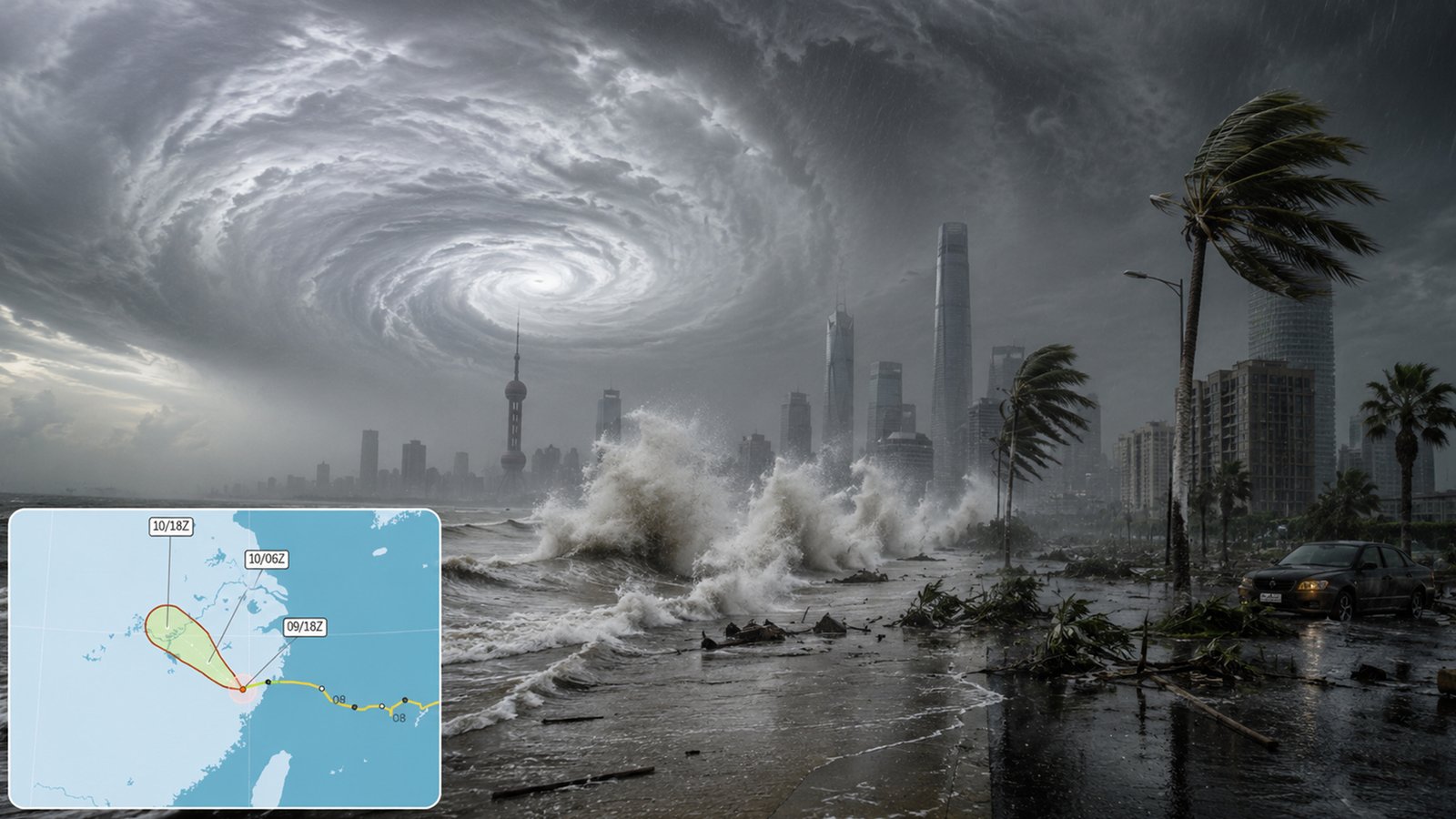
Typhoon Dolphin has battered eastern China with powerful winds and torrential rain, forcing more than one million people to evacuate as authorities prepare for flooding, landslides and further disruption.
The storm made landfall on Sunday along China’s eastern coast, striking Zhejiang province with winds of up to 151 kmph. It was one of the strongest tropical cyclones to hit China this year and brought intense weather to densely populated areas, including Shanghai.
Dolphin weakened after moving inland, but its enormous rain system continued to affect large parts of eastern and central China. Authorities warned that the threat had not ended, with heavy rainfall expected to continue across several provinces.
More than one million people were moved from vulnerable areas before and during the storm. Zhejiang province accounted for the largest number of evacuations, while hundreds of thousands of residents in Shanghai were also relocated as officials tried to reduce the risk to life and property.
The scale of the evacuation reflected concerns about the storm’s rainfall as much as its winds. Forecasts had warned that some parts of Zhejiang could receive several hundred millimetres of rain, raising the possibility of flash floods, river flooding and landslides.
In Shanghai, the storm caused widespread flooding and disrupted daily life. Some areas were inundated with water, while emergency services responded to reports of flooding and residents needing assistance. Shanghai recorded exceptionally heavy rainfall, with some locations receiving around 400 mm within 24 hours.
The rainfall created major problems for transportation. More than 1,300 flights were cancelled at Shanghai airports, while public transport services were suspended in several areas. Ports and shipping operations were also affected as vessels were moved to safer locations ahead of the storm.
The disruption extended beyond Shanghai. Zhejiang, Fujian, Jiangsu, Anhui and other provinces experienced heavy rain and strong winds as the storm system moved inland. Authorities issued warnings in areas where saturated ground and swollen rivers could increase the risk of flooding and landslides.
Emergency measures were introduced before Dolphin reached the coast. Schools and tourist attractions were closed in some areas, water activities were suspended and ships were ordered to seek shelter. Local authorities also strengthened preparations for rescue operations and possible flooding.
The storm had already affected parts of the region before reaching mainland China. Its earlier passage near Taiwan brought strong winds and heavy rain, while seasonal weather systems in the wider region added to the threat of flooding.
For residents of eastern China, the storm turned an otherwise busy weekend into a period of uncertainty. Streets in some parts of Shanghai became flooded, while strong winds and rain forced people to stay indoors. Authorities urged residents to avoid unnecessary travel and remain alert to further weather warnings.
Dolphin’s impact has also highlighted the vulnerability of major cities to extreme weather. Shanghai is one of the world’s largest urban and economic centres, with a population of more than 20 million in its metropolitan area. Heavy rainfall can quickly overwhelm drainage systems and disrupt airports, roads, rail networks and other infrastructure.
The storm’s movement inland has not ended the danger. Weather officials expect its remnants to continue producing heavy rainfall across central and northern parts of China. Beijing has also issued rainfall and flood warnings as the system moves further inland.
Authorities are particularly concerned about mountainous areas, where prolonged rain can loosen soil and trigger landslides. Rivers and reservoirs are also being monitored as rainfall continues.
The Chinese government had already raised its typhoon warning to the highest red-alert level before landfall because of the storm’s wide impact area, heavy rainfall and expected duration. The alert reflected concerns that Dolphin could affect a large stretch of the eastern coast rather than a single locality.
The storm also comes during an active Pacific typhoon season. Scientists and weather experts have increasingly warned that rising global temperatures can contribute to more intense rainfall and stronger tropical cyclones, although individual storms are influenced by several atmospheric and oceanic conditions.
For now, the focus in China is on emergency response and recovery. Rescue teams are working in flooded areas, while authorities continue to monitor rainfall, rivers and vulnerable communities.
The number of evacuations shows the scale of the preparations made ahead of Typhoon Dolphin. Moving more than one million people from areas considered at risk was a major logistical operation involving local governments, emergency services and shelters.
Although the storm has weakened from its peak intensity, officials have warned residents not to assume that the danger has passed. Heavy rain can continue long after a typhoon loses strength, particularly when its rain bands spread across a large area.
Typhoon Dolphin has therefore left eastern China facing a second challenge after landfall: managing the flooding, landslide and infrastructure risks created by prolonged rainfall.
As the storm moves inland, authorities are continuing rescue operations and monitoring weather conditions. The coming days will determine the full extent of the damage, but the immediate priority remains protecting communities from flooding and other hazards left in Dolphin’s wake.