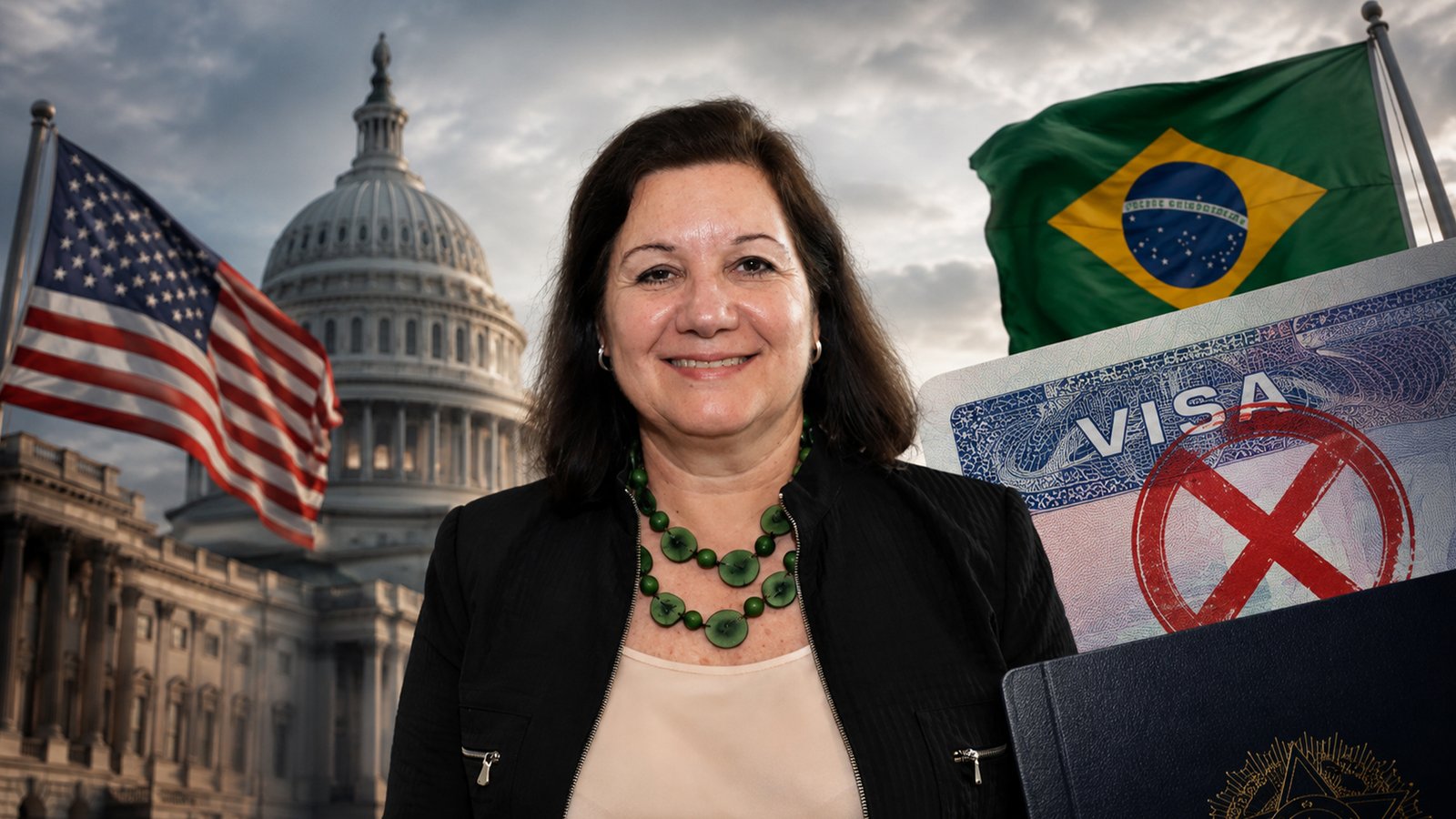
The diplomatic relationship between the United States and Brazil has taken another sharp turn after the Donald Trump administration revoked the visa of Brazil’s ambassador to Washington, Maria Luiza Ribeiro Viotti. The move comes amid an increasingly bitter dispute between the two countries, with Brazil accusing Washington of political interference ahead of its October presidential election.
A senior U.S. State Department official said on Tuesday that Viotti’s visa had been cancelled as a reciprocal measure after Brazil delayed approval of President Trump’s nominee for U.S. ambassador to Brazil and denied visas to two American officials. The official stressed that the Brazilian ambassador was not being expelled from the United States.
The visa could also be restored quickly if Brazil gives formal approval, known as agrément, to Trump’s nominee, Daniel Perez. Perez, a Republican politician from Florida and a close ally of U.S. Secretary of State Marco Rubio, was nominated in June but has not yet received Brazil’s consent to take up the diplomatic post in Brasília. His nomination has also been sent to the U.S. Senate.
For Washington, the delay has become a major point of frustration. A State Department official said the United States expected Brazil to provide a prompt response to the ambassadorial nomination. The administration has argued that Brazil’s actions amount to an unnecessary obstruction of normal diplomatic relations.
Brazil, however, sees the situation very differently. Its government rejected the U.S. justification for revoking Viotti’s visa and accused Washington of violating established diplomatic procedures. Brasília said the United States announced Perez’s nomination publicly before seeking Brazil’s consent, which it described as contrary to diplomatic protocol.
The Brazilian government also said the latest U.S. action was not an isolated incident but part of what it called a deliberate escalation against the country. Officials in Brasília have become increasingly concerned that Washington is trying to influence Brazil’s domestic politics as the presidential election approaches.
The dispute intensified last month when Brazil denied visas to two senior U.S. State Department officials who had planned to visit the country. The officials, Riley Barnes of the Bureau of Democracy, Human Rights and Labor and one of his senior aides, were expected to hold meetings on election integrity, freedom of expression and religious freedom.
The U.S. government has rejected Brazil’s allegation that the planned visit was intended to interfere in the election. Washington described the proposed trip as routine diplomatic engagement and called suggestions of an attempt to undermine Brazil’s electoral system baseless. Brazil, meanwhile, maintained that the planned visit could have been used to cast doubt on its electronic voting system.
At the heart of the growing U.S.-Brazil diplomatic rift is Brazil’s October presidential election. President Luiz Inácio Lula da Silva, 80, is seeking another term and has positioned national sovereignty as a central issue of his campaign. He is expected to face Senator Flávio Bolsonaro, the son of former President Jair Bolsonaro and a political figure closely associated with Trump’s movement.
The relationship between Trump and the Bolsonaro family has added another layer to the dispute. Jair Bolsonaro, who governed Brazil from 2019 to 2022, was a close political ally of Trump. He is currently serving a 27-year sentence under house arrest following his conviction over an attempt to overturn the result of Brazil’s 2022 presidential election.
Trump has repeatedly criticised the legal proceedings against Bolsonaro. His administration has also taken several steps that have increased pressure on Lula’s government. These include trade measures against Brazilian exports and the designation of two major Brazilian criminal organisations as foreign terrorist organisations.
Trade has become an important part of the wider dispute. The United States recently imposed additional tariffs on Brazilian goods, with a 25% tariff under a Section 301 action and another 12.5% tariff applying to certain products under a separate measure. Depending on the product and applicable exemptions, the combined burden has raised concerns for Brazilian exporters.
Lula’s government has rejected Washington’s trade accusations and argued that the tariffs are politically motivated. Brazilian officials have also questioned why the Trump administration is pushing for a U.S. ambassador in Brasília only months before a closely watched presidential election.
That condition, however, places the next move firmly in Brasília’s hands. Brazil has indicated that Perez’s nomination remains under review and that it may not take a final decision before the first round of the presidential election on October 4.