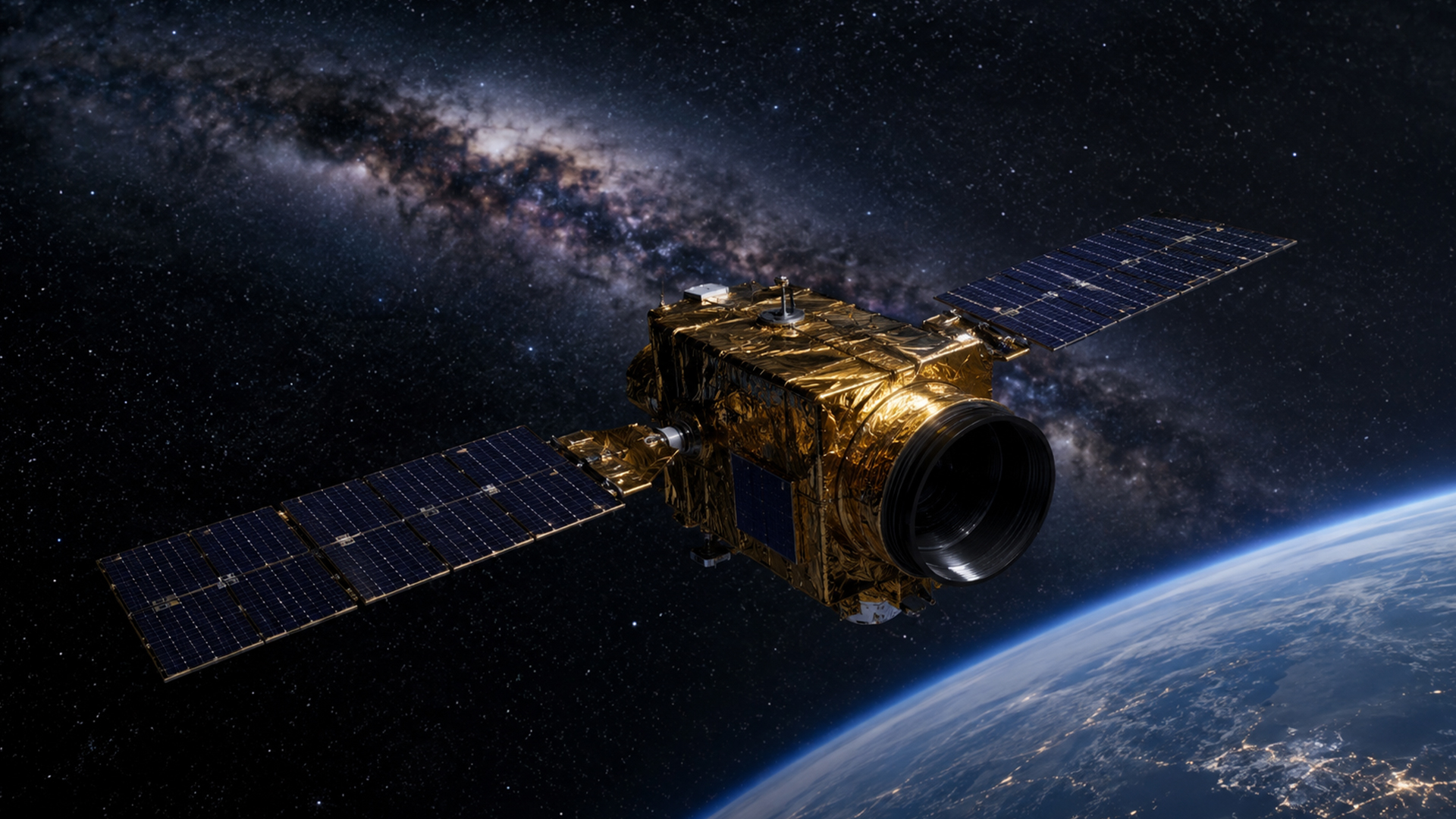
The European Space Agency (ESA) has officially approved the Arrakihs mission, a new space telescope project designed to study the faint outer regions of galaxies and uncover clues about how the universe evolved. The mission is scheduled for launch by the end of 2030.
Arrakihs, short for “Analysis of Resolved Remnants of Accreted galaxies as a Key Instrument for Halo Surveys,” will focus on observing extremely dim structures surrounding galaxies. These include stellar streams, galactic haloes and remnants of smaller galaxies that were absorbed over billions of years.
Scientists describe the mission as a form of “galactic archaeology,” as it will help reconstruct the history of galaxy formation and growth. By studying these faint structures, researchers hope to better understand how galaxies assembled over cosmic time and how dark matter influences their evolution.
The spacecraft will carry advanced imaging instruments capable of detecting features that are difficult to observe from Earth. Such observations could provide valuable insights into the invisible dark matter haloes believed to surround galaxies and shape their structure.
ESA selected Arrakihs as part of its science programme after years of research and planning. The mission is expected to complement data from other major observatories while focusing on areas that have remained largely unexplored because of their extremely low brightness.
Researchers say the findings could improve current models of galaxy formation and help answer fundamental questions about the composition and evolution of the universe. The mission will observe hundreds of nearby galaxies, creating one of the most detailed surveys ever conducted of their outer regions.
Also Read: Quebec lifts intake cap on PEQ applicants