The United States has reaffirmed its commitment to deepening strategic ties with India, with defence, civil nuclear energy, artificial intelligence (AI) and resilient supply chains emerging as the next major pillars of the fast-growing partnership. The renewed focus reflects a shared ambition to build stronger economic, technological and security cooperation as both countries navigate an increasingly uncertain global landscape.
Speaking at a roundtable on India hosted by the Hoover Institution, US Assistant Secretary of State S. Paul Kapur said Washington sees India as one of its most important strategic partners and is committed to expanding cooperation across critical sectors. The discussion, attended by former US Secretary of State Condoleezza Rice and former US Ambassador to India David C. Mulford, highlighted the growing importance of the India-US relationship in shaping the future of the Indo-Pacific.
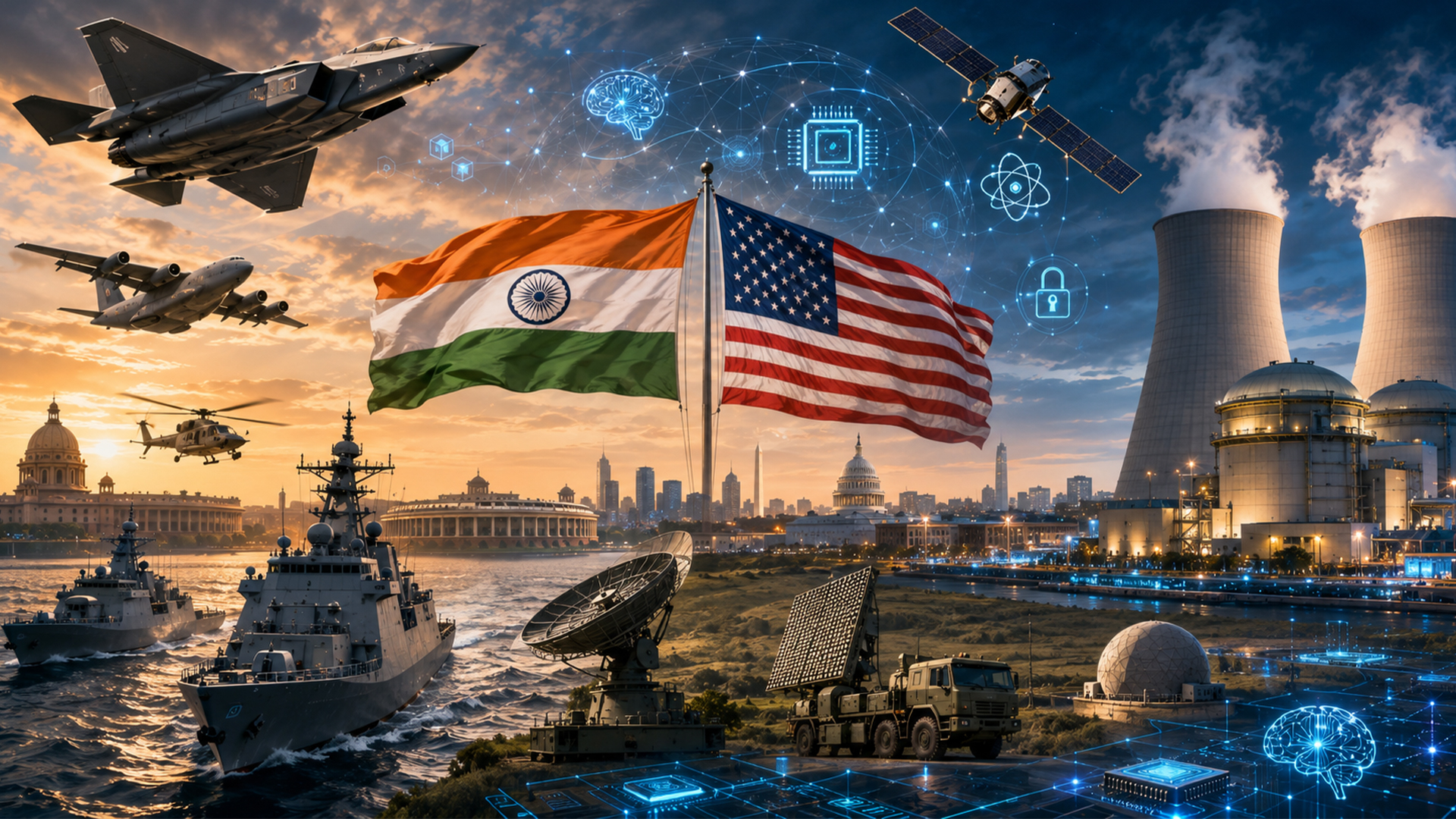
Kapur said the partnership is no longer limited to traditional defence ties. Instead, it is evolving into a broader collaboration that includes advanced technologies, clean energy, trusted AI and secure supply chains. According to him, these initiatives are expected to create economic opportunities, strengthen innovation and generate jobs in both countries.
Defence cooperation continues to remain at the heart of the India-US strategic partnership. Over the years, the two nations have expanded military exercises, defence technology sharing and industrial collaboration. Washington now wants to build on that momentum by encouraging greater cooperation between defence manufacturers, research institutions and technology companies from both sides.
The emphasis comes at a time when countries around the world are looking to strengthen their security partnerships amid growing geopolitical tensions. For India and the United States, closer defence cooperation is also seen as essential for maintaining peace and stability across the Indo-Pacific region.
Another major area of focus is civil nuclear energy. Kapur said the US is keen to expand cooperation with India in the sector, opening new opportunities for clean energy development and long-term energy security. As India works towards meeting its rising power demand while reducing carbon emissions, civil nuclear cooperation could play a significant role in achieving those goals.
The renewed push also builds on the landmark India-US civil nuclear agreement signed nearly two decades ago. While progress has been gradual over the years, both governments now appear eager to unlock fresh investments and technology partnerships that can support India’s clean energy transition.
Artificial intelligence has emerged as another key area where both countries see enormous potential. Kapur highlighted the importance of developing “trusted AI”—systems that are secure, transparent and reliable. As AI becomes central to everything from healthcare and manufacturing to defence and governance, India and the US are looking to work together on research, innovation and responsible deployment of these technologies.
Technology cooperation is also closely linked to the growing importance of resilient supply chains. Recent global disruptions, ranging from the pandemic to geopolitical conflicts, have exposed vulnerabilities in critical industries. Both India and the United States are therefore working to create more reliable supply chains for strategic sectors such as semiconductors, defence manufacturing and advanced technologies.
According to Kapur, stronger supply chain partnerships will not only improve economic resilience but also create new business opportunities and employment. By combining India’s manufacturing capabilities with American technology and investment, both countries hope to reduce dependence on unreliable global networks while strengthening their own economies.
The expanding partnership also reflects a broader shift in bilateral relations. What once centred largely on defence purchases and diplomatic engagement has now grown into a comprehensive relationship spanning innovation, clean energy, advanced manufacturing, digital technologies and critical infrastructure.
Experts believe this wider collaboration will help both countries address emerging global challenges more effectively. For India, deeper engagement with the US offers greater access to cutting-edge technologies, investment and industrial partnerships that can support economic growth and strengthen domestic capabilities. For the United States, India remains an indispensable partner in promoting a stable Indo-Pacific, securing critical supply chains and advancing shared strategic interests.
The latest remarks also underline the growing trust between New Delhi and Washington at a time when both countries are seeking dependable partners in an increasingly complex world. Their cooperation is steadily moving beyond government-to-government engagement to include businesses, researchers, universities and technology innovators.
While no new agreements were announced during the discussion, Kapur’s comments reaffirm the direction of the relationship. Defence, civil nuclear energy, trusted AI and resilient supply chains are expected to shape the next phase of India-US cooperation, creating opportunities that extend well beyond security into trade, innovation and sustainable development.
As global priorities continue to evolve, both India and the United States appear determined to build a partnership that is not only strategic but also future-ready—one driven by technology, shared values and long-term economic growth.