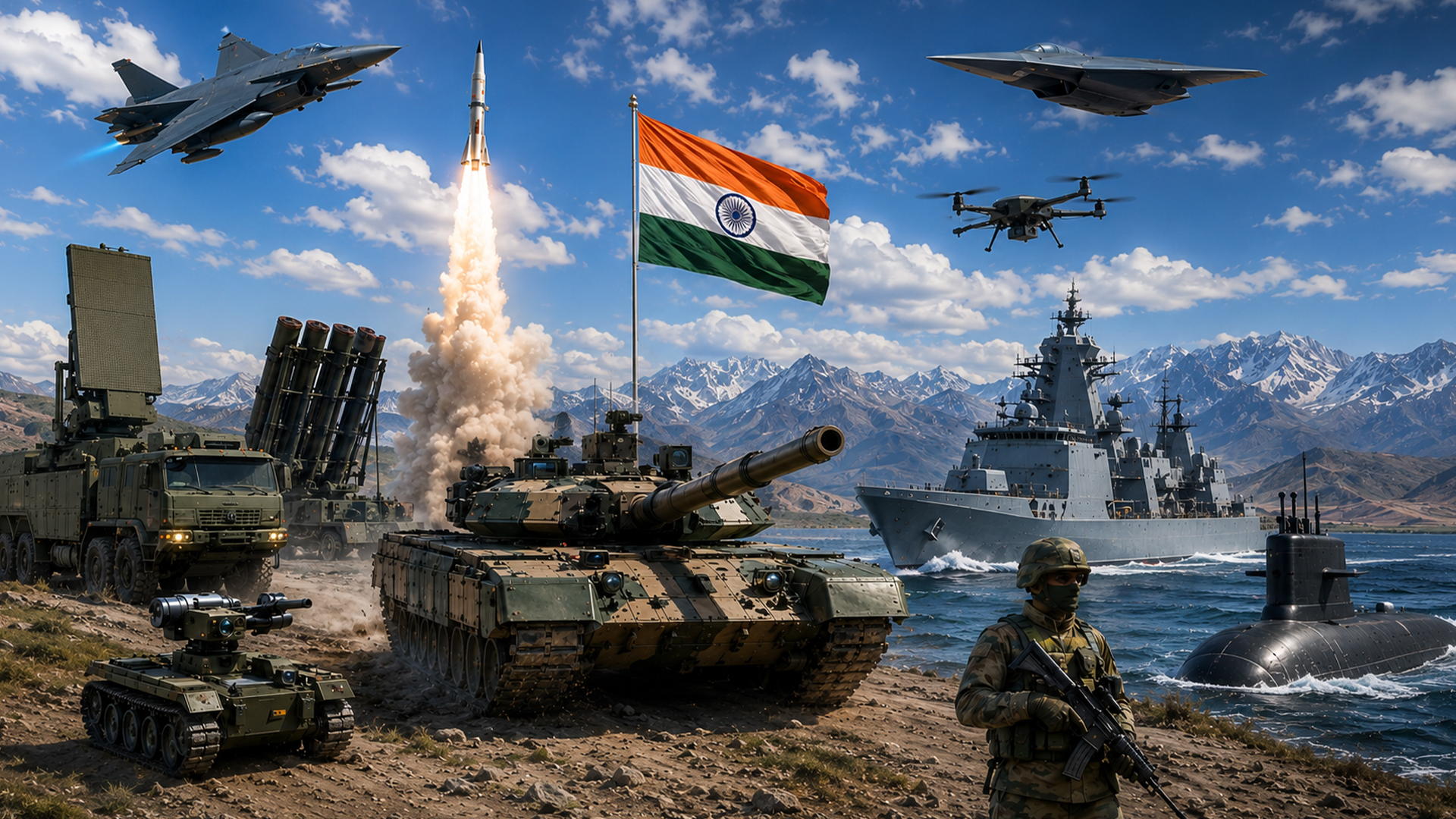
India has successfully demonstrated a major advancement in its strategic defence capabilities by testing its ballistic missile defence (BMD) system against an intercontinental ballistic missile (ICBM)-class target, according to official sources and defence reports.
The Defence Research and Development Organisation (DRDO) carried out the test as part of the ongoing development of the Phase-II Ballistic Missile Defence programme. The trial validated India’s ability to detect, track, and intercept a high-speed, long-range missile threat using advanced radar, command-and-control systems, and interceptor technology.
During the exercise, a simulated hostile missile representing an ICBM-class target was launched to test the country’s integrated air defence architecture. The system successfully engaged and neutralised the target at a high altitude, demonstrating both endo-atmospheric and exo-atmospheric interception capabilities depending on the engagement phase.
Officials said the test marks a significant milestone in strengthening India’s multi-layered missile defence shield. It confirms the maturity of indigenous technologies developed to counter evolving aerial threats, including long-range ballistic missiles that travel at hypersonic speeds and follow complex trajectories.
The successful demonstration places India in an elite group of nations that have proven capabilities in developing and operating advanced ballistic missile defence systems. Such systems are considered critical for safeguarding strategic assets, major cities, and military infrastructure from missile attacks.
According to defence establishment sources, the system integrates multiple components including high-performance tracking radars, mission control centres, and fast-response interceptor missiles. These elements work in coordination to ensure rapid detection, precise tracking, and successful neutralisation of incoming threats within seconds.
The test is also seen as a boost to India’s broader indigenous defence manufacturing ecosystem, aligning with the government’s push for self-reliance in critical military technologies under the Atmanirbhar Bharat initiative.
Also Read: India–Bangladesh border chiefs hold talks in New Delhi