ndia’s sugar industry is preparing for a prolonged period of tight supplies, with experts warning that the country may not be able to resume large-scale sugar exports for several years.
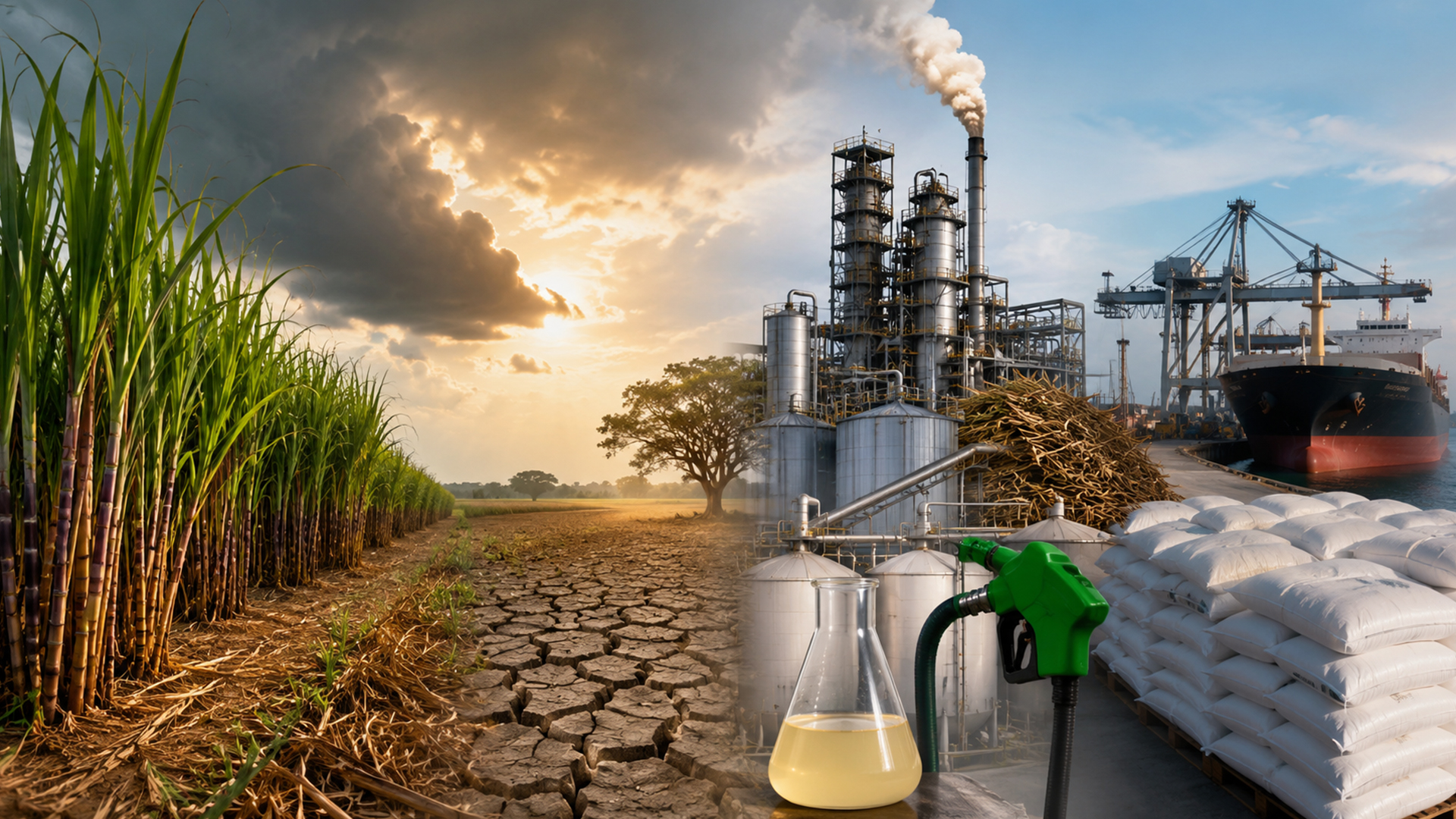
The concern stems from two growing pressures. A possible El Niño weather pattern could affect rainfall and reduce sugarcane yields, while increasing diversion of cane towards ethanol production is leaving less raw material available for sugar manufacturing.
India, once among the world’s leading sugar exporters, has already seen exports shrink sharply over the past few seasons. The government has restricted overseas shipments to ensure adequate domestic supplies and prevent sharp price increases at home. Industry participants now believe those restrictions could remain in place longer than previously expected.
The weather outlook is a major source of uncertainty. Sugarcane is heavily dependent on a healthy monsoon, and any prolonged dry spell or uneven rainfall could reduce crop productivity in key producing states. Producers fear that lower cane availability may impact sugar output over the next few years, keeping inventories under pressure.
At the same time, India’s ethanol blending programme continues to gather momentum. The policy is designed to reduce dependence on imported fossil fuels and support cleaner energy goals. However, it has also intensified competition for sugarcane, as a larger share of the crop is being used to produce ethanol instead of sugar.
The developments are being closely watched by global sugar traders. India’s absence from the export market has the potential to tighten international supplies and support higher global prices. For Indian consumers, the immediate impact may be limited, but sustained production shortfalls could eventually influence domestic prices as well.
For farmers, millers and policymakers, the challenge will be balancing food security, energy ambitions and climate-related risks. As weather uncertainties grow and ethanol demand rises, India’s sugar sector is entering a period where managing supply may become more important than expanding exports.
Also Read: India, UAE explore BrahMos missile deal