The standoff between the Centre and the Cockroach Janta Party (CJP) entered a critical phase on Friday after a second round of talks failed to break the deadlock over the demand for Union Education Minister Dharmendra Pradhan’s resignation. While the government reiterated its commitment to reforming India’s examination system, student leaders made it clear that they would not settle for anything less than the minister stepping down.
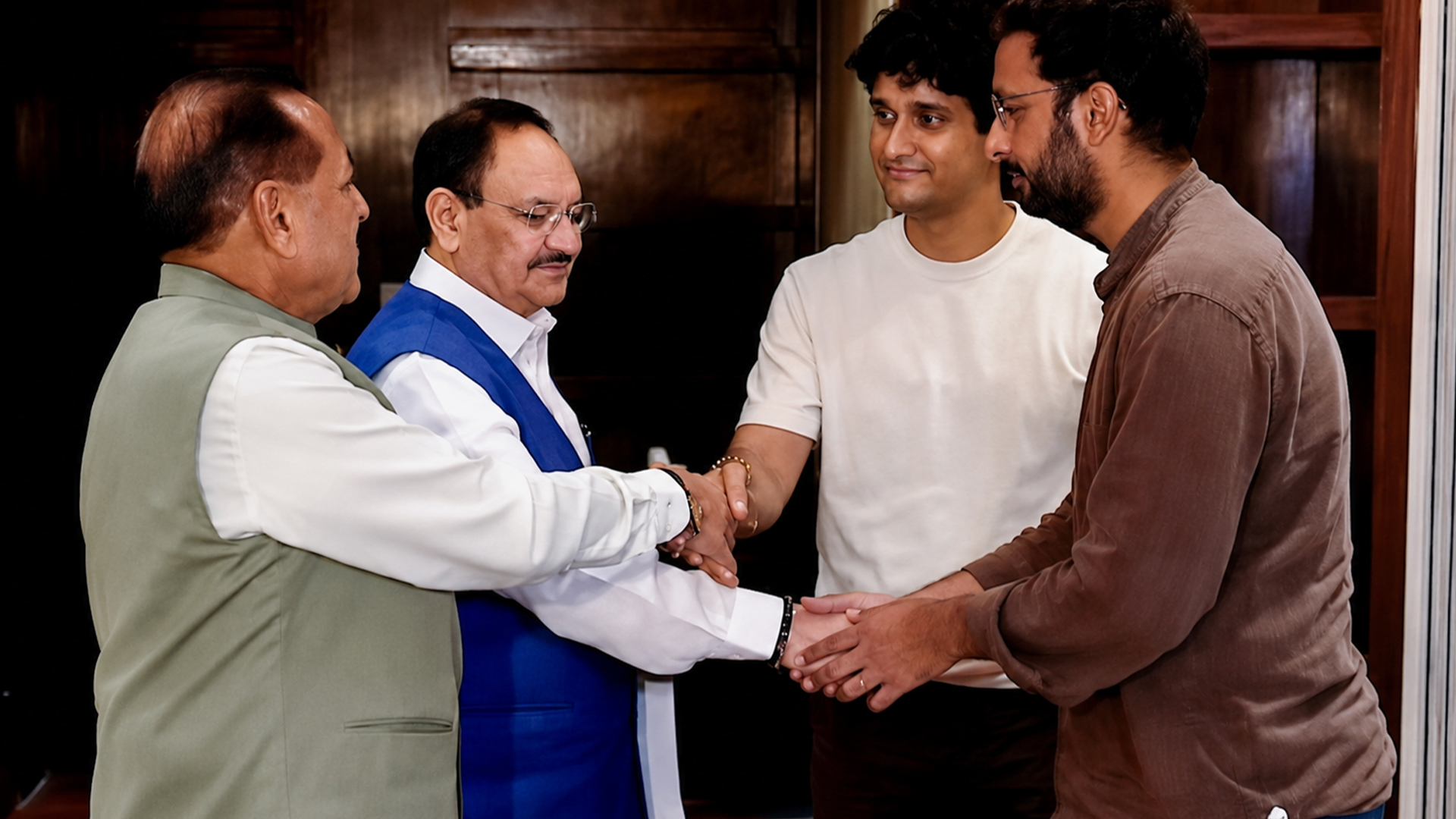
The nearly two-hour meeting in New Delhi brought together Union Health Minister J.P. Nadda, Union Minister Jitendra Singh and representatives of the CJP, which has been spearheading nationwide protests following the alleged NEET paper leak and a series of examination-related controversies.
Although both sides described the discussions as constructive, no agreement was reached on the protesters’ principal demand. Emerging from the meeting, CJP leaders said they had conveyed to the government that Pradhan’s resignation was “non-negotiable” and remained the central issue around which the agitation had gathered momentum.
According to the student representatives, the Centre requested additional time until Saturday afternoon to respond to the demand. Until then, they said, protests at Delhi’s Jantar Mantar and demonstrations in several other cities would continue.
“Our stand has not changed. Accountability must begin at the top. The Education Minister’s resignation is non-negotiable,” CJP leaders told reporters after the meeting.
The student movement began over allegations of irregularities in the NEET examination but has since evolved into a wider campaign seeking greater transparency, accountability and structural reforms in India’s competitive examination system. Protesters argue that repeated paper leak incidents have shaken students’ confidence in national entrance examinations and undermined the principle of merit.
However, government sources indicated that the resignation of the Education Minister is not being considered. Officials said removing a minister would not solve the systemic problems that have emerged within the National Testing Agency (NTA), which conducts major entrance examinations including NEET, JEE and CUET.
Instead, the Centre has chosen to focus on institutional reforms.
Over the past few days, the government has announced a sweeping overhaul of the NTA. As part of the restructuring, 47 officials have been removed from the agency, while criminal action is being examined against some individuals found responsible for lapses in the examination process.
The Centre has also promised major reforms aimed at preventing future paper leaks. These include strengthening cybersecurity systems, reducing dependence on outsourced agencies, improving monitoring of examination centres, introducing experts in digital forensics and assessment research, and tightening internal accountability mechanisms.
Officials believe these measures will address the root causes of examination irregularities more effectively than leadership changes.
Apart from seeking Dharmendra Pradhan’s resignation, the CJP has placed several other demands before the government. These include the withdrawal of criminal cases registered against peaceful protesters, compensation for the families of students who allegedly died by suicide during the examination controversy, and stronger legal safeguards to ensure fair and transparent conduct of competitive examinations.
According to protest leaders, the government has shown a willingness to examine some of these demands, but no formal commitments have been made.
Meanwhile, the agitation has continued to gather political attention. Several opposition parties have expressed support for the students, accusing the Centre of failing to protect the integrity of India’s examination system. The issue has repeatedly disrupted proceedings in Parliament, where opposition leaders have demanded accountability over the paper leak controversy.
The legal battle is also intensifying. The Supreme Court is expected to hear petitions related to allegations of police action against protesters during demonstrations. Student groups have accused law enforcement agencies of using excessive force while dispersing peaceful gatherings, allegations that authorities have yet to formally respond to in detail.
The prolonged deadlock has raised concerns about its wider consequences for students and the education system.
Education experts warn that continued uncertainty could further erode public confidence in national entrance examinations. With millions of candidates appearing for competitive tests every year, trust in the fairness and credibility of the examination process is essential. Any perception that the system is vulnerable to leaks or manipulation could discourage deserving students and increase anxiety among aspirants.
The protests have also delayed broader discussions on academic planning and admissions, with many students worried that prolonged unrest could affect future examination schedules and policy decisions.
For the government, the challenge is equally significant. While it has attempted to demonstrate accountability through the NTA overhaul and tougher anti-cheating measures, the refusal to consider the Education Minister’s resignation has become the biggest obstacle in negotiations. Officials fear that conceding to the demand could set a political precedent, whereas student leaders believe it is necessary to restore public trust.
With both sides standing firm, another round of talks is expected after the Centre responds to the protesters’ demands.
For thousands of students gathered at Jantar Mantar and many more supporting the movement across the country, the protest has grown beyond the NEET controversy. It has become a larger fight for transparency, accountability and fairness in India’s education system.
Whether the Centre’s institutional reforms will be enough to satisfy the protesters remains uncertain. Until a breakthrough is reached, demonstrations are likely to continue, keeping pressure on the government and ensuring that the debate over examination reforms remains at the centre of the national conversation.