Pakistan witnessed one of its deadliest attacks on security forces this year after a suicide bombing and gun assault killed at least 15 people, including 12 soldiers, in the country’s northwestern Khyber Pakhtunkhwa province. The coordinated attack targeted a joint security checkpoint in Tank district, a region that has long remained vulnerable to militant violence because of its proximity to the Afghan border.
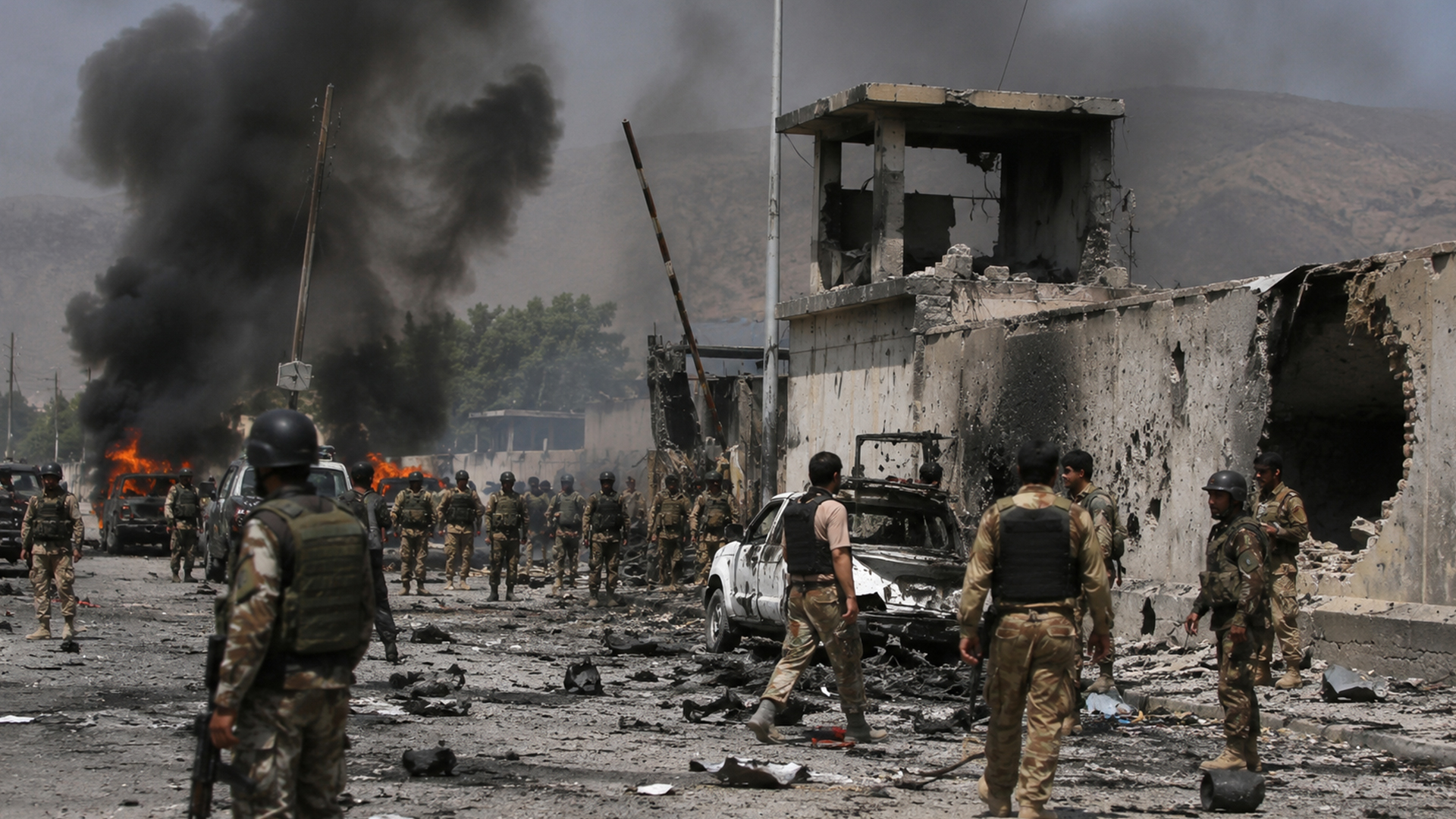
According to Pakistan’s military, the attack began late on Thursday night when a group of heavily armed militants attempted to storm the checkpoint. Security personnel immediately engaged the attackers, triggering an intense exchange of gunfire. As the forces resisted the assault, a suicide bomber drove an explosives-laden vehicle into the checkpoint’s perimeter wall, causing a massive explosion that shook the surrounding area.
The powerful blast caused extensive damage to the security installation and nearby structures. Thick clouds of smoke rose from the site as emergency responders rushed to rescue the injured and recover victims from the debris. Local residents reported hearing the explosion from several kilometres away.
Pakistan’s military said 12 soldiers were killed in the attack. Two police officers and a former forest department official also lost their lives, taking the death toll to 15. Several others sustained injuries and were shifted to nearby hospitals, where some remain under treatment.
Despite the scale of the assault, security personnel prevented the militants from capturing the checkpoint. A fierce gun battle continued for several hours before the attackers were neutralised. The military said 12 militants were killed during the operation, while search and clearance operations were launched to ensure no attackers had escaped or were hiding in the surrounding area.
Officials blamed the attack on Tehrik-e-Taliban Pakistan (TTP), commonly known as the Pakistani Taliban. Although the group did not immediately claim responsibility, military officials said the assault closely resembled previous attacks carried out by the outfit. The TTP has frequently targeted Pakistani military bases, police stations and security checkpoints, particularly in Khyber Pakhtunkhwa and neighbouring Balochistan.
The TTP is separate from Afghanistan’s Taliban government but shares ideological roots and historical ties with it. Pakistan has repeatedly accused militants of using safe havens inside Afghanistan to plan and launch attacks across the border. The Taliban administration in Kabul has consistently denied these allegations, insisting it does not allow Afghan territory to be used against any country.
The latest Pakistan suicide bombing comes amid a sharp rise in militant violence across the country’s northwest. Over the past two years, attacks on security forces have increased significantly, raising concerns about the resurgence of extremist groups despite repeated military operations.
Tank district has remained one of the most sensitive regions in Pakistan’s counter-terrorism efforts. Located close to the former tribal areas bordering Afghanistan, it has witnessed frequent militant activity for years. Security forces continue to maintain a strong presence in the district, but insurgent groups have repeatedly demonstrated their ability to launch coordinated attacks.
Security experts say the latest assault reflects the changing tactics of militant organisations. The use of a suicide vehicle bomb alongside armed fighters indicates careful planning aimed at causing maximum casualties and breaching heavily guarded installations. Such attacks are designed not only to inflict losses but also to challenge the state’s security apparatus.
The tragedy has once again highlighted the sacrifices made by Pakistan’s security personnel, many of whom serve in dangerous conflict zones far from their families. Relatives of the slain soldiers and police officers have been left grieving, while communities across the region mourn another deadly chapter in the country’s long battle against terrorism.
Pakistan’s military has vowed to continue its counter-terrorism campaign and bring those responsible to justice. Authorities have strengthened security across nearby districts and intensified intelligence-based operations to prevent further attacks.
As investigations continue, the bombing serves as a grim reminder that terrorism remains one of Pakistan’s biggest security challenges. Despite years of military offensives and counter-insurgency operations, militant groups continue to pose a serious threat, particularly in Khyber Pakhtunkhwa, where security forces remain on the frontline in the fight against extremism.