India Couture Week 2026 opened with a spectacular celebration of Indian artistry as acclaimed designer Anamika Khanna unveiled her latest couture collection, Moonlit Palace, at Hyderabad’s iconic Taj Falaknuma Palace. The showcase not only set the tone for this year’s fashion extravaganza but also marked a historic first for the Fashion Design Council of India (FDCI). For the first time in its 18-year history, the opening show of India Couture Week was hosted outside New Delhi, highlighting the growing reach of India’s luxury fashion industry.
The choice of venue was symbolic. Perched high above Hyderabad, the former residence of the Nizams provided a regal backdrop that perfectly complemented the collection’s theme. The palace’s grand staircases, marble halls and illuminated courtyards transformed into an enchanting runway, where fashion, history and architecture came together to create an unforgettable visual experience.
With Moonlit Palace, Anamika Khanna explored a central question that has shaped her design philosophy for years: How can Indian craftsmanship evolve without forgetting where it came from? Rather than recreating traditional royal attire, the designer presented a collection that respected India’s tetile heritage while giving it a contemporary identity suited to today’s global audience.
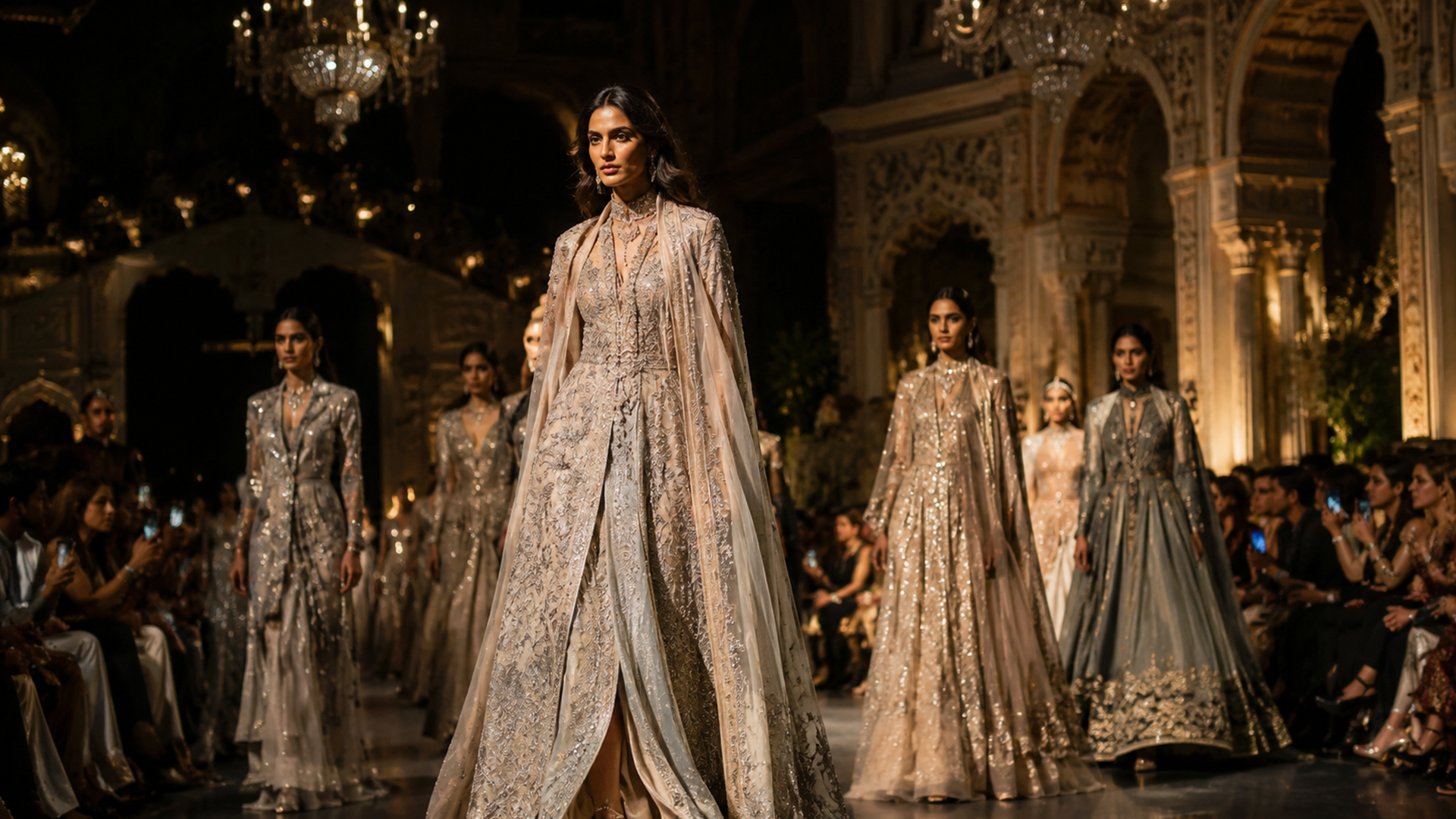
The collection featured a mix of flowing drapes, sharply tailored jackets, sculptural lehengas, fluid capes and layered separates. Traditional embroidery techniques, intricate mirror work, metallic embellishments and handcrafted detailing were seamlessly combined with modern silhouettes. The result was a wardrobe that felt luxurious yet wearable, proving that couture can be both artistic and relevant.
One of the strongest themes running through Moonlit Palace was its tribute to India’s artisan communities. Khanna drew inspiration from the colourful embroidery traditions of Barmer in Rajasthan and the expressive storytelling style of Bengal’s Kalighat paintings. These regional craft forms were thoughtfully reinterpreted into contemporary couture pieces, ensuring they remained living traditions rather than fading cultural memories.
Speaking about the collection, the designer emphasised that Indian craftsmanship should not remain confined to museums or archives. Instead, she believes traditional techniques must continue evolving through innovation, allowing younger generations to connect with them while preserving their authenticity. That philosophy was visible throughout the collection, where every garment reflected a careful balance between heritage and modernity.
The showcase also reinforced Anamika Khanna’s reputation as one of India’s most influential designers. Known for challenging conventional bridal fashion, she has consistently redefined Indian couture by introducing relaxed tailoring, layered separates and versatile garments that can move beyond wedding occasions. Her latest collection continued this evolution, presenting couture as an expression of individuality rather than tradition alone.
The grandeur of the Taj Falaknuma Palace enhanced the storytelling behind the collection. As models walked through the illuminated palace grounds beneath the evening sky, the garments appeared to shimmer under the lights, creating the illusion of moonlight reflected on intricate embroidery. The setting elevated the presentation, allowing every detail of the craftsmanship to stand out without overshadowing the designs themselves.
Fashion industry observers described the opening show as a reflection of the changing direction of India Couture Week 2026. While Indian couture has traditionally been associated with elaborate bridal wear, designers are increasingly creating collections that appeal to a wider audience seeking timeless luxury with practical elegance. Contemporary silhouettes, sustainable craftsmanship and versatile styling are becoming defining features of modern Indian fashion.
The decision to begin India Couture Week in Hyderabad before continuing in New Delhi also represents an important shift for the industry. Organisers believe India’s luxury fashion ecosystem is expanding rapidly beyond the capital, with cities such as Hyderabad emerging as influential destinations for couture, luxury retail and high-end lifestyle experiences. The move is expected to attract new audiences while showcasing India’s rich cultural heritage through different regional landmarks.
However, the event also sparked conversations on social media because it coincided with student protests in Delhi. Some users questioned whether a glamorous fashion event should proceed during a period of public unrest. Others defended the decision, pointing out that India Couture Week supports thousands of artisans, embroiderers, weavers and craftspeople whose livelihoods depend on the fashion industry. The Fashion Design Council of India acknowledged the ongoing situation while expressing hope for a peaceful resolution.
Beyond the glamour, Moonlit Palace carried a deeper message about preserving India’s cultural identity through design. Every embroidered motif, handcrafted embellishment and carefully constructed silhouette reflected the extraordinary skills of Indian artisans whose work continues to shape the country’s global reputation in fashion.
The collection also highlighted the growing international appeal of Indian craftsmanship. As luxury consumers increasingly seek authenticity and handmade excellence, Indian couture is earning recognition not just for its opulence but for its centuries-old artisanal traditions. Designers like Anamika Khanna are helping bridge the gap between heritage and innovation, ensuring that traditional techniques remain relevant in an ever-changing fashion landscape.
By opening India Couture Week 2026 with Moonlit Palace, Anamika Khanna delivered more than a fashion show. She presented a thoughtful celebration of India’s artistic legacy, demonstrating that true luxury lies not only in exquisite garments but also in the stories, skills and cultural traditions woven into every creation. As the week unfolds, Moonlit Palace has already established itself as one of the defining moments of the season, reaffirming India’s position as a global destination for exceptional couture and timeless craftsmanship.