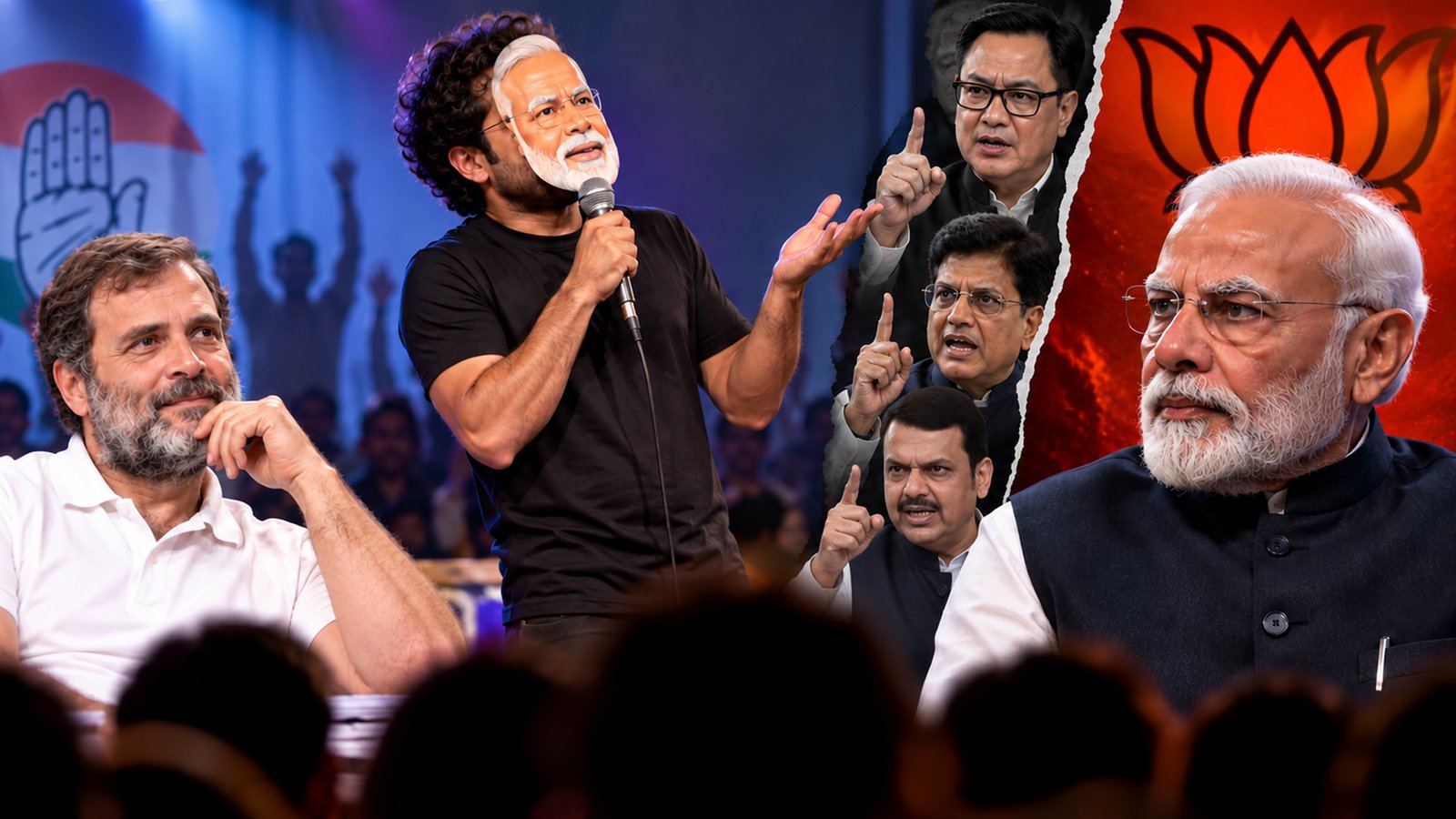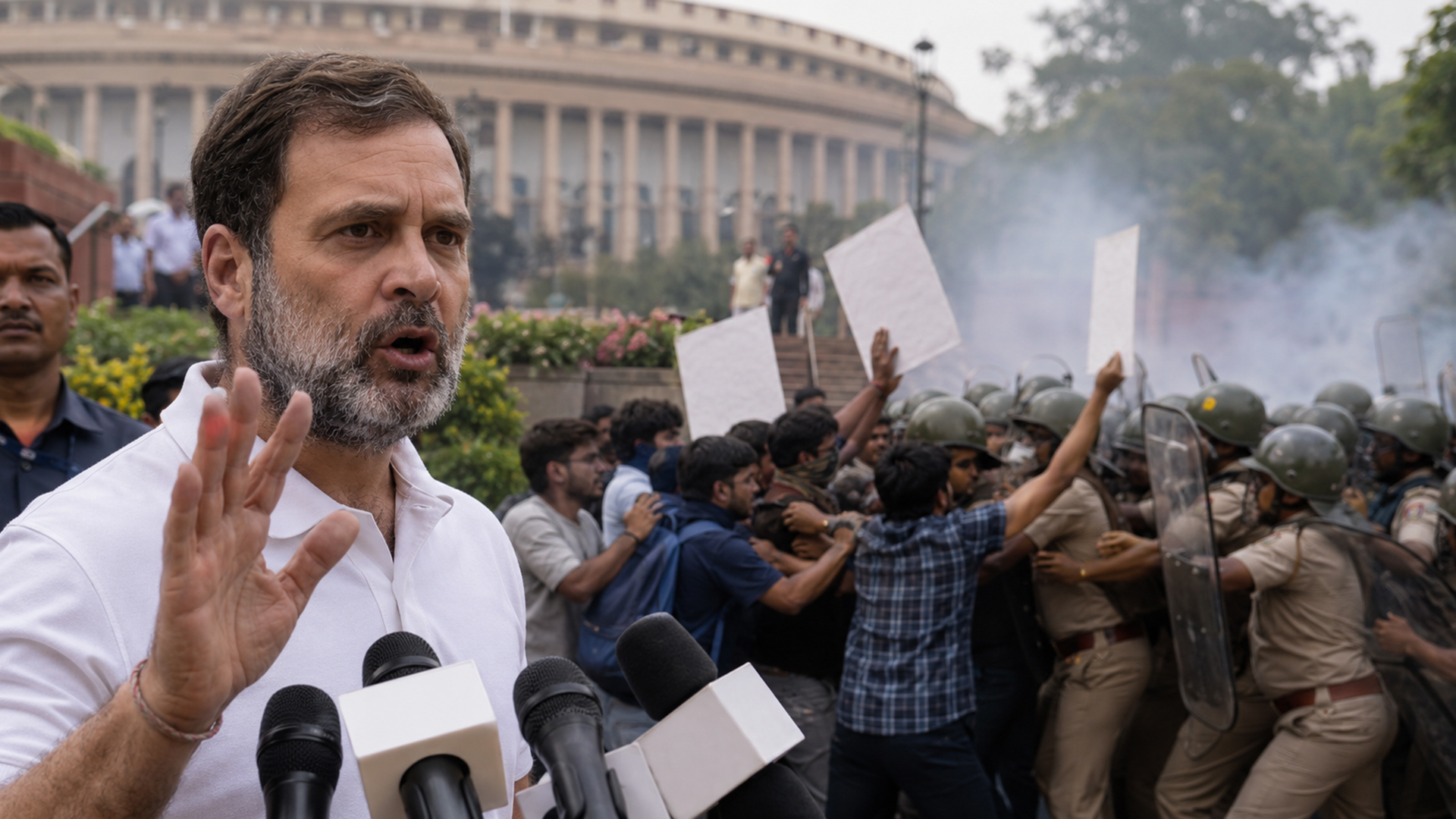
Congress leader and Leader of Opposition in the Lok Sabha Rahul Gandhi has stepped up his attack on Union Home Minister Amit Shah, demanding that Prime Minister Narendra Modi remove Shah from the Union Cabinet over the alleged police crackdown on student protesters in Delhi.
Gandhi raised the issue during the ongoing Monsoon Session of Parliament on Wednesday, July 29, accusing the Home Minister of being responsible for the police action against young protesters who had gathered over concerns linked to the alleged NEET examination paper leak. He also called for an independent investigation into the incident, with judicial oversight.
The confrontation brought the issue of police action against protesters directly into the Lok Sabha and added to the already tense atmosphere in Parliament. Gandhi’s remarks triggered strong objections from the ruling benches, with BJP MPs demanding that he withdraw his allegations and apologise.
Gandhi alleged that students protesting against the examination system were subjected to excessive force. He questioned whether Shah had personally authorised the use of force or whether the Home Minister was unaware of what was happening. He argued that either situation raised questions about Shah’s accountability as the country’s Home Minister.
The Congress leader’s comments were linked to the police action during a student protest in Delhi earlier in July. Opposition parties have alleged that protesters were beaten and that pellet guns were used during the crackdown. Gandhi described the alleged treatment of students as unacceptable and demanded accountability from the government.
The government, however, rejected the allegations. Union minister Jitendra Singh told the Lok Sabha that no bullets had been fired at protesters and questioned the basis of Gandhi’s claim that the Home Minister had ordered firing. Parliamentary Affairs Minister Kiren Rijiju also demanded an apology from Gandhi for his remarks against Shah.
The BJP argued that the government had exercised restraint while dealing with the protesters. The ruling party also accused Gandhi of making serious allegations without sufficient evidence. BJP MP Sambit Patra said Gandhi had been given an opportunity to speak in the House and that objections to his remarks were based on parliamentary rules rather than an attempt to silence him.
Gandhi refused to back down. After the disruption in the Lok Sabha, he reiterated his demand outside Parliament, saying the responsibility for the police response ultimately rested with the Union Home Ministry. He also rejected the BJP’s demand for an apology.
The dispute unfolded while Parliament was considering the Public Examination (Prevention of Unfair Means) Amendment Bill, 2026. The legislation seeks tougher action against malpractice and paper leaks in competitive examinations, an issue that has become particularly sensitive among students and job aspirants.
The Lok Sabha eventually passed the anti-paper leak bill by voice vote amid the political uproar. The legislation proposes stricter punishment for those involved in examination malpractice and seeks to strengthen the legal framework for preventing unfair means in public examinations.
The timing of the confrontation was politically significant. The government was attempting to move forward with legislation aimed at addressing examination irregularities, while the Opposition was pressing it to answer questions about the treatment of students protesting the same broader issue.
For many young people, examination paper leaks have become more than a political issue. Repeated allegations of irregularities can affect months or even years of preparation for competitive examinations, leaving students worried about their careers and the fairness of the recruitment process. The Opposition has sought to use these concerns to put pressure on the government during the Parliament session.
Rahul Gandhi‘s demand for Shah’s removal therefore goes beyond the immediate police action. It has become part of a larger Opposition campaign questioning the government’s handling of student grievances, public protests and accountability within the Home Ministry.
The controversy has also widened the political divide between the Congress and the BJP. While the Opposition says the government’s response to student protesters reflects excessive use of force, the ruling party maintains that the allegations are politically motivated and that security agencies acted within the law.
The episode is expected to remain a contentious issue through the Monsoon Session, particularly as Opposition parties continue to seek answers over the police response. For the government, the challenge will be to defend its handling of the protests while demonstrating that concerns surrounding examination paper leaks are being addressed seriously.