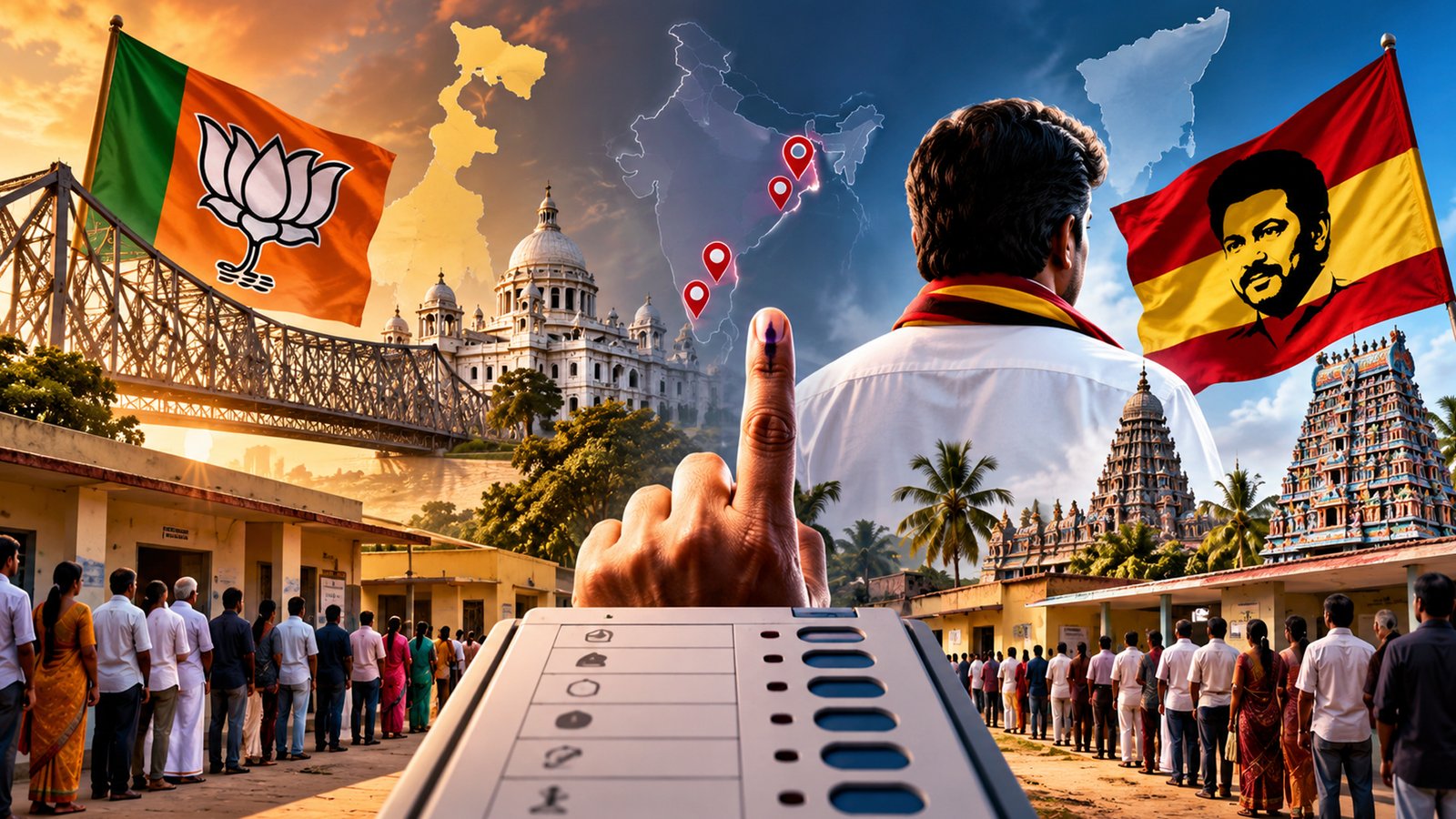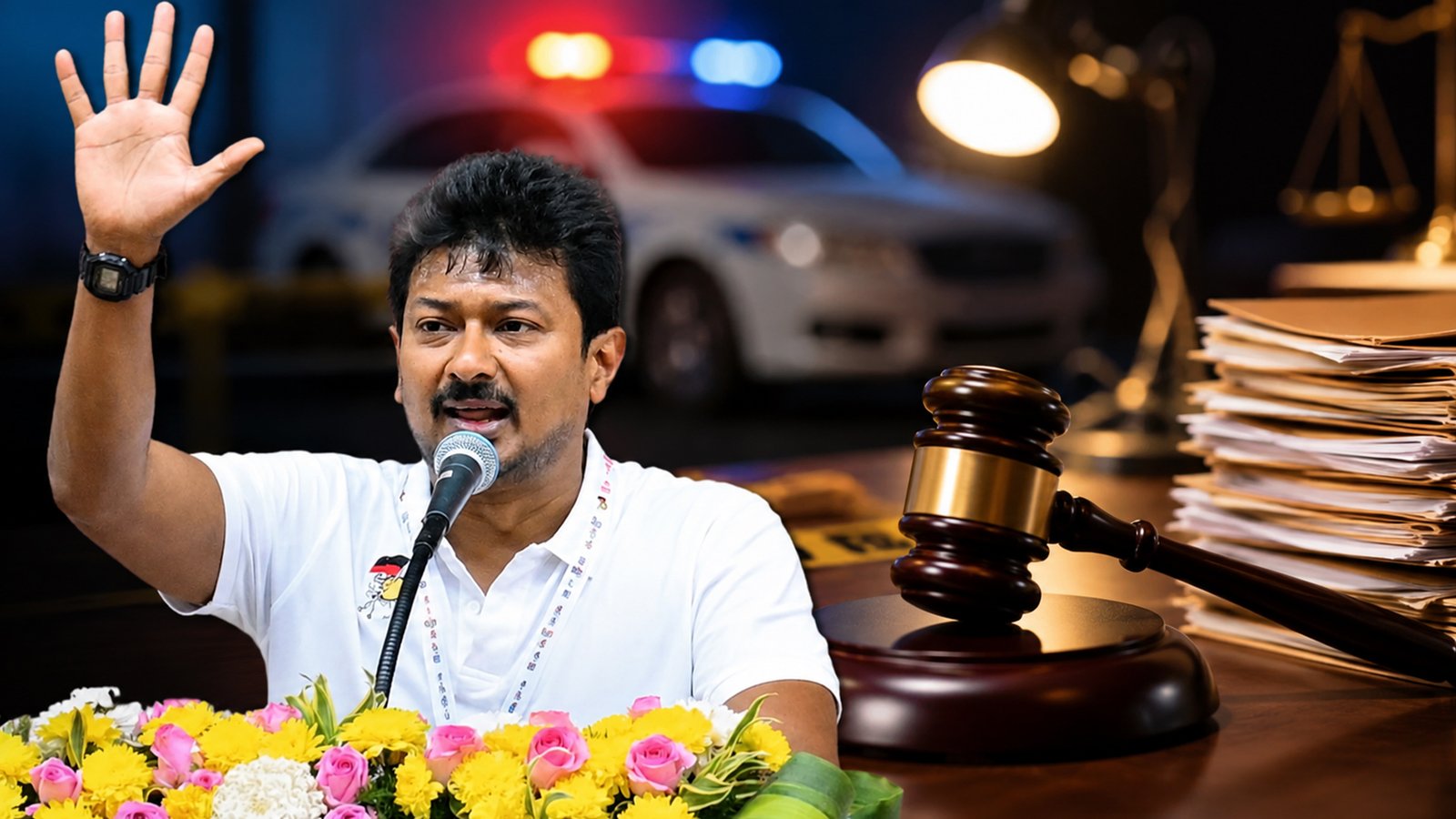
Tamil Nadu Leader of the Opposition and DMK leader Udhayanidhi Stalin was arrested from his Chennai residence on Tuesday in connection with a case over allegedly objectionable remarks made during a political rally in Thanjavur. The arrest has triggered a fresh political confrontation between the ruling Tamilaga Vettri Kazhagam (TVK) and the opposition DMK.
A police team led by Joint Commissioner of Police Dr P Vijayakumar took Udhayanidhi into custody from his residence in Neelankarai. He was subsequently being taken to Thanjavur, where the First Information Report (FIR) was registered over his remarks at a rally on the Cauvery water dispute.
The incident began at a public meeting on Monday, where Udhayanidhi was speaking about the Cauvery water issue. During the speech, sections of the gathering reportedly began chanting the name of actor Trisha. Udhayanidhi paused before making a remark about water reaching “there”, while saying he was referring to the Cauvery water.
The comment quickly became controversial. Political opponents interpreted it as a double entendre involving Tamil Nadu Chief Minister C Joseph Vijay and actor Trisha, and accused the DMK leader of making a vulgar and sexually suggestive reference. Udhayanidhi has rejected the allegations and described the case as politically motivated.
The complaint was filed by the TVK, Vijay’s political party, following the controversy. Based on the complaint, Thanjavur police registered an FIR invoking provisions relating to promoting enmity, the Information Technology Act and the Tamil Nadu Prohibition of Harassment of Women Act. The TVK also approached the National Commission for Women (NCW), seeking action over what it described as objectionable and degrading remarks.
The party has demanded an unconditional public apology from Udhayanidhi. TVK representatives have argued that remarks of this nature by a senior political leader lower the standard of public discourse and objectify women.
The controversy has also acquired a larger political dimension because of the sharp rivalry between the DMK and TVK. Vijay’s entry into electoral politics has significantly changed Tamil Nadu’s political landscape, with his party emerging as a major force in the 2026 Assembly election. Udhayanidhi, meanwhile, is now the Leader of the Opposition after the DMK moved to the opposition benches.
Before his arrest, Udhayanidhi had approached the Madras High Court seeking anticipatory bail, anticipating police action in the case. When the matter was mentioned before Justice G K Ilanthiraiyan, the court agreed to hear the urgent plea and orally directed the police not to precipitate the matter until the petition was taken up. Despite this, police subsequently took him into custody.
After being detained, Udhayanidhi strongly rejected the case against him. He described it as a “forged” case and said he would fight the matter legally. He also accused the TVK government of targeting DMK legislators through what he called “fake cases” and alleged political horse-trading.
The DMK has rallied behind its leader. Party leaders have accused the government of using the police and criminal cases to silence the opposition. The party’s youth wing has argued that Udhayanidhi’s detention was intended to prevent him from raising questions in the Tamil Nadu Assembly.
DMK leaders have also questioned the timing of the arrest, particularly as the Assembly is dealing with several political and public-interest issues. Senior party figures have described the police action as political vendetta rather than a straightforward legal response to the complaint.
The arrest also led to protests by DMK workers in parts of Tamil Nadu. Party supporters gathered in several locations after news of Udhayanidhi’s detention spread. Police detained a number of protesters, including a DMK MLA, amid demonstrations against the action.
On the other side, the TVK has defended its complaint and intensified its criticism of Udhayanidhi. Party leaders have maintained that political status should not shield anyone from accountability when comments are alleged to cross legal or social boundaries.
The controversy has therefore moved beyond a single speech. What began as a dispute over a remark at a Cauvery water rally has quickly turned into another flashpoint in the growing DMK-TVK rivalry.
For Udhayanidhi, the immediate focus will now be on the legal proceedings arising from the Thanjavur FIR. For the DMK, his arrest has become an opportunity to accuse the new government of suppressing the opposition. For the TVK, the case has become a test of its claim that political leaders must be held accountable for their public statements.
As the legal process unfolds, the central issue will be whether the controversial remark constitutes an offence under the provisions invoked by the police. The political battle, however, is already well underway, adding another tense chapter to Tamil Nadu’s rapidly changing political landscape.