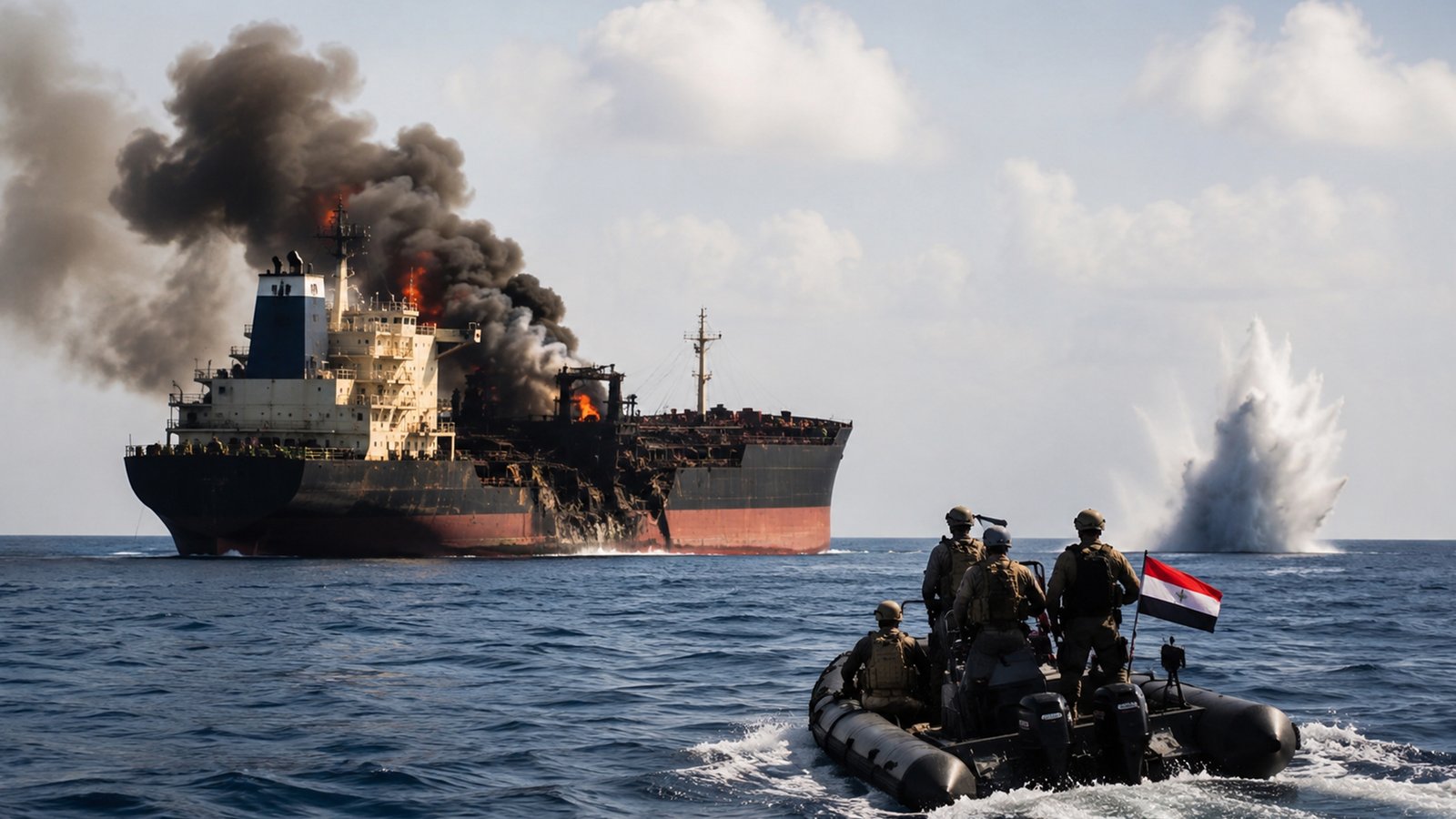
An Indian-flagged commercial vessel, MSV Faize Noore Oliya, sank in the Red Sea after coming under attack near the coast of Yemen on August 4. All 14 people aboard the vessel, including 13 Indian nationals and one Yemeni national, were rescued safely by the Yemeni Coast Guard.
The incident has once again highlighted the growing risks faced by commercial shipping and Indian seafarers in the conflict-affected waters around Yemen and the wider Red Sea region.
According to the latest information, the vessel was struck by a projectile while sailing near Yemeni waters. The impact caused the ship to capsize before it eventually sank. The attack took place around 13 nautical miles south of Hodeidah, a major port city on Yemen’s western coast that is controlled by the Houthi movement.
The crew managed to survive the attack and were subsequently brought to safety by Yemeni authorities. The rescued seafarers were taken to the Port of Mokha, where they received medical assistance. There were no reports of deaths or serious injuries among the crew.
Union Minister for Ports, Shipping and Waterways- Sarbananda Sonowal confirmed the incident and said the safety of Indian seafarers remained the government’s top priority. He also expressed relief that all 14 people aboard the vessel had been rescued.
The Ministry of External Affairs (MEA) strongly condemned the attack on the Indian-flagged commercial vessel. The ministry said the continuing attacks on commercial shipping in the region were deeply concerning and stressed the need to protect civilian vessels and their crews.
The Indian Embassy in the region is monitoring the situation and coordinating with Yemeni authorities regarding the rescued Indian nationals. The government’s immediate focus is on ensuring their safety and facilitating further assistance following the incident.
The identity of those responsible for the attack has not been independently established. The vessel was attacked close to Hodeidah, an area associated with the ongoing Houthi conflict and previous attacks on commercial ships using the Red Sea shipping route. Reports from local sources have attributed the incident to Houthi forces, but there has been no independent confirmation establishing who launched the projectile.
The Red Sea has remained a high-risk maritime corridor because of the continuing conflict in Yemen and attacks involving commercial vessels. The waterway is an important international trade route connecting the Indian Ocean with the Mediterranean through the Suez Canal. Any disruption in the region can therefore affect global shipping, freight costs, delivery schedules and energy supplies.
For India, the issue carries particular significance because a large number of Indian nationals work in the global shipping industry. Indian seafarers are routinely employed on merchant ships travelling through some of the world’s busiest and most strategically important maritime routes.
The latest incident also comes against the backdrop of repeated security concerns involving Indian seafarers and commercial vessels in West Asian waters. In recent months, Indian sailors have been caught up in attacks and other maritime emergencies linked to the wider regional conflict.
The Indian government has already stepped up efforts to protect Indian seafarers operating in conflict-affected waters. The Ministry of Ports, Shipping and Waterways recently launched a ‘Seafarer-First’ initiative aimed at strengthening safety measures for Indian seafarers working in areas affected by regional tensions.
Authorities have also advised Indian seafarers and shipping companies to exercise the highest level of caution while operating in conflict-affected maritime zones. The government has been coordinating with international maritime agencies and other countries to monitor risks and provide assistance when required.
The sinking of the MSV Faize Noore Oliya therefore adds to concerns over maritime security in the Red Sea. While the safe rescue of all 14 crew members has brought relief, the loss of the vessel underlines how quickly commercial shipping can become vulnerable in a conflict zone.
The incident has renewed concerns over the safety of commercial vessels crossing the Red Sea, a vital route for global trade. With tensions around Yemen remaining high, shipping companies and governments are facing fresh pressure to protect crews and keep maritime traffic moving safely through the region.
The safe rescue of all 14 seafarers has provided relief, even as questions remain over the security of the route. Authorities are expected to continue monitoring the area closely as risks to merchant shipping persist.