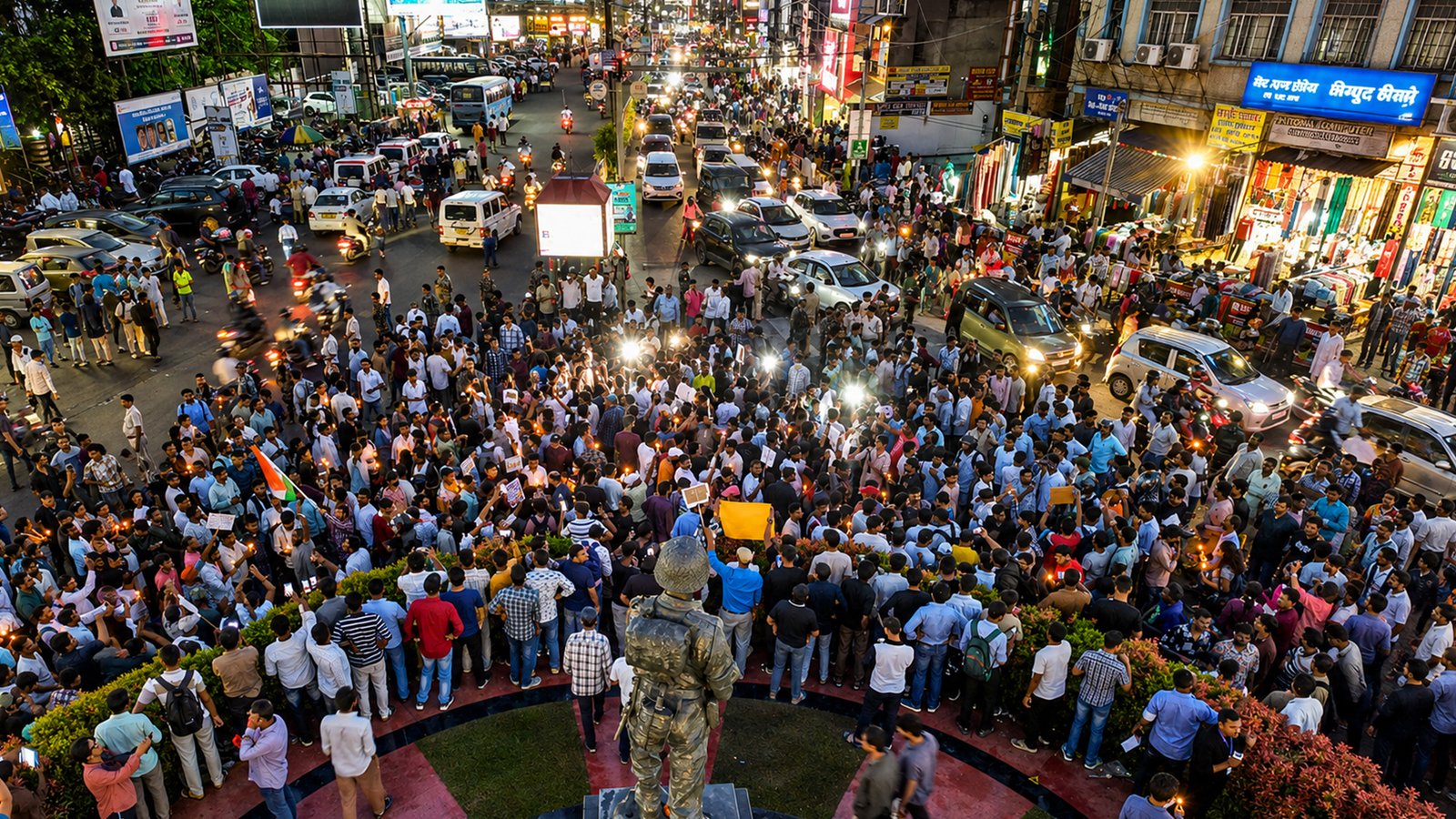
A growing group of government job aspirants in Jharkhand has taken its protest against alleged irregularities in recruitment examinations into its 12th day, with the agitation showing no signs of slowing down. Students have been camping at Jaipal Singh Munda Stadium in Ranchi, demanding a transparent recruitment process and an independent investigation into alleged irregularities involving the Jharkhand Public Service Commission (JPSC) and Jharkhand Staff Selection Commission (JSSC).
The agitation has now entered a more serious phase, with student leader Devendra Nath Mahto and other aspirants resorting to a hunger strike. Protesters are seeking a Central Bureau of Investigation (CBI) probe, arguing that an independent investigation is necessary to establish whether there were lapses or manipulation in the recruitment process.
The protest is also beginning to spread beyond the stadium. Student groups have announced separate marches towards the Jharkhand Vidhan Sabha to press the government to act on their demands.
The JKLM has planned a march on August 6, while the All India Students’ Association (AISA) and other organisations have announced another demonstration for August 7. A group of students who say they are not affiliated with political parties has planned a march on August 10.
The different dates reflect the growing breadth of the agitation, although some protesters have stressed that they want the movement to remain student-led and free from political interference.
The protests have also attracted political attention. Earlier, opposition leaders and organisations had raised concerns over the JPSC examination process, while the latest student-led movement has increasingly focused on the future of thousands of government job aspirants
Jharkhand Chief Minister Hemant Soren has now responded to the continuing agitation, saying that the state government is taking the examination controversy “very seriously”.
Soren said the government was committed to addressing the concerns of students within the constitutional and legal framework. His remarks come as pressure mounts on the administration to respond more concretely to the demands being raised at the Ranchi protest site.
For protesters, however, assurances alone may not be enough. They are seeking visible action on the allegations and a clear mechanism to ensure that future recruitment examinations are conducted without controversy.
The dispute has also put the functioning of JPSC and JSSC under renewed scrutiny. Both bodies play a crucial role in conducting recruitment examinations for government posts in the state, making public confidence in their procedures particularly important.
With talks and assurances yet to end the protest, students have announced plans to intensify their campaign. Protesters are preparing for a Tiranga March and have announced a statewide gherao of the Jharkhand Assembly on August 10.
The planned escalation could bring the recruitment examination controversy directly into the political arena, particularly if a large number of students and job aspirants join the proposed march.
The continuing protest also comes against a wider backdrop of frustration among young people over competitive examinations across India. Government jobs remain highly sought after because of their stability, benefits and social security. For candidates who spend years preparing, any allegation of a paper leak, procedural lapse or unfair selection can have consequences far beyond one examination.
At the heart of the Jharkhand recruitment exam controversy is a simple demand: candidates want to believe that their performance, rather than irregularities or administrative failures, will determine whether they get a government job.
The JPSC and JSSC conduct examinations that attract large numbers of candidates competing for a limited number of posts. That makes transparency at every stage — from issuing notifications and question papers to conducting examinations, evaluating answer sheets and declaring results — critical.
The protesters argue that allegations surrounding recruitment examinations should be addressed quickly so that genuine candidates do not lose valuable time. Delays can be particularly difficult for aspirants who face age limits for government recruitment and may have already spent several years preparing.
The government, meanwhile, faces the challenge of balancing the students’ concerns with the need to follow due process before taking decisions on examinations or recruitment.
As the JPSC-JSSC protest enters its second week, the issue is increasingly becoming a test of trust between Jharkhand’s young job seekers and the state’s recruitment system.
The students are not simply asking for another examination or an announcement. Their larger demand is for a recruitment process they can trust.
Whether the state government can address those concerns through a credible investigation and concrete reforms will determine how the agitation develops in the coming days. For now, the protest continues, the hunger strike has added urgency and the planned Assembly gherao on August 10 could mark another major turn in Jharkhand’s recruitment exam row.