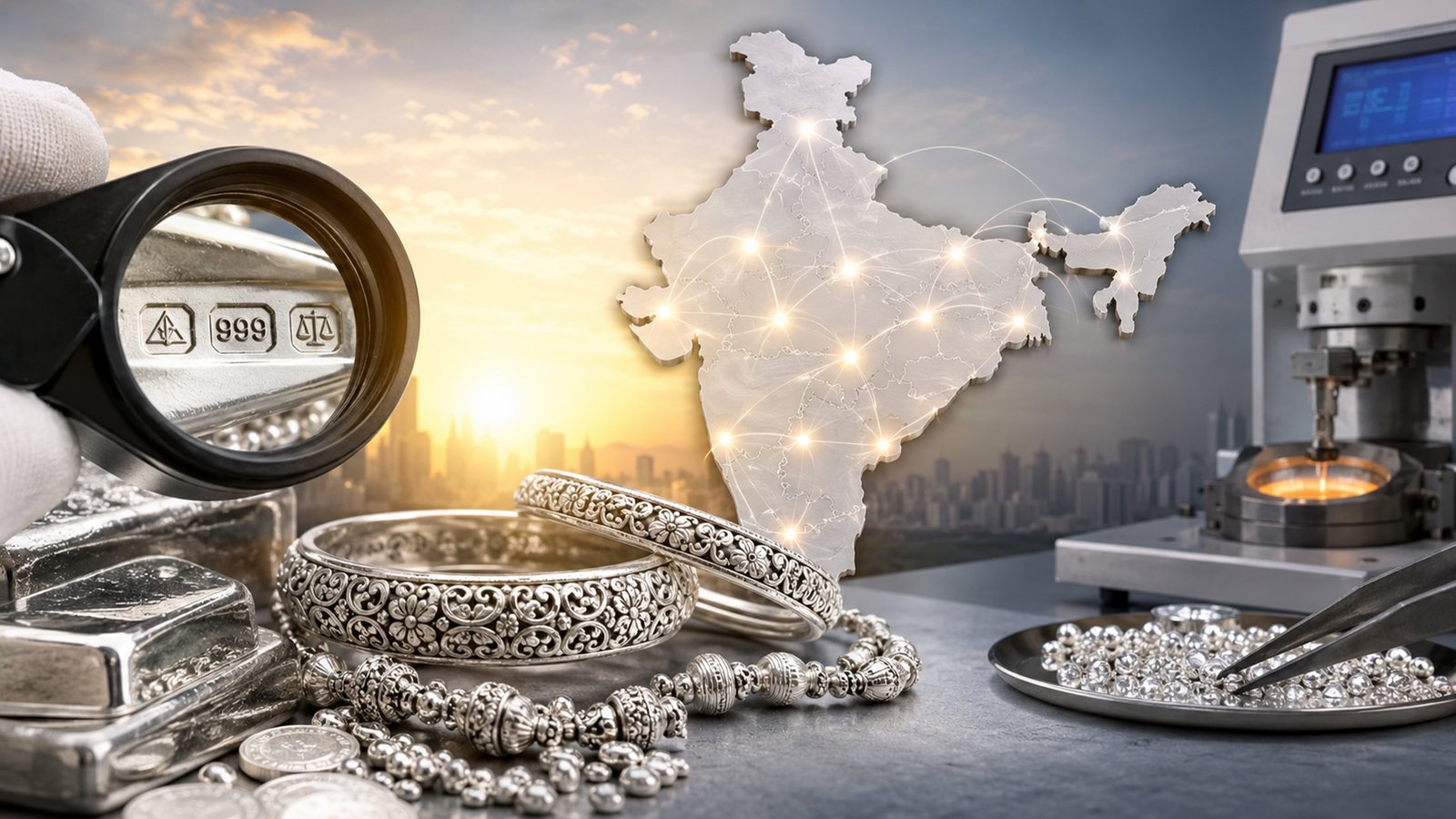
Rising gold prices are prompting more Indian consumers to turn to silver, and the Bureau of Indian Standards (BIS) is preparing to expand its silver hallmarking and testing network to keep pace with the shift.
The standards regulator plans to strengthen the country’s silver testing infrastructure by expanding its laboratory network and upgrading existing facilities. The move is aimed at making silver hallmarking more accessible to jewellers while giving consumers greater confidence about the purity of the products they buy.
The growing focus on silver comes as gold prices remain at elevated levels. For many consumers, particularly those buying jewellery for weddings, festivals and other occasions, the sharp increase in gold prices has made silver a more affordable option.
BIS officials and industry representatives have pointed to a noticeable rise in interest in silver jewellery and other silver products. The change in buying behaviour has increased the need for reliable purity testing and certification.
Hallmarking is important because the appearance of a precious-metal article does not reveal its actual purity. A certified hallmark gives consumers an additional assurance that the product has been tested according to prescribed standards.
While gold hallmarking has become a familiar part of India‘s jewellery market, silver hallmarking has not reached the same level of adoption. The BIS is now looking to close that gap as silver gains popularity.
The proposed expansion will focus on increasing the number of laboratories that can test silver articles. Existing facilities are also expected to be upgraded so they can handle a larger number of samples.
A wider laboratory network could be particularly useful for jewellers operating outside major cities. At present, businesses in some locations may have to send silver articles to testing centres located considerable distances away. More testing facilities would reduce logistical challenges and potentially make the hallmarking process faster.
The BIS is also exploring the use of artificial intelligence in silver testing. Technology-assisted testing could help laboratories improve efficiency and process larger volumes while maintaining accuracy.
The move towards AI-based testing is part of a broader effort to modernise India’s quality-control systems. As demand for hallmarking increases, technology could help laboratories manage the additional workload without compromising testing standards.
The rise in silver demand is closely linked to the changing economics of precious metals. Gold has traditionally been the preferred choice for Indian jewellery buyers, with the metal also serving as an important household investment. But higher gold prices have made consumers more cautious about their purchases.
Silver offers a lower-cost alternative. Buyers can purchase silver jewellery, coins, utensils and other articles at a fraction of the cost of comparable gold products. This affordability has helped silver attract consumers who may otherwise have postponed or reduced their precious-metal purchases.
The shift does not mean gold is losing its importance. Gold remains deeply embedded in Indian traditions and continues to be widely purchased for weddings, festivals and investment. However, the price gap between gold and silver has encouraged consumers to consider silver for a wider range of purchases.
Silver is also gaining attention as an investment. Unlike gold, however, it has substantial industrial demand. The metal is used in electronics, solar panels and several other industrial applications. This combination of investment and industrial demand has kept silver firmly on the radar of investors and consumers.
The stronger demand makes purity standards increasingly important. As more silver products enter the market, consumers need clear information about the quality and purity of what they are purchasing.
For jewellers, wider access to BIS-approved testing facilities could make compliance easier. It could also support greater transparency in the market by encouraging more businesses to sell hallmarked silver.
For consumers, the expansion of silver hallmarking could provide an important layer of protection. A reliable certification system can help buyers distinguish tested products from those whose stated purity may be difficult to verify.
The BIS initiative comes at a time when India’s precious-metals market is changing rapidly. Elevated gold prices, shifting consumer preferences and growing interest in silver are reshaping demand across the jewellery sector.
The regulator’s planned expansion of silver testing laboratories, along with upgraded facilities and possible use of AI, is intended to ensure that quality-control infrastructure keeps pace with this change.
As silver becomes a more popular choice among Indian buyers, hallmarking is likely to play a bigger role in the market. For consumers, the expansion could mean easier access to certified silver products and greater confidence when making purchases.
The immediate trigger may be the high price of gold, but the changes underway could have a longer-term impact. A stronger silver hallmarking system could help organise the market, improve transparency and establish purity certification as a more important part of India’s growing silver jewellery trade.