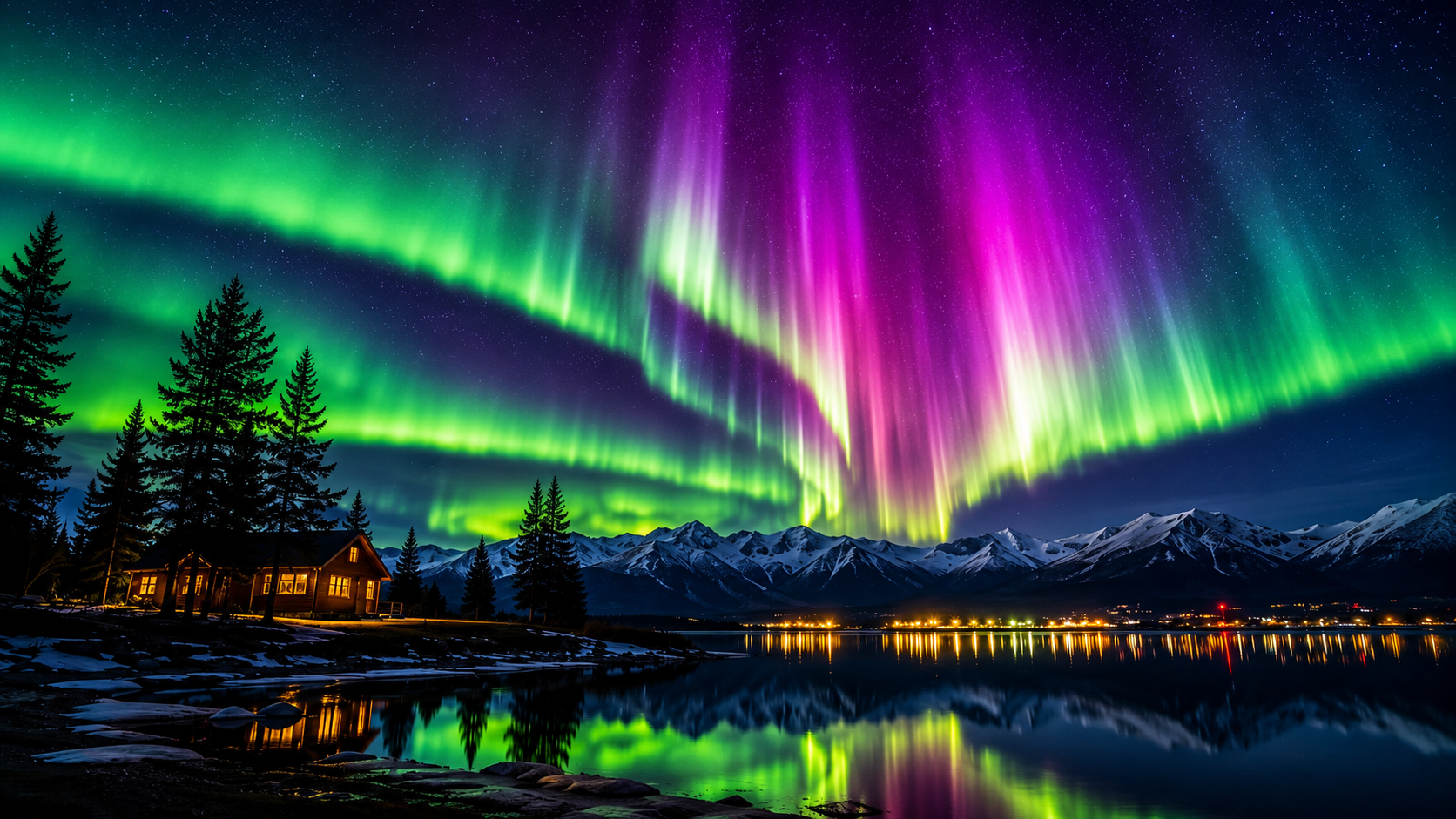
A minor solar storm could paint the night sky with the aurora borealis, giving people across 19 northern US states a chance to witness the rare natural spectacle.
The US National Oceanic and Atmospheric Administration (NOAA) has forecast G1 to G2 geomagnetic storm conditions after a burst of charged particles from the Sun headed towards Earth. As these particles interact with Earth’s magnetic field, they could create the colourful northern lights, usually seen only near the Arctic. Solar activity and its effects on Earth continue to be closely studied, with more such research and discoveries covered in our science news and discoveries section.
States with the best chance of viewing the aurora include Washington, Montana, North Dakota, Minnesota, Wisconsin, Michigan and Maine, while parts of several neighbouring states could also catch a glimpse if conditions remain favourable.
However, experts caution that aurora forecasts are highly unpredictable. NOAA’s latest update suggests the storm may be weaker than initially expected, which could reduce visibility in some areas. Even so, skywatchers are being encouraged to keep an eye on the skies, as geomagnetic activity can change quickly.
To improve the chances of seeing the lights, experts recommend heading to a dark location away from city lights, with a clear view of the northern horizon. Clear skies are essential, and allowing your eyes to adjust to the darkness for about 20 minutes can make the aurora easier to spot. Smartphone cameras with night mode or long-exposure settings may capture colours that are difficult to see with the naked eye.
The aurora borealis forms when charged particles from the Sun collide with gases in Earth’s upper atmosphere, producing shimmering shades of green, pink and purple. Although such displays are common in polar regions, stronger solar activity can push the lights farther south, creating a rare opportunity for millions of people.