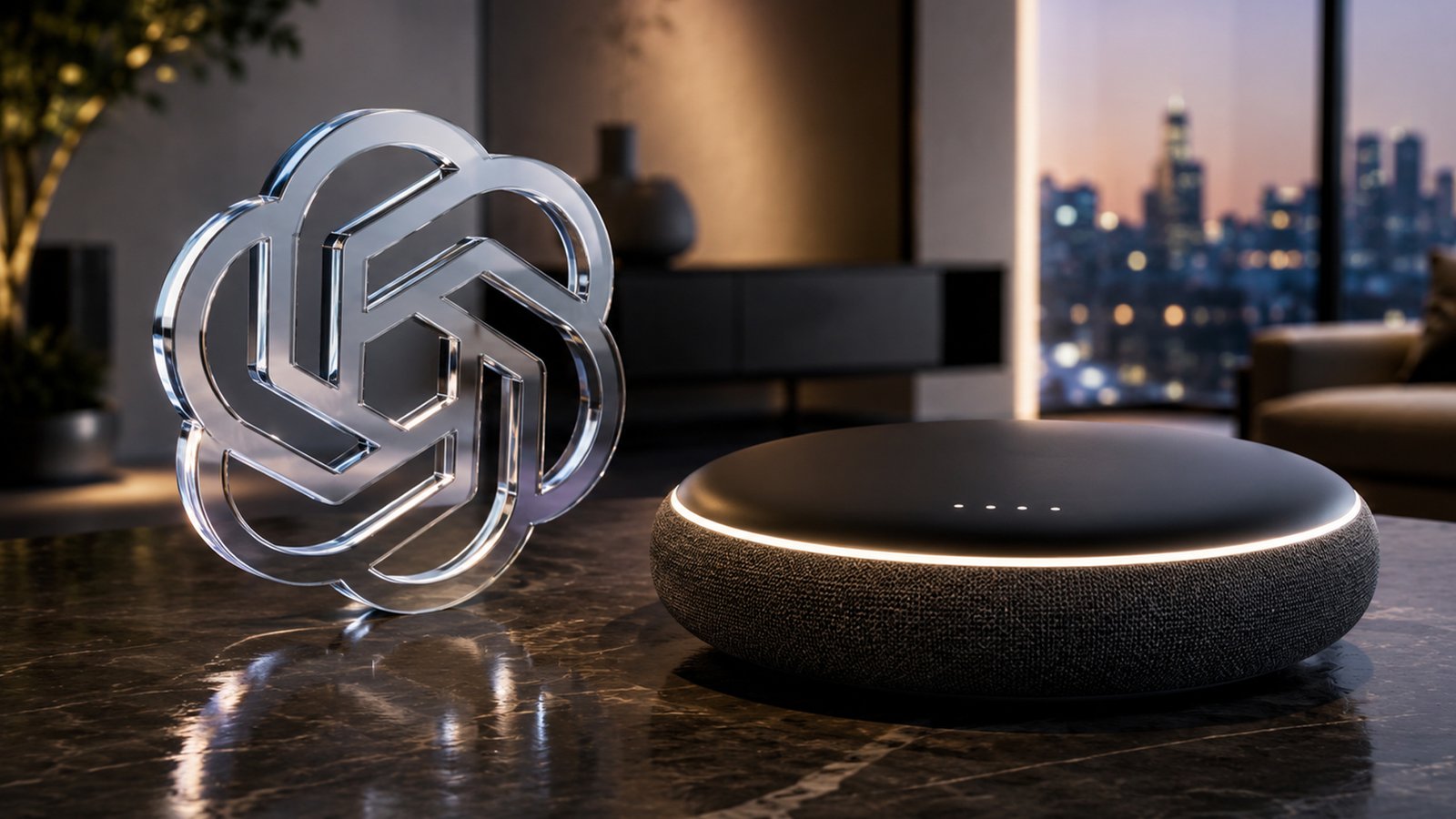
OpenAI is reportedly preparing to enter the consumer hardware market with a new artificial intelligence device that could bring ChatGPT into homes in a more natural, voice-first format. The company is said to be developing a compact, donut-shaped smart speaker that could cost between $300 and $400.
The device has not been officially unveiled by OpenAI, and several details remain based on reports. However, the reported product could arrive in 2027 and become the company’s first major consumer hardware launch.
Unlike traditional smart speakers, the reported OpenAI device is expected to focus heavily on conversational artificial intelligence. Instead of relying primarily on commands to play music, set alarms or control smart-home devices, users could interact with the speaker through natural conversations with ChatGPT.
The unusual design is among the most talked-about aspects of the reported product. It is said to have a ring or donut-like shape and could be roughly the size of a hockey puck. Reports also suggest that it could be battery-powered, allowing users to move it around their homes.
The device may also include cameras and other sensors. If those features make it into the final product, they could help ChatGPT understand the user’s surroundings and provide responses based on greater contextual information. That would potentially make the product more capable than conventional voice assistants.
The idea appears to be to make artificial intelligence feel less like software and more like an everyday presence. Instead of opening an application or looking at a screen, users could simply speak to the device and ask it to answer questions, organise information, assist with tasks or interact with other connected devices.
The project has attracted additional attention because of OpenAI’s collaboration with renowned designer Jony Ive, the former Apple design chief. Ive and his design company, LoveFrom, have been working with OpenAI on consumer hardware, raising expectations that the company’s first device could take a different approach to traditional technology products.
OpenAI has previously indicated an interest in developing a new kind of computing experience rather than simply copying existing devices. The reported speaker could be part of that effort, combining a distinctive physical design with conversational AI.
The move also comes as voice-based artificial intelligence becomes increasingly important. ChatGPT has traditionally been accessed through websites and smartphone applications, where users type questions or interact through a screen. Improvements in voice AI are now allowing conversations with machines to become faster and more natural.
OpenAI has been developing its realtime voice technology as part of this shift. Its newer voice models are designed to support natural conversations, reasoning, translation and transcription. A dedicated AI device could extend those capabilities beyond smartphones and computers.
For OpenAI, its own hardware could provide greater control over the complete user experience. At present, ChatGPT largely operates on devices designed and manufactured by other companies. A dedicated OpenAI product would allow the company to integrate its AI models, software, sensors and hardware more closely.
It could also create a new consumer revenue stream for the company. OpenAI has been spending heavily on computing infrastructure and AI development as demand for ChatGPT expands among consumers, businesses and developers. Hardware could eventually become another way for the company to build a direct relationship with users.
However, a reported price of $300 to $400 would put the product in a very different category from many existing smart speakers. Amazon, Google and other companies already offer voice-enabled devices at considerably lower prices. OpenAI would therefore need to demonstrate that its AI capabilities justify the premium.
Privacy could be another major consideration. If the reported device includes microphones, cameras and other sensors, consumers may have concerns about how information from their homes is collected, processed and stored. Strong privacy controls and clear user consent would be essential for widespread adoption.
OpenAI has not officially confirmed the product’s final design, price, specifications or launch date. The reported details could change before the device reaches consumers.