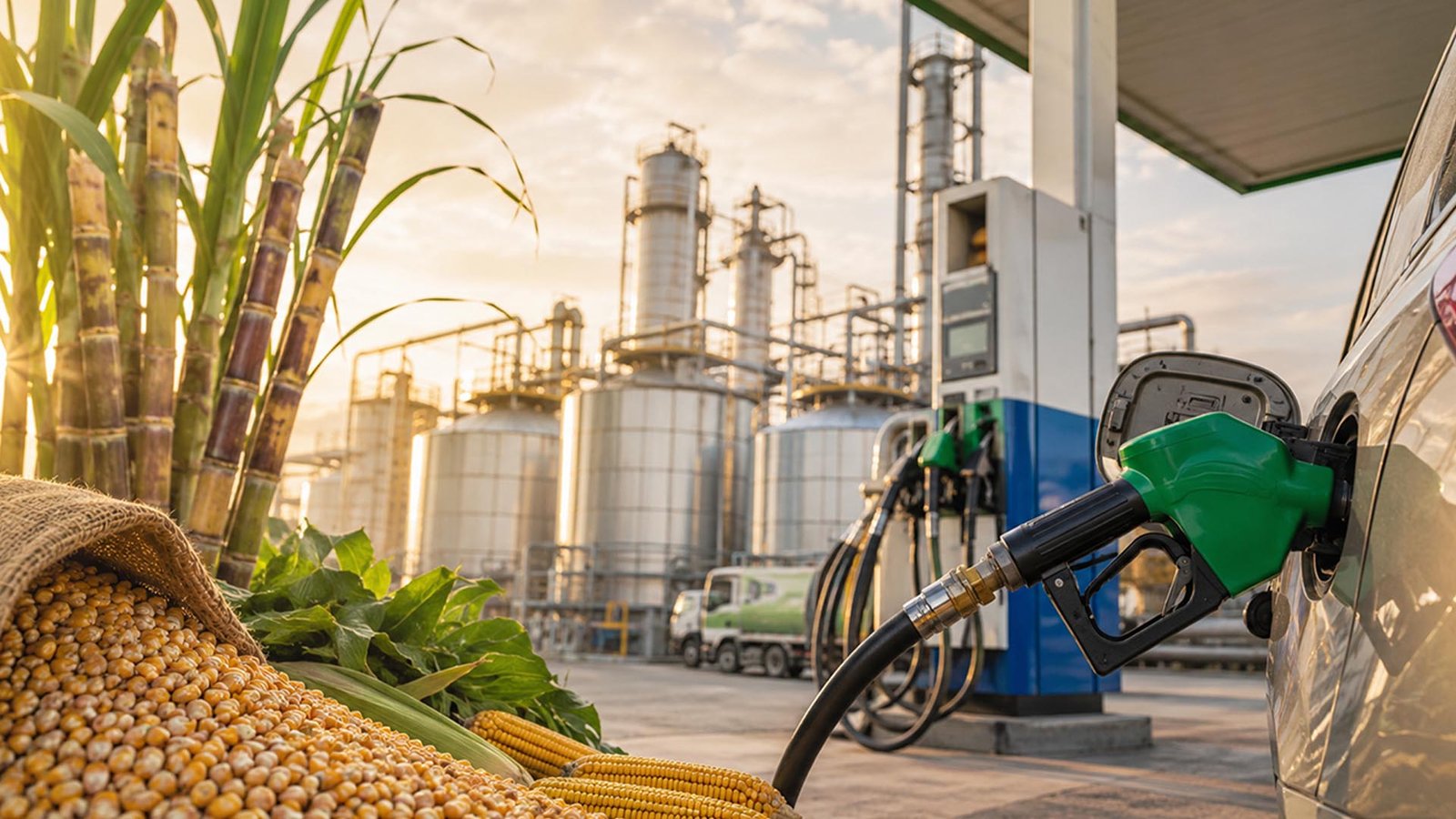
India’s biofuel story has entered a new phase. Ethanol supplies have crossed the 800 crore-litre mark in ESY 2025-26, but the latest industry data suggests that the bigger question is no longer whether India can produce enough ethanol. It is whether the market can absorb the growing volumes.
Data compiled by the All India Distillers’ Association (AIDA) shows that 93 crore litres of ethanol were supplied in July. Of this, 71 crore litres came from grain-based feedstocks, giving grains a 76% share of monthly supplies. Sugarcane-based ethanol accounted for the remaining portion.
The figures underline a major change in India’s ethanol industry. For years, sugarcane and its by-products were central to ethanol production. The industry is now increasingly relying on maize, surplus FCI grains and other grain-based raw materials. This has created a broader and more flexible feedstock base for the country’s ethanol blending programme.
Maize has been particularly important. AIDA-linked data shows that maize and surplus FCI grains each contributed around 30 crore litres to July’s grain-based supplies. The growing role of maize reflects its importance not only as an agricultural commodity but also as an industrial raw material for biofuel production.
The shift is happening alongside significant changes in the sugar market. India has been facing concerns over sugar output and availability, particularly because of rainfall-related issues in major sugar-producing states. At the same time, sugar prices have remained firm. This has prompted discussions about whether less sugarcane should be diverted towards ethanol in the next supply year.
If such changes are implemented, grain-based ethanol could become even more important. The government wants to maintain the country’s 20% ethanol blending target, and greater use of maize and rice could help maintain supplies without putting additional pressure on sugar availability.
The current numbers show how rapidly this transition is taking place. In June, grain-based ethanol accounted for approximately 75% of monthly supplies, with 75 crore litres supplied from grains out of a total 103 crore litres. In July, grain-based supplies stood at 71 crore litres out of 93 crore litres, lifting their share to 76%.
The change is not merely about production technology. It is also reshaping the relationship between the agriculture and energy sectors. Higher demand for maize can provide farmers with an additional market, while distilleries get access to a feedstock that is not directly tied to sugar production.
India’s ethanol programme has also expanded dramatically over the past few years. Earlier AIDA figures showed cumulative supplies at 717 crore litres by June, compared with contracted volumes of 1,048 crore litres. At that stage, grain-based ethanol already accounted for nearly two-thirds of total supplies.
The crossing of 800 crore litres therefore marks the continuation of a trend rather than an isolated achievement. The country’s ethanol ecosystem is becoming more diversified, with multiple feedstocks contributing to the supply chain.
That diversification can be useful from an energy-security perspective. India’s heavy dependence on imported crude oil exposes the economy to global oil prices and geopolitical disruptions. Replacing part of petrol consumption with domestically produced ethanol can reduce the amount of crude-linked fuel required.
The ethanol blending programme also gives sugar mills and distilleries another revenue stream. Instead of relying entirely on sugar sales, mills can divert eligible feedstocks towards ethanol production and supply the fuel to oil marketing companies.
But the industry’s rapid expansion has created a new challenge. Supply is rising faster than demand in some parts of the market, making the next stage of policy development crucial. The Times of India report points to demand creation as the industry’s emerging concern.
For producers, a strong and predictable procurement market is essential. Ethanol plants require substantial investment, and investors need confidence that capacity will be utilised. If production expands without matching procurement or blending requirements, capacity utilisation could suffer.
The government therefore faces the task of balancing three competing priorities: ensuring enough ethanol for the E20 programme, protecting food and sugar availability, and keeping ethanol producers financially viable.
The growing role of grain-based ethanol could help address some of these concerns. It reduces reliance on sugarcane and gives the industry access to a wider range of raw materials. At the same time, it increases the importance of managing maize supplies carefully because the crop is also important for food and animal feed.