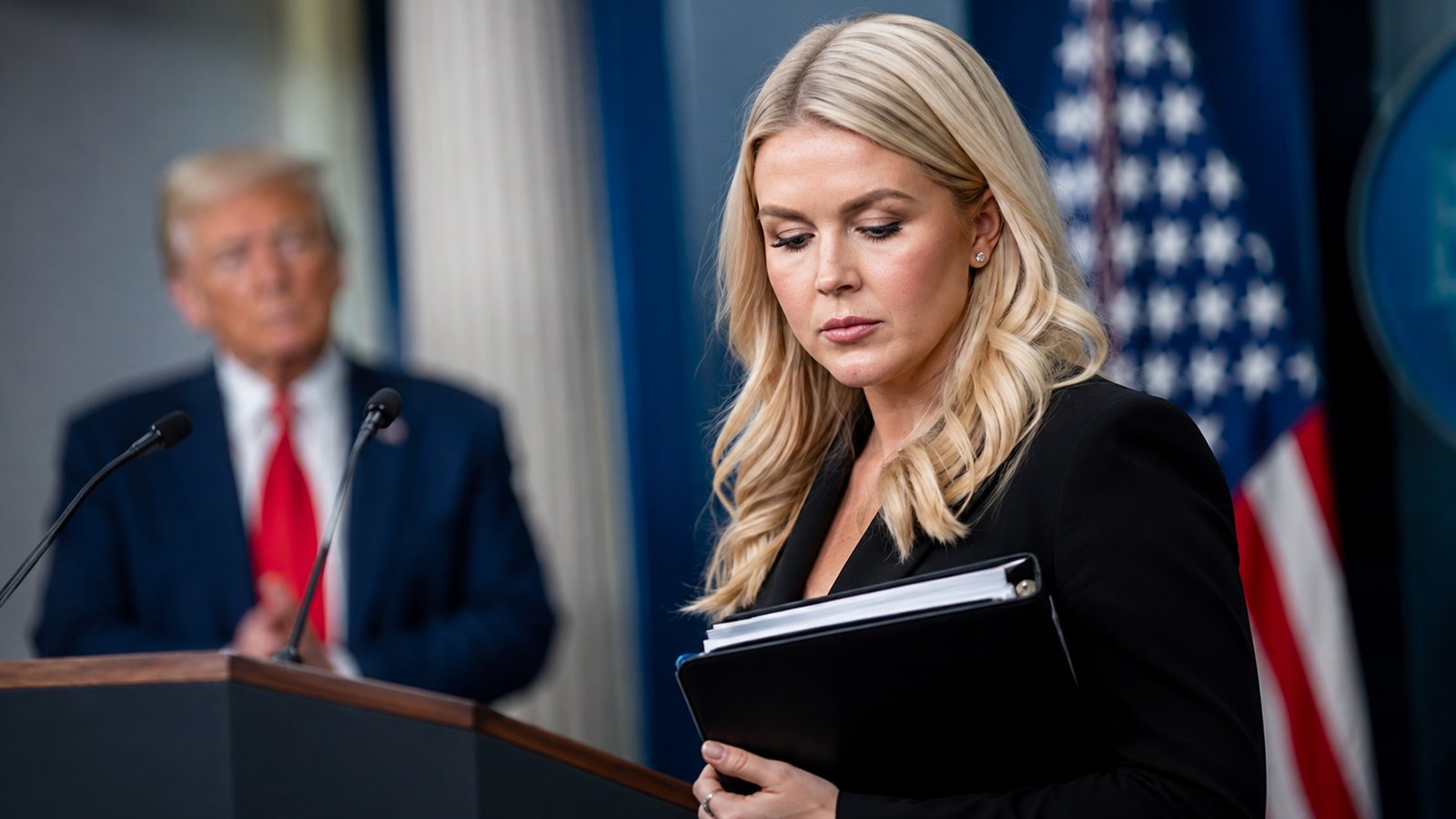
White House Press Secretary Karoline Leavitt will leave her position at the end of August, US President Donald Trump announced on Wednesday, bringing an end to the tenure of one of the most visible and outspoken members of his administration.
Trump said Leavitt was stepping down to spend more time with her young children and family. He praised her performance as press secretary and said he understood her decision.
Leavitt, 28, confirmed her departure in a post on X, describing her time as White House press secretary as a major honour. She said returning to work after the birth of her second child made her realise how difficult it was to balance motherhood with the demanding responsibilities of the position.
Her decision comes only months after she gave birth to her second child. Leavitt had recently returned to the White House following maternity leave and resumed her regular press briefings.
The White House press secretary job requires long hours, frequent media appearances and an almost constant response to political developments. Leavitt said the demands of the position had made it difficult to spend the amount of time with her children that she wanted.
Despite leaving the White House, Leavitt is expected to remain involved in Trump’s political operation. Trump said she would continue working as one of his outside advisers, allowing her to maintain a relationship with the president and remain active in Republican politics.
Her departure is significant for the Trump administration, where she has become a key part of the president’s communications strategy. Trump has repeatedly praised her performance and her ability to defend his policies during sometimes heated exchanges with reporters.
Leavitt became the youngest person to serve as White House press secretary when she took the position in January 2025 at the age of 27. She succeeded Karine Jean-Pierre and quickly became one of the administration’s most recognisable public figures.
Her press briefings often featured sharp exchanges with reporters on immigration, the economy, foreign policy and other controversial issues. She frequently echoed Trump’s arguments and strongly defended the administration’s record.
Her style also reflected changes in how the Trump White House approached the media. The administration gave greater prominence to conservative outlets, digital platforms and newer media organisations alongside traditional news organisations.
Leavitt became particularly popular among Trump’s supporters, who viewed her as an effective defender of the president. At the same time, her confrontational approach drew criticism from Democrats and sections of the US media.
Her role extended beyond the regular White House press briefing. Leavitt was also an important public messenger for the administration on social media and television, helping communicate Trump’s positions on major domestic and international issues.
Trump highlighted her long association with his political movement. Her involvement with Trump dates back to his first administration, and she later worked on his 2024 presidential campaign.
Before becoming press secretary, Leavitt worked as an assistant press secretary during Trump’s first presidency. She later served as communications director for Republican Congresswoman Elise Stefanik and ran unsuccessfully for Congress in New Hampshire.
Her rise to the White House press secretary position was closely linked to her work with Trump during the 2024 presidential campaign. After Trump returned to office in January 2025, he selected Leavitt to become the public face of his administration’s communications operation.
Her relatively young age made her appointment notable, but her close relationship with Trump helped establish her position within the administration.
The timing of her departure is also significant. The Trump White House is entering a politically important period ahead of the 2026 midterm elections, when control of Congress will again be contested.
The next press secretary will inherit the responsibility of communicating the administration’s policies during a period likely to involve intense political scrutiny. The position requires the ability to handle daily briefings, respond to breaking news and defend the president’s decisions under pressure.
The administration has yet to announce who will replace Leavitt. Her successor will also inherit a communications operation that has increasingly relied on direct engagement with supporters and alternative media platforms.
Leavitt’s decision highlights the personal demands of one of Washington’s most high-pressure political jobs. The press secretary is expected to remain available for major developments, manage difficult questions and represent the president publicly on a daily basis.