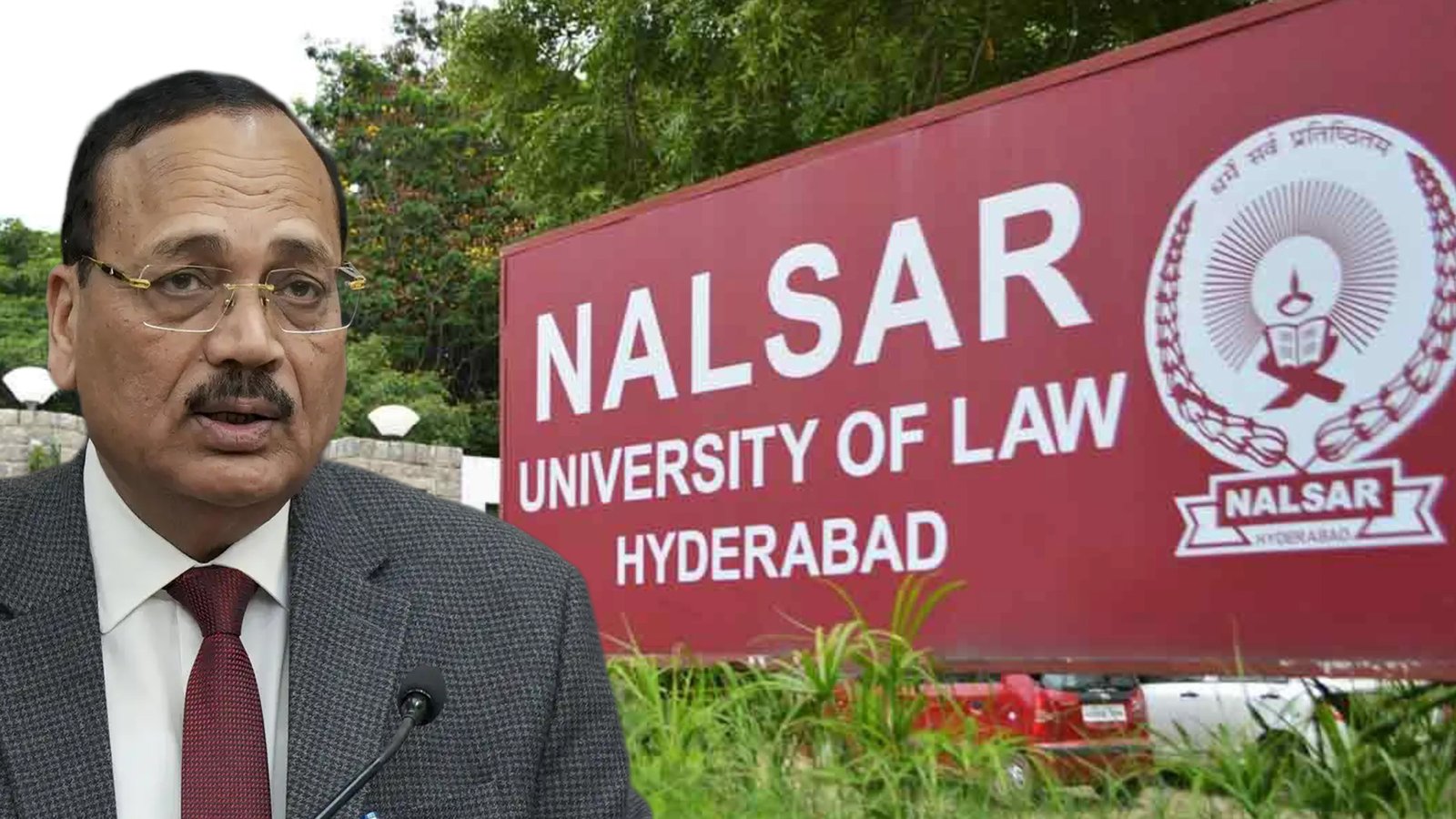
The Bar Council of India (BCI) has closed its proceedings against the 2026 graduating batch of NALSAR University of Law, Hyderabad, after its action against the students triggered widespread criticism and drew a sharp response from the Supreme Court. The controversy began when some NALSAR students opposed the proposed participation of Chief Justice of India Surya Kant as chief guest at the university’s convocation.
BCI chairman Manan Kumar Mishra said on Thursday that the decision to close the proceedings followed representations and reactions from senior advocates, members of the Bar, law students and members of the public. He also acknowledged that the earlier order had been issued in haste.
The BCI had initially taken strong action against the entire 2026 graduating batch. It directed State Bar Councils not to enrol the graduates as advocates and sought a report from NALSAR on the students who had allegedly organised or mobilised the campaign opposing the CJI’s participation in the convocation.
The order was withdrawn within hours, allowing the graduates to proceed with their enrolment. However, the BCI initially retained its demand for an inquiry into those allegedly involved in the campaign. The latest decision goes further, with Mishra saying that the proceedings against the batch have now been closed altogether.
The BCI’s original action had generated concern because the enrolment restriction applied to the entire graduating batch, rather than only to students who may have been involved in the protest. Enrolment with a State Bar Council is an essential step for law graduates seeking to begin legal practice, making the order potentially consequential for students who had no role in the campaign.
The controversy escalated further on Friday when the Supreme Court heard a challenge to the BCI’s action. A bench headed by CJI Surya Kant questioned the Bar Council’s intervention and strongly defended the students’ right to protest.
During the hearing, the CJI questioned why the BCI had entered an issue concerning the students and the Chief Justice. The court indicated that students are entitled to express their views and participate in peaceful protest. The Supreme Court also questioned the basis on which the BCI had sought to take action against the students.
The court issued notice to the BCI and sought its response. It also made clear that students and faculty members of NALSAR and other national law universities should not face punitive action in connection with the controversy while the matter is being considered.
The Supreme Court’s intervention came as the BCI’s handling of the issue itself became a subject of debate within the legal community. Questions were raised over whether the professional regulator had exceeded its role by intervening in a university matter involving student expression and a proposed convocation invitation. The dispute also reflects wider national developments in India around student rights, institutional autonomy and the role of professional and judicial bodies.
NALSAR had also questioned the legal basis of the proposed inquiry. The university’s Vice-Chancellor, Professor Srikrishna Deva Rao, said the BCI’s request would be placed before the university’s Executive Council for consideration. The Executive Council was expected to examine whether the university could legally and constitutionally conduct an inquiry into the students’ campaign at the request of the BCI.
The issue of institutional autonomy became important because NALSAR, a national law university, has its own statutory framework and governing bodies. The university therefore did not immediately accept the BCI’s demand for an inquiry and instead decided to consider the matter through its established institutional process.
The dispute traces back to opposition from a section of students to the invitation extended to CJI Surya Kant for the university’s convocation. Students had expressed their disagreement through a campaign and representation, raising concerns about issues involving the judiciary and protesters. Their campaign subsequently came under scrutiny from the BCI.
The Bar Council initially treated the campaign as a matter serious enough to warrant regulatory intervention. Mishra’s first order directed that the 2026 NALSAR graduates should not be enrolled as advocates until the matter was examined. The decision was met with immediate backlash, with critics questioning the proportionality of penalising an entire graduating class over the actions or views of some students.
The BCI then softened its position, restoring the students’ right to enrolment but retaining the proposed inquiry. Mishra has now made a second reversal by deciding to close the proceedings completely.
The BCI chairman said the decision was taken after considering the responses received from different sections of the legal community. The change in position effectively removes the immediate professional consequences for the NALSAR 2026 batch.