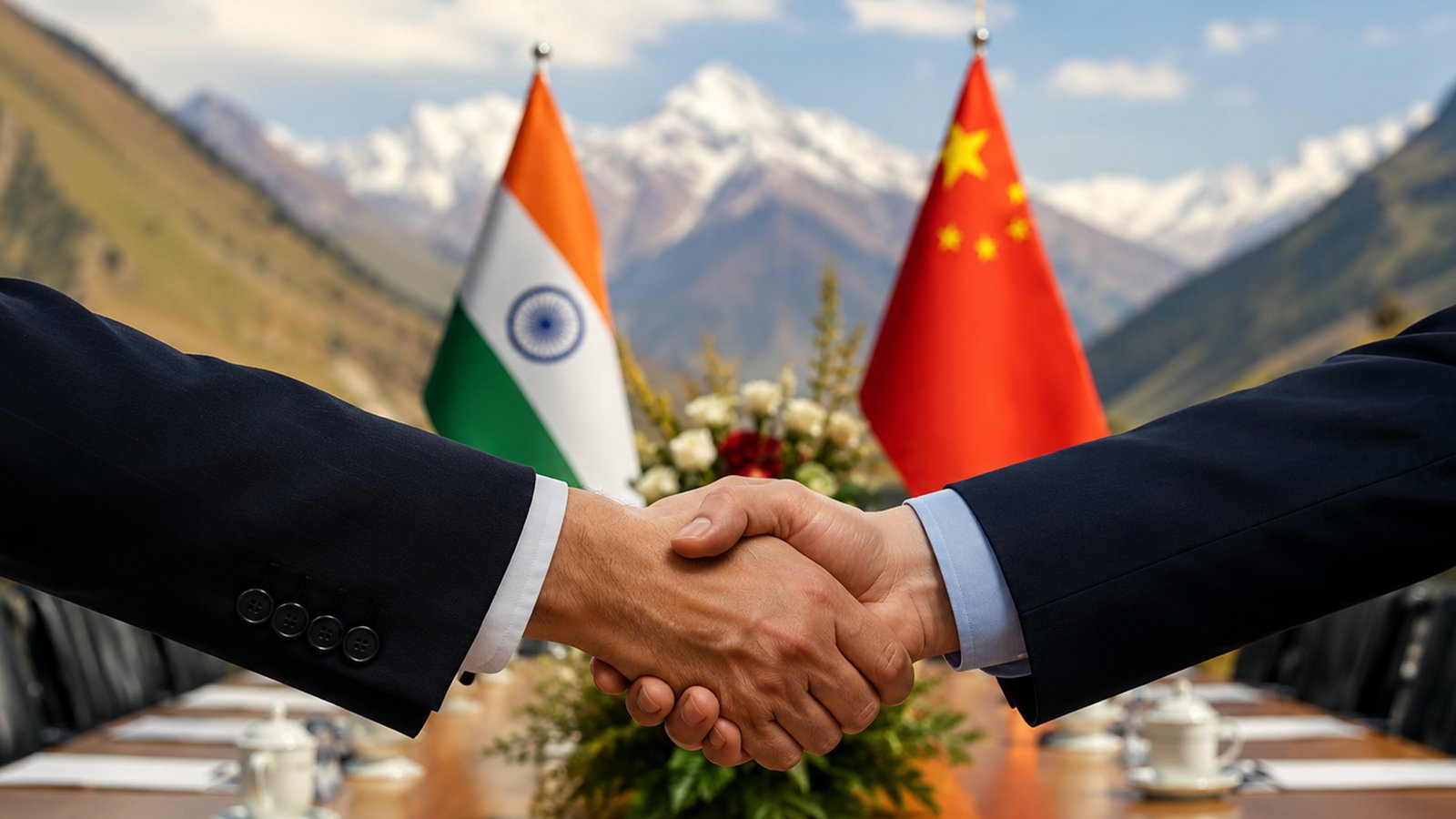
India and China have agreed to intensify efforts to address their long-running boundary dispute, while expanding military communication channels along the Line of Actual Control (LAC) to reduce the risk of misunderstandings and fresh confrontations.
The decisions followed the 25th round of talks between India’s National Security Adviser Ajit Doval and Chinese Foreign Minister Wang Yi in Beijing on August 25. The meeting produced an eight-point understanding covering boundary negotiations, border management, military communication, cross-border trade, pilgrimage and cooperation on trans-border rivers.
At the centre of the latest agreement is a decision to push discussions towards an “early and substantial harvest” on boundary delimitation and border management. While this does not represent a final settlement of the India-China border dispute, it indicates that both sides want to move beyond managing tensions and make progress on the broader boundary question.
The two countries will work towards developing a framework for settling the boundary issue, based on the 2005 Agreement on Political Parameters and Guiding Principles and understandings reached during earlier rounds of Special Representatives’ talks. The stated objective remains a fair, reasonable and mutually acceptable solution.
To take the process forward, India and China have agreed to establish an Expert Group on Boundary Delimitation and a Working Group on Border Management under the existing Working Mechanism for Consultation and Coordination, or WMCC. The two groups will first work out their respective terms of reference before beginning substantive work.
The move is important because the India-China boundary dispute involves several unresolved sections of the frontier and has remained a major source of tension in bilateral relations. The LAC itself is not a mutually demarcated international boundary, making military communication and ground-level mechanisms particularly important.
The latest agreement therefore places considerable emphasis on preventing incidents along the LAC. India and China will establish two additional military hotlines, covering the eastern and middle sectors of the border. The two sides will also create two additional meeting points for General-Level Mechanism and Senior Highest Military Commander-level meetings.
These arrangements are intended to provide commanders with faster and more direct ways to communicate when tensions arise. Regular military contact can help clarify troop movements, resolve local disputes and prevent a minor incident from developing into a larger confrontation.
Both countries have also agreed to use existing diplomatic and military mechanisms to deal with situations along the LAC. The WMCC, commander-level meetings and other mutually agreed channels will continue to be used to address pending issues and avoid miscalculation.
The emphasis on communication reflects the lessons of the military tensions that followed the deadly Galwan Valley clash in 2020. The confrontation triggered a prolonged military standoff in eastern Ladakh and sharply affected India-China relations.
Since then, both countries have gradually worked to stabilise the situation. The October 2024 disengagement understanding at key friction points in eastern Ladakh created space for renewed diplomatic engagement. The Special Representatives’ mechanism subsequently resumed, providing a higher-level platform for discussing the wider boundary question.
The latest talks suggest that both governments now want to combine military stability with a longer-term diplomatic effort. However, the distinction between border management and boundary settlement remains important. Improving communication along the LAC can reduce the chances of conflict, but it does not by itself resolve competing territorial claims. Experts have described the process of boundary delimitation as complicated and likely to require sustained negotiations.
The discussions also covered areas of cooperation beyond the border dispute. India welcomed steps by China to facilitate more batches of Indian pilgrims travelling to Mount Kailash and Lake Manasarovar. The two sides also welcomed the reopening of three border trading markets and agreed to strengthen cooperation in areas including border trade and pilgrimage.
Trans-border river cooperation was another part of the eight-point understanding. India and China have agreed to hold the next meeting of their Expert-Level Mechanism on cross-border rivers in September.
The meeting is expected to address issues including hydrological information sharing and the renewal of relevant memorandums of understanding. Cooperation on trans-border rivers is important for India, particularly because rivers originating in the Tibetan plateau flow into the country and have implications for water management, flood preparedness and downstream communities.
The two countries have also agreed to continue high-level engagement. The 26th round of Special Representatives’ talks will be held in India in 2027, keeping the boundary issue within the formal diplomatic process.
The latest developments come amid a cautious improvement in India-China relations. After several years of strained ties, the two sides have gradually reopened diplomatic and practical channels while remaining firm on their respective positions on the boundary.
The new hotlines and meeting points are therefore aimed at strengthening the immediate management of the disputed frontier, while the new expert and working groups are expected to address longer-term questions concerning boundary delimitation and border management.
The latest agreement should not be viewed as an immediate breakthrough in the decades-old India-China border dispute. Instead, it represents a step towards creating more predictable communication and a structured negotiating process.