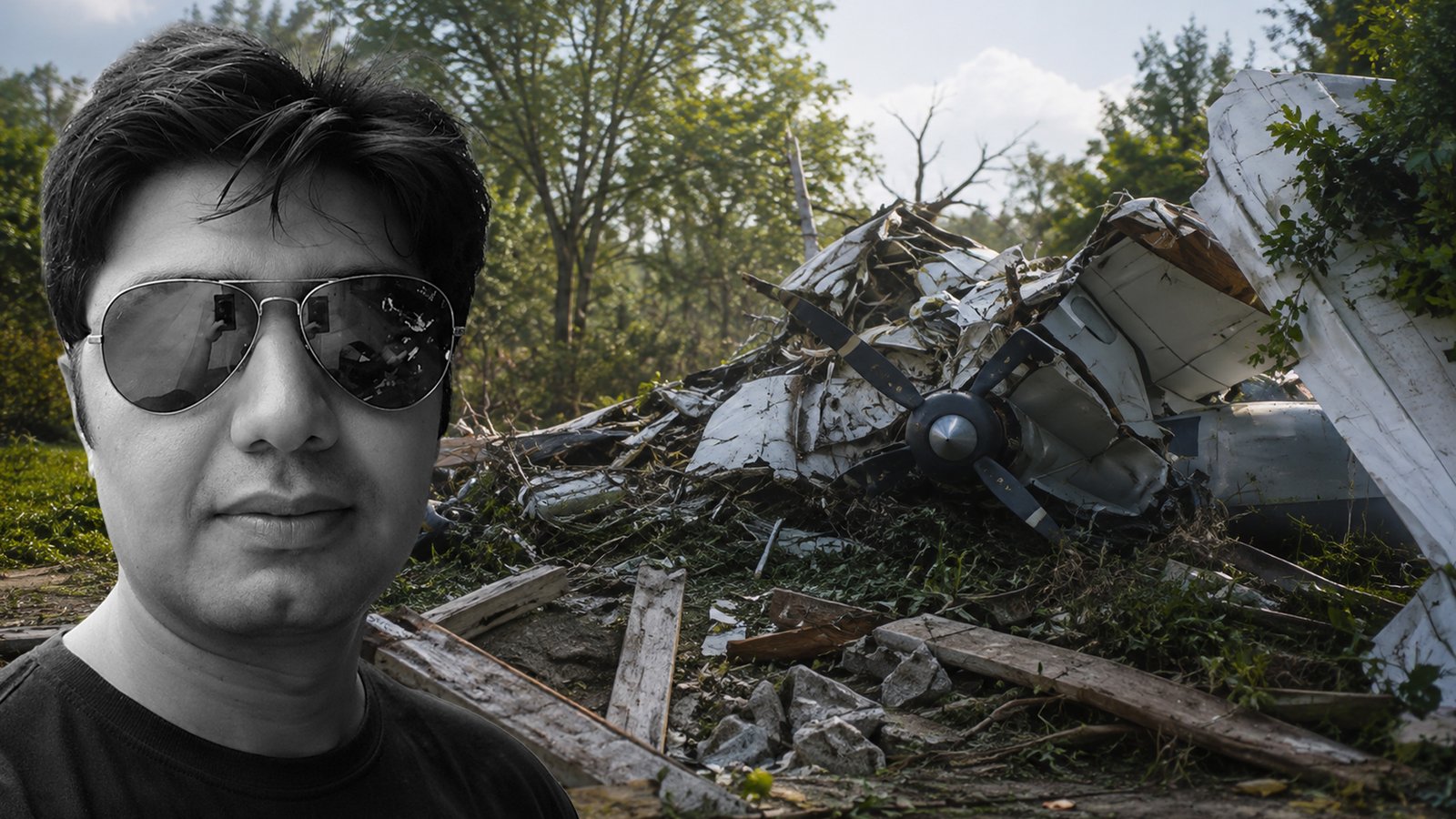
A training aircraft crashed near the Ganga Barrage in Kanpur, Uttar Pradesh, killing both pilots on board and triggering an investigation into the cause of the accident. The aircraft came down in a field near Nathupurwa village in the Katri area on Thursday, August 27, during a training sortie.
The aircraft, a twin-engine Tecnam P2006T operated by Garg Aviation, had taken off from Kanpur Civil Airport at around 11.30 am. It crashed about 20 minutes later, with an instructor and a trainee pilot on board. Both pilots died in the accident.
The crash site, located close to the Ganga Barrage, quickly became the focus of emergency operations. Police personnel, rescue teams and other officials reached the area after receiving information about the incident. The aircraft was severely damaged in the impact, while the surrounding area was secured to preserve evidence for the investigation.
Training flight turns fatal
The deceased were identified as instructor pilot Sachin Bhatia, who was from Gujarat, and trainee pilot Abhishek Pujari, a resident of Karnataka. The deaths have highlighted the risks associated with flight training, where trainee pilots regularly undertake supervised flights as part of their preparation for professional aviation careers.
For trainee pilots, training sorties are designed to build practical experience in aircraft handling, navigation, communication and emergency procedures. The presence of an instructor provides additional supervision and allows students to learn how to manage different flying situations. However, an unexpected problem at low altitude can leave pilots with very little time to react.
The aircraft involved in the Kanpur plane crash was a four-seater, twin-engine aircraft used for flight training. Investigators will now examine whether the aircraft was functioning normally before the flight and whether there were any indications of a problem after take-off.
Local residents rushed towards the area after hearing about the accident. Emergency personnel subsequently secured the site and worked to manage the situation. The presence of wreckage in the field meant that authorities had to preserve the area carefully so that investigators could examine the aircraft and other available evidence.
Cause of Kanpur crash under probe
The exact cause of the accident has not yet been established. Officials have not confirmed whether the crash was caused by a technical malfunction, pilot-related factors, weather conditions or another issue.
The Aircraft Accident Investigation Bureau, or AAIB, has been tasked with investigating the crash. The Directorate General of Civil Aviation, or DGCA, is also expected to be involved in assessing the circumstances surrounding the accident.
The investigation will examine several aspects of the flight, including the aircraft’s maintenance history, technical condition, operational records and flight path. Investigators may also study communications between the aircraft and ground personnel to determine whether either pilot reported an emergency or unusual aircraft behaviour.
Weather conditions at the time of the flight will also be assessed. Although there is no confirmed indication that weather played a role, investigators generally consider environmental conditions when examining an aviation accident.
The condition of the aircraft’s engines and other critical systems will be particularly important. Investigators may analyse the wreckage to determine whether there was evidence of a mechanical failure before impact. Maintenance records could also help establish whether required inspections and servicing had been carried out.
Focus on flight training safety
The Kanpur crash has also renewed attention on safety standards at flight-training organisations. India’s aviation industry is expanding, increasing the demand for trained pilots and creating a larger role for flying schools and training operators.
Flight-training safety depends on several factors, including aircraft maintenance, instructor supervision, pilot preparedness, operational procedures and emergency planning. Regular inspections and adherence to aviation regulations are important to ensure that training aircraft remain fit for operation.
The investigation into the Kanpur accident could therefore have implications beyond the specific aircraft involved. If investigators identify a technical, procedural or operational issue, their findings could help aviation authorities and training organisations strengthen safety measures.
The crash also comes at a time when India is seeing growing interest in professional pilot training. With airlines expanding their fleets and passenger traffic increasing, more young people are seeking commercial pilot training. Flying schools are consequently under greater pressure to maintain high standards while providing students with sufficient practical flying experience.
The AAIB investigation is now expected to establish the sequence of events and determine the factors that contributed to the accident. Investigators will study the wreckage, aircraft records and other evidence before reaching conclusions.
Until then, officials have urged caution against speculation. The cause of the Kanpur plane crash will only become clear once the technical and operational investigation is completed.