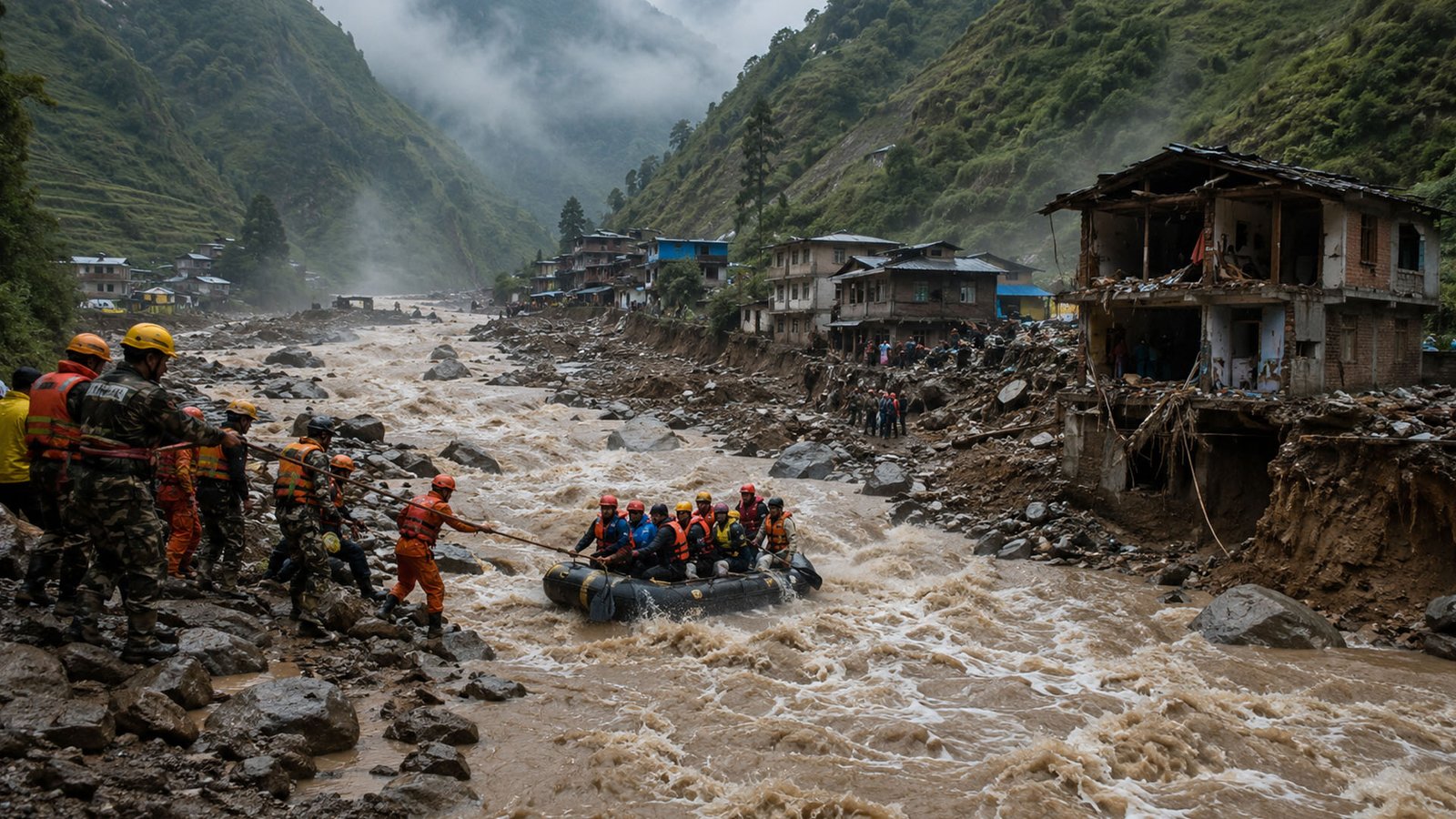
Nepal is facing one of its worst natural disasters in recent years after devastating flash floods swept through the Himalayan region, killing at least 626 people and leaving nearly 3,000 missing. Rescue teams are battling difficult terrain, damaged roads and worsening weather as they search for survivors and recover bodies.
The disaster began on August 26 after a massive collapse of ice, rock and debris in the Himalayan region triggered torrents of water through river systems along the Nepal-China border. The floodwaters raced through valleys and settlements, carrying mud, boulders and debris and destroying homes, roads, bridges and other infrastructure.
Nepal has reported the majority of deaths, while seven people have been confirmed dead on the Tibetan side of the border. The latest figures remain fluid as rescue teams reach areas that were cut off by the floods. Authorities have also warned that the number of missing could change as communication links are restored and more people are accounted for.
The scale of the missing-person crisis has added to the anguish of families across Nepal and neighbouring countries. Thousands remain unaccounted for, with foreign nationals, including Indian pilgrims, among those missing. Nepalese authorities have been working with security forces and local communities to trace people stranded in remote areas and bring survivors to safety.
The tragedy has also affected the Kailash Mansarovar pilgrimage route, which passes through the Nepal-Tibet border region. A group linked to the Isha Foundation, founded by spiritual leader Sadhguru Jaggi Vasudev, was caught at the Gyirong immigration centre when the flood struck. Chinese rescuers have now reached the badly damaged border facility, which was reportedly left in ruins.
The fate of several people from the group has remained a major concern. Reports have said that dozens of pilgrims and volunteers were unaccounted for after the flood, prompting urgent appeals for search and rescue efforts. The destruction around the Gyirong crossing has made the operation particularly difficult.
Rescuers in Nepal are facing similar challenges. At the Trishuli-1 hydropower project, workers are believed to be trapped inside tunnels filled with mud and debris. Army teams have been working to reach the tunnels, but unstable conditions and the risk of further flooding have slowed the operation.
The disaster has left communities struggling with more than the loss of lives. Roads and bridges have been washed away, communications disrupted and access to remote settlements severely restricted. Thousands of survivors have been moved to safer locations, many leaving behind homes and belongings that were destroyed within minutes.
Hospitals and emergency facilities have also been placed under enormous pressure. Authorities are dealing with a growing number of unidentified bodies and have begun DNA sampling in an effort to establish identities. In some areas, bodies are being buried after samples are collected because of concerns over decomposition and public health.
Poor weather has emerged as another major obstacle. Heavy rain, cloud cover and difficult visibility have restricted helicopter operations and complicated efforts to reach isolated communities. Nepal has temporarily suspended some search-and-rescue activities because of the conditions, while continuing efforts to evacuate survivors and provide essential supplies.
The floods have also raised concerns about the wider threat from glacial lakes and unstable Himalayan terrain. Authorities are monitoring water bodies in the region after fears that further flooding could trigger another disaster. Water levels in some areas have begun to recede, but officials remain cautious because damaged landscapes and blocked river channels could create fresh risks.
India, meanwhile, has stepped up monitoring of glacial lakes and flood risks in its Himalayan states. The possibility of floodwaters affecting downstream areas has prompted authorities in northern India, including Bihar and Uttar Pradesh, to remain alert. The disaster has highlighted how quickly a climate-related event in the mountains can have consequences far beyond its immediate location.
India has also offered support to Nepal as rescue and relief operations continue. The priority remains locating missing people, evacuating those stranded and restoring roads and communication networks needed to deliver assistance.
The economic damage is expected to be enormous. Nepal has estimated that rebuilding damaged infrastructure could cost several billion dollars. Roads, hydropower facilities, bridges, homes and communication systems will require extensive repairs once the immediate rescue operation is over.
At hospitals and relief centres, relatives continue to search lists of missing people and wait for information about loved ones. Rescue workers, meanwhile, are entering damaged areas where the full scale of destruction is only gradually becoming visible.
The Nepal flash floods have therefore become more than a natural disaster. They have exposed the vulnerability of communities living along Himalayan rivers and the growing risks posed by unstable mountain environments.