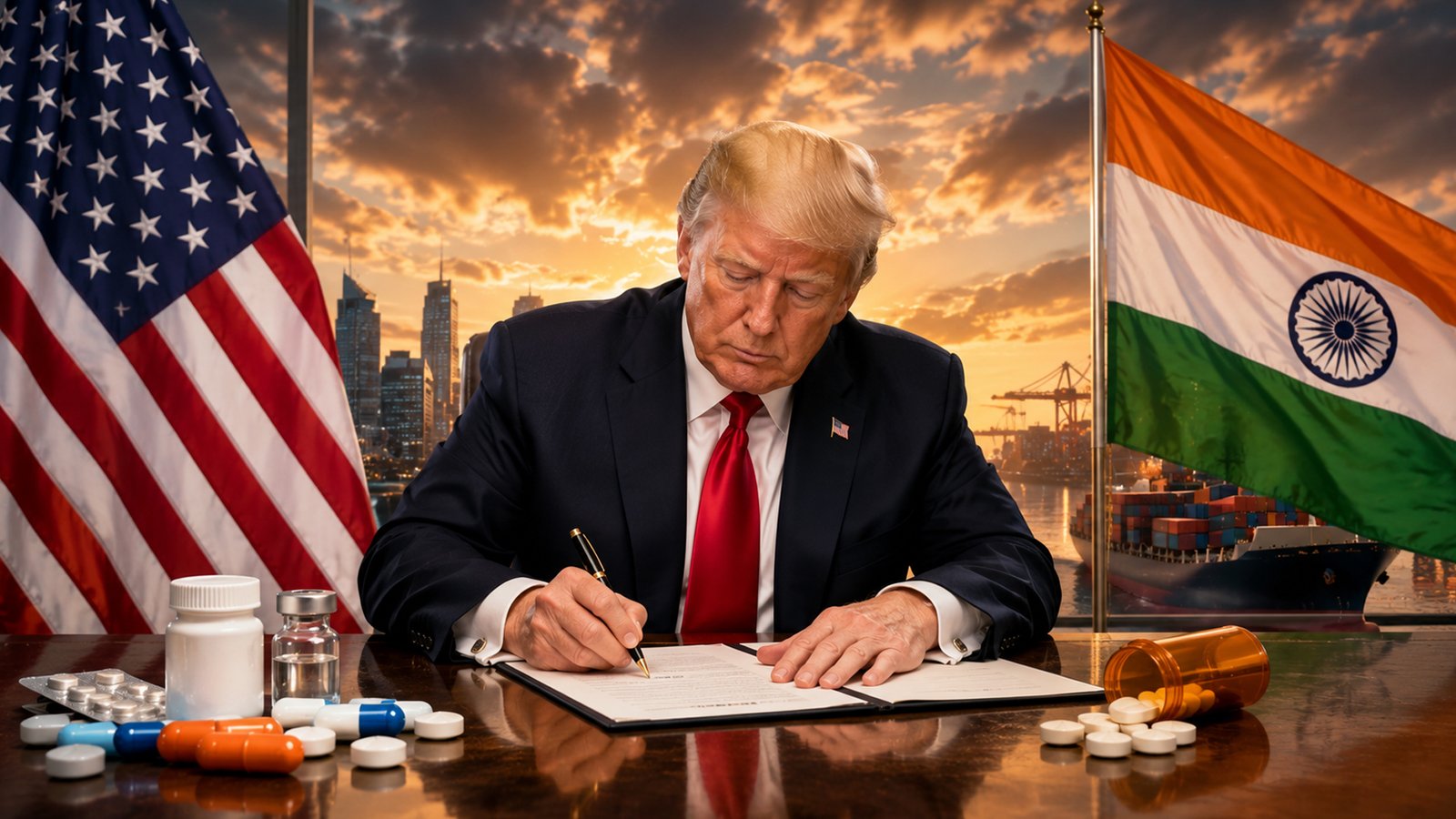
US President Donald Trump has announced agreements with nine more pharmaceutical companies to lower the prices of medicines in the United States, expanding his administration’s push to make prescription drugs more affordable.
The latest companies to sign the deals include India’s Sun Pharmaceutical Industries, along with Alcon, Astellas Pharma, BeOne Medicines, BridgeBio, CSL, Kyowa Kirin, Teva Pharmaceuticals and UCB. The agreements are part of Trump’s Most Favoured Nation (MFN) drug pricing programme, which seeks to bring US medicine prices closer to the lower prices paid in other developed countries.
With these nine companies joining the programme, the Trump administration says a total of 26 pharmaceutical companies have now reached pricing agreements. The White House has claimed that these companies together account for about 90% of the US pharmaceutical market.
The latest agreements focus mainly on medicines supplied through state Medicaid programmes. Under the arrangements, participating drugmakers will offer certain medicines to Medicaid at prices linked to the lowest prices they charge in other developed countries.
The move is part of Trump’s broader effort to bring down what he has repeatedly described as excessively high prescription drug prices in the US. American patients have historically paid significantly more for many branded medicines than patients in other countries, making drug affordability a major political issue.
The administration is using both pricing pressure and trade policy to persuade pharmaceutical companies to participate. Companies that agree to the pricing arrangements can receive relief from some of the tariff measures being considered or imposed on pharmaceutical products.
The agreements , for pharmaceutical companies, offer a way to reduce the risk of higher US tariffs while gaining greater certainty about their operations in the world’s largest pharmaceutical market.
Sun Pharma’s participation is particularly significant for India. The Mumbai-based drugmaker has a large business in the United States, which is one of its most important international markets. The company has a strong presence in areas including dermatology, oncology, ophthalmology and specialty medicines.
Under its agreement with the US government, Sun Pharma will provide MFN pricing to state Medicaid programmes and apply similar pricing principles to certain future innovative medicines launched in the US. The company has also agreed to contribute antibiotics to the US medical reserve.
The agreement also gives Sun Pharma relief from a potential US tariff on innovative pharmaceutical products for more than two years, according to details released after the announcement.
The tariff issue has been an important part of the negotiations. Trump has been seeking greater pharmaceutical manufacturing in the US and has warned drug companies that imports could face steep duties unless companies take steps to reduce prices and increase domestic investment.
The latest group of companies is different from the biggest pharmaceutical firms that previously signed agreements with the administration. Many of the latest participants are mid-sized pharmaceutical companies and biotechnology firms.
Earlier agreements involved major drugmakers such as Pfizer, Eli Lilly, Novo Nordisk and several other global pharmaceutical companies. The administration has been gradually expanding the MFN programme to cover a larger share of the US drug market.
The White House says the new agreements could significantly reduce the cost of medicines for American patients and taxpayers. The latest deals cover medicines used to treat a wide range of serious conditions, including cancer, haemophilia, liver disease and dermatological disorders.
The participating companies have also committed to increased investment in US manufacturing. According to the White House, the nine companies together have pledged at least $19.6 billion in US investments. The administration sees this as an important part of its effort to bring more pharmaceutical production and supply chains into the country.
For Americans, however, the key question is how much these agreements will actually reduce what they pay for medicines. A lower price negotiated for Medicaid does not automatically mean every patient will see the same reduction at the pharmacy counter.
Medicaid is a government health programme for eligible low-income Americans, and the agreements primarily target prices paid through state Medicaid programmes. The impact on privately insured patients and people paying directly for medicines will depend on individual drugs, insurance arrangements and future pricing decisions.
The programme has also attracted criticism from some healthcare policy groups. Critics argue that the administration has not provided enough detail to independently assess the overall savings and question how much of the claimed reduction will reach ordinary consumers.
The Trump administration, however, has presented the agreements as evidence that its pressure on the pharmaceutical industry is producing results.
The deals also come as the US pharmaceutical industry faces a changing regulatory and commercial environment. Drugmakers are dealing with pressure over medicine prices, possible tariffs, government negotiations and growing demands for greater domestic manufacturing.
For Indian pharmaceutical companies, the developments are particularly important because the US is a major export market. Any changes in US drug pricing or tariff policy can have a direct impact on companies that manufacture medicines in India and sell them in the American market.
Sun Pharma’s agreement therefore carries significance beyond the company itself. It shows how Indian drugmakers are navigating the Trump administration’s efforts to reshape the US pharmaceutical market.
The latest agreements strengthen Trump’s MFN pricing campaign and increase the pressure on remaining companies to participate. The administration has indicated that it wants the programme to cover virtually the entire US pharmaceutical market.
The focus will be on whether the agreements translate into meaningful savings for patients and government programmes. For drugmakers, the challenge will be to balance lower US prices with the cost of research, manufacturing and maintaining their global businesses.
The latest deals show that the debate over US drug prices, pharmaceutical tariffs, Medicaid costs and global medicine pricing is far from over. But with 26 companies now part of the programme, Trump’s push to make drugmakers accept lower US prices has clearly entered a much broader phase.