
The fever has gone. The blocked nose has cleared. Energy is returning. Yet every few minutes – often just as you start speaking, step into cool air or lie down at night – the cough returns. It can feel as if the infection must still be sitting somewhere in the chest.
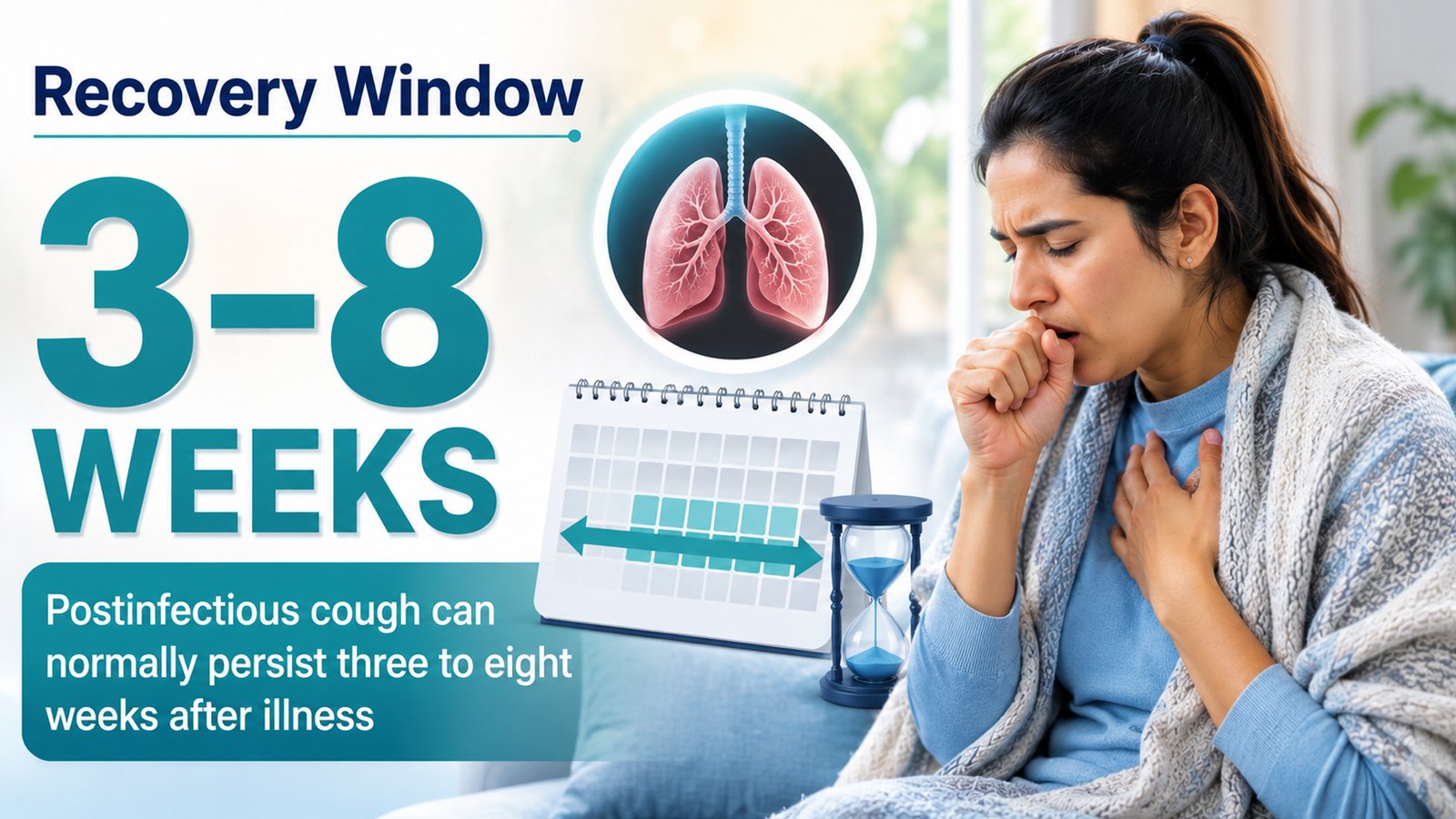
Often, it is not. A lingering cough after a respiratory infection is so common that it has its own name: postinfectious cough. It affects roughly 11% to 25% of adults after a respiratory infection and is usually classed as a subacute cough lasting three to eight weeks.
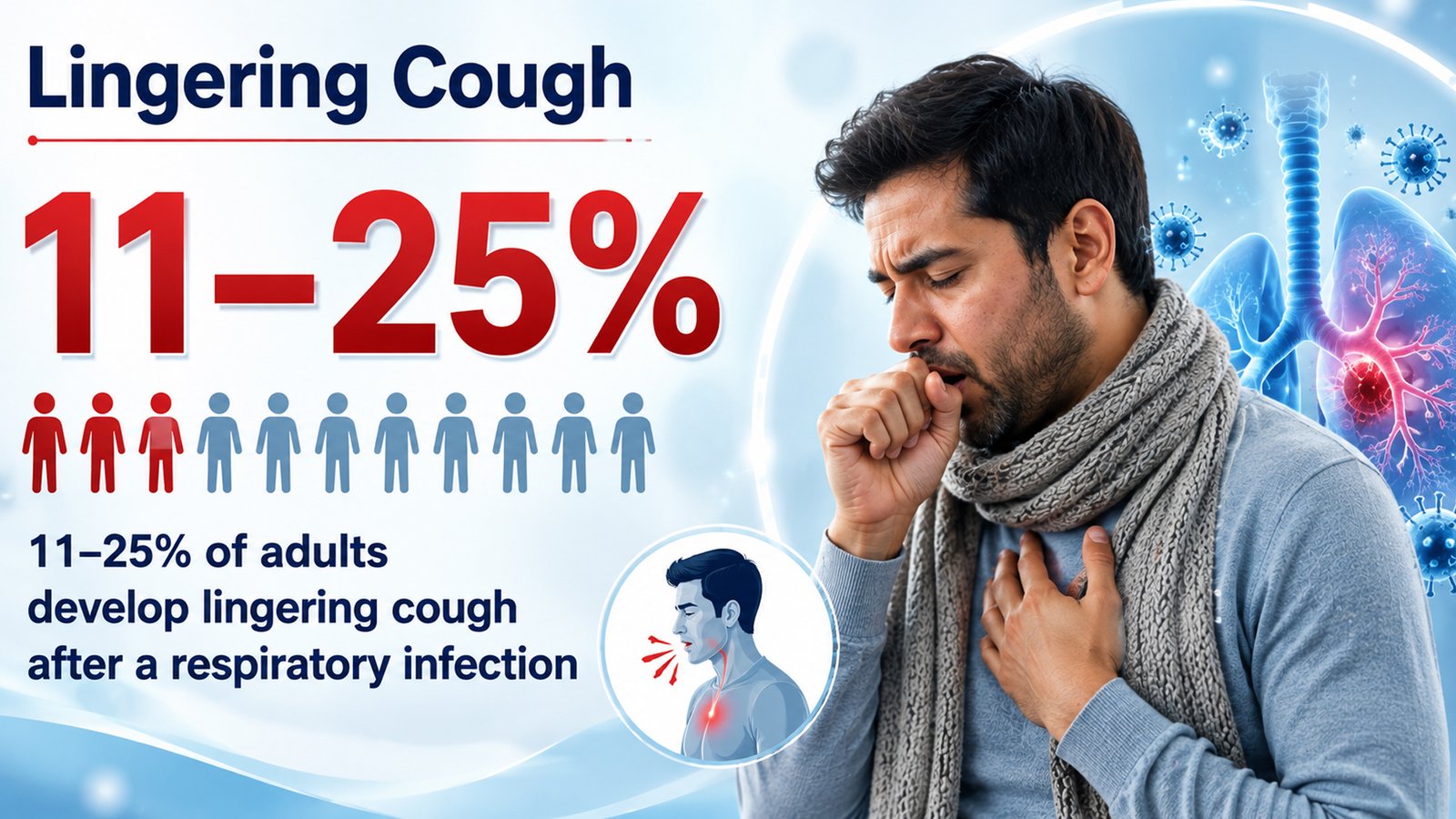
The important idea is that the germ and the cough do not always share the same timetable. The infection may have settled while the airway lining, mucus-clearance system and sensory nerves that trigger coughing are still recovering. The cough is real, sometimes exhausting – but persistence by itself does not prove that antibiotics are needed or that the infection is still active.
The infection can end before the cough does
A cough is one of the lungs’ most important defence reflexes. Sensors in the larynx – the voice box – and the breathing tubes detect mucus, particles, chemical irritants and sudden mechanical changes. Signals travel mainly through the vagus nerve to the brainstem, which coordinates the forceful burst of air that clears the airway.
During a viral or other respiratory infection, inflammation makes this system busier. The airway surface may produce more mucus, clear it less efficiently and become temporarily more reactive. Even after the original infection is over, that inflammatory after-effect can leave the bronchi – the larger breathing tubes – unusually sensitive. This is one reason an ordinary breath of cool air or a small amount of mucus can provoke a cough that would not have bothered you before.
Your cough reflex has a sensitivity setting
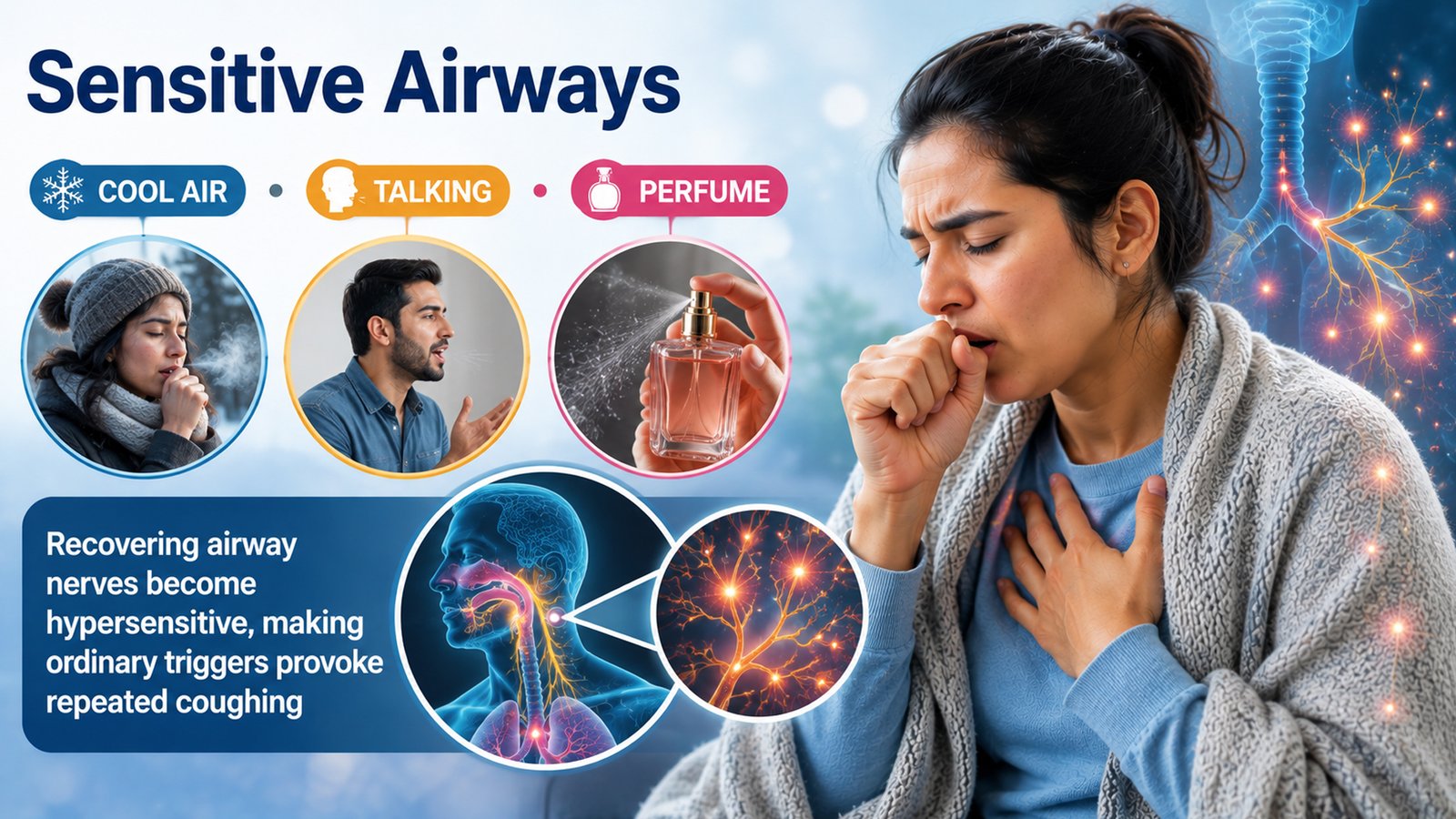
Respiratory specialists increasingly describe troublesome persistent cough through the idea of cough hypersensitivity. In simple terms, the alarm threshold has been lowered. People may cough after talking, laughing, inhaling perfume, traffic smoke, cleaning sprays or cold air. Some describe a tickle, itch or sudden urge to cough in the throat just before an attack.
Think of a smoke alarm after a real kitchen fire. During the fire, extreme sensitivity is useful. Afterwards, however, the alarm may still react to a piece of toast. Postinfectious cough can behave in much the same way: the original danger has passed, but the sensory system has not yet reset. Repeated coughing can also irritate the throat and larynx, helping to keep the cycle going.
A second mechanism is temporary bronchial hyper-responsiveness – airways narrowing or reacting more readily than usual after infection. This may be accompanied by wheeze, chest tightness or cough with exercise and may reveal previously unrecognised asthma. Upper-airway inflammation from rhinitis – inflammation inside the nose – or sinusitis can add another trigger, so more than one mechanism can coexist in the same person.
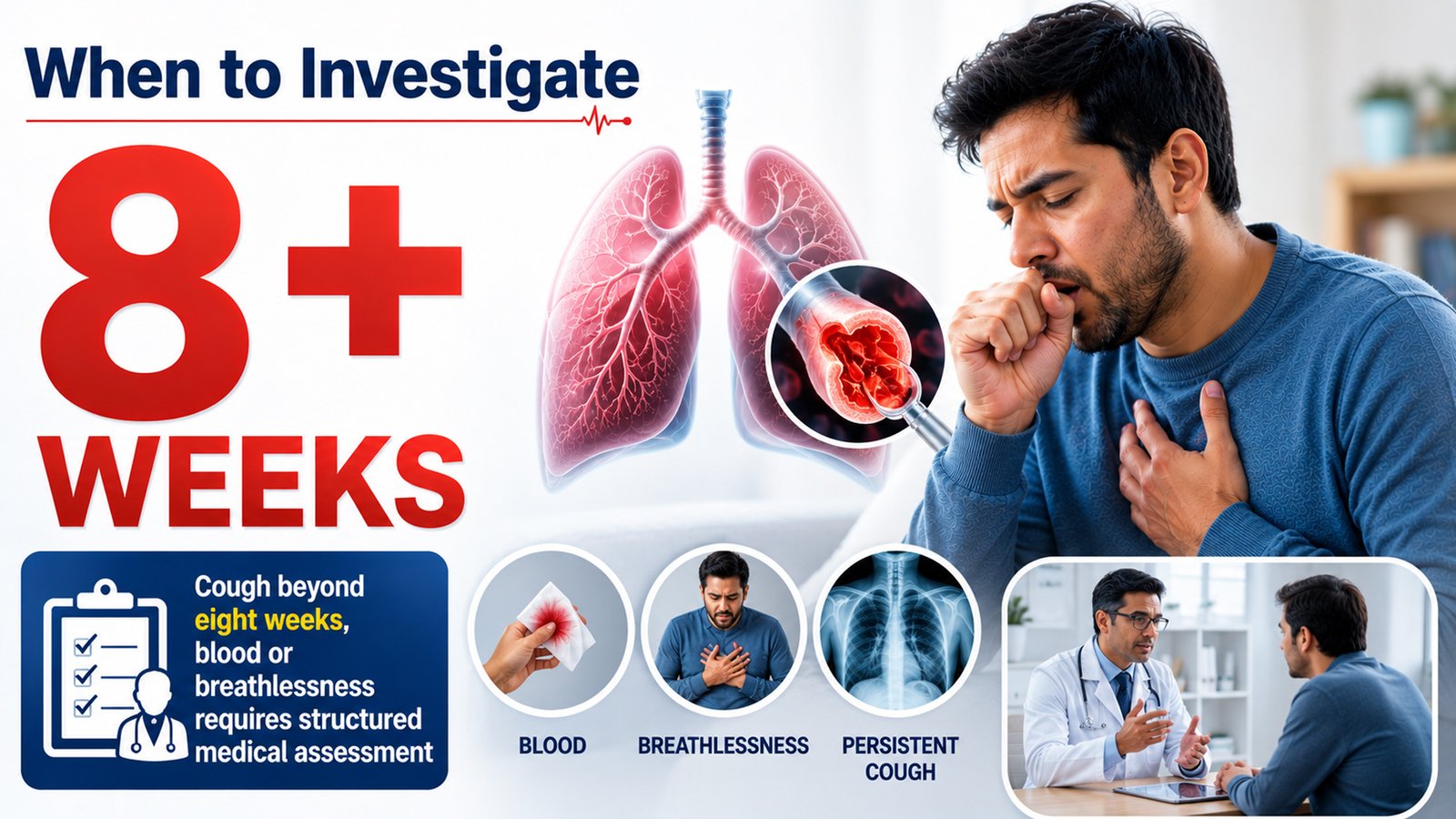
THE NUMBER TO REMEMBER | Three to eight weeks can still fit the recognised postinfectious window. A cough that lasts beyond eight weeks is chronic and deserves a structured assessment rather than indefinite reassurance.
One infection that can break the usual pattern: pertussis
Whooping cough, or pertussis, deserves special attention because it can initially look like an ordinary cold. The later cough comes in violent bursts, sometimes followed by vomiting, exhaustion or a high-pitched “whoop” on breathing in. In adults and vaccinated people, however, the classic whoop may be absent. The US CDC notes that coughing fits can last up to 10 weeks and can recur with later respiratory infections for months.
Timing matters. Antibiotics given early can reduce the severity and spread of pertussis, but once the illness is well established, late antibiotics may not shorten the cough because the bacteria may already have gone even though cough symptoms can continue. A prolonged cough with repeated fits or post-cough vomiting therefore deserves assessment rather than simply another bottle of cough syrup.
In India, two weeks already matters
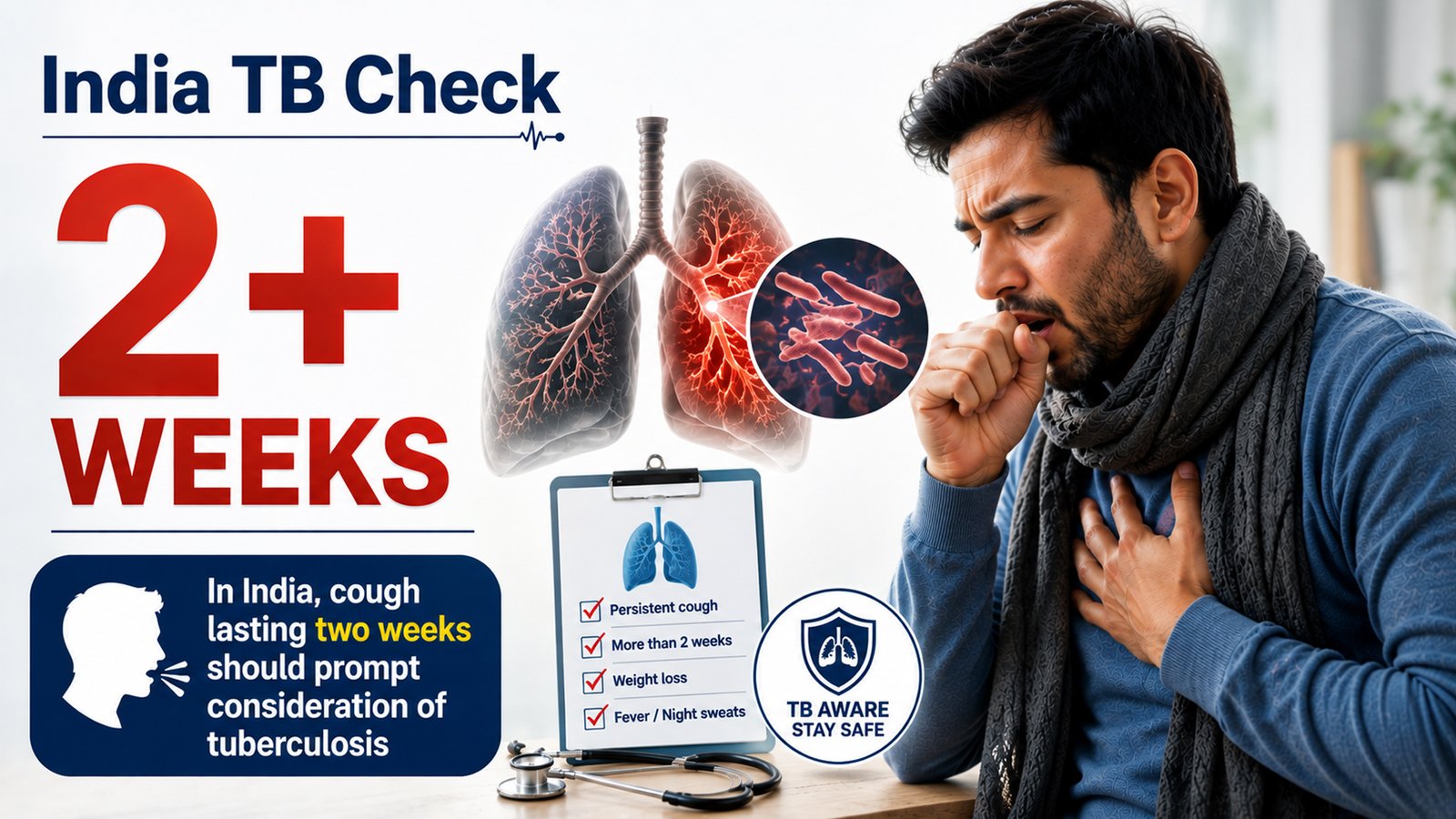
The international definition of chronic cough is useful, but it must not become an excuse to wait eight weeks in every patient. India carries a major tuberculosis burden: the latest WHO data estimate that India accounted for about one quarter of the world’s incident TB cases in 2024.
For that reason, a cough lasting two weeks or more is already a recognised symptom that should prompt consideration of pulmonary tuberculosis under India’s National TB Elimination Programme. Current TB Mukt Bharat guidance similarly includes cough for more than two weeks in symptom screening, with an even lower threshold in vulnerable groups. Fever, night sweats, weight loss, blood in the sputum or a known TB contact increase concern, but their absence does not make persistent cough automatically harmless.
When should a lingering cough be investigated?
A gradually fading dry cough after a clear-cut viral illness, in a person who otherwise feels well, is usually reassuring. What changes the picture is a red flag or a failure to improve. Seek prompt medical assessment for coughing up blood, significant or worsening breathlessness, persistent high fever, severe chest pain, blue lips, confusion, unexplained weight loss, repeated pneumonia, or a cough that is steadily worsening rather than settling. The latest specialist cough guideline specifically treats haemoptysis – the medical term for coughing up blood – high fever, shortness of breath and suspicion of serious disease as reasons for urgent investigation.
The threshold should also be lower in people who are immunocompromised – meaning their immune defences are weakened – have known lung disease, substantial smoking exposure, recent TB contact, or an abnormal chest X-ray; and in anyone whose cough continues beyond eight weeks. In these situations, the label “post-viral” should be a working possibility, not a permanent diagnosis.
What might the doctor look for?
The first step is often not a scan but a careful history. Did the cough begin with a definite infection? Is it dry or producing sputum? Is there wheeze, nasal blockage, heartburn, hoarseness or breathlessness? Does it occur after meals or when lying down? Is there exposure to tobacco, vaping, dust, fumes or air pollution? Medicines matter too: drugs called angiotensin-converting-enzyme inhibitors, used for blood pressure and heart disease, are a recognised cause of chronic cough.
If cough becomes chronic, established respiratory guidance recommends a recent chest X-ray and spirometry as core initial tests. Spirometry is a breathing test that measures how much air you can blow out and how quickly; it can reveal airflow obstruction suggestive of asthma or chronic obstructive pulmonary disease. Depending on the story, testing may then be directed towards asthma-like inflammation, tuberculosis, bronchiectasis, reflux, sinus disease or other causes.
A CT scan is not automatically the next step for everyone. The European Respiratory Society advises that chest CT should not be routine when the chest X-ray and examination are normal; it is reserved for selected patients when the cough remains unexplained, treatment fails, or another lung disorder is suspected.
Do cough syrups, antibiotics or inhalers help?
For an uncomplicated postinfectious cough, time remains an important part of treatment. A 2024 clinical review found that routine trials of inhaled steroids, bronchodilators – medicines that open narrowed airways – and oral medicines have not shown convincing benefit for every otherwise well adult with a simple postinfectious cough; spontaneous improvement is substantial. That does not mean every treatment is useless. It means the treatment should match the mechanism rather than the mere existence of a cough.
If the infection has unmasked asthma or caused clear temporary airway hyper-responsiveness, a clinician may reasonably use an inhaled corticosteroid – an anti-inflammatory inhaler – sometimes with a bronchodilator, for a limited trial – an approach reflected in the 2025 respiratory guideline. If pertussis, bacterial pneumonia or tuberculosis is diagnosed, treatment follows disease-specific guidance. Giving antibiotics repeatedly to a recovering viral cough, however, will not reset a hypersensitive cough reflex.
Simple measures can still matter: avoid cigarette smoke and vaping, reduce exposure to strong fumes or fragrances that reliably trigger attacks, keep normally hydrated, and give the throat time to recover. The goal is not to suppress every protective cough at any cost, but to make sure the reflex is no longer being driven by a treatable disease.
The cough is often the last symptom to leave
A lingering cough can be one of the most frustrating endings to an otherwise ordinary respiratory infection. The useful question is not simply, “Is the infection still there?” It is, “Does this look like a cough reflex that is slowly resetting, or is there another diagnosis that needs to be found?”
If the cough is clearly improving and the rest of the illness has resolved, a few weeks can still be within the normal postinfectious recovery window. If it reaches the tuberculosis threshold relevant to India, develops red flags, behaves like pertussis, or persists beyond eight weeks, it deserves investigation.
The germ may have gone. The alarm can keep ringing for a while. But no alarm should be left ringing indefinitely without asking why.
This article provides general health information and is not a substitute for individual medical assessment.
(The author is an interventional pulmonologist and respiratory medicine consultant in Bengaluru.)