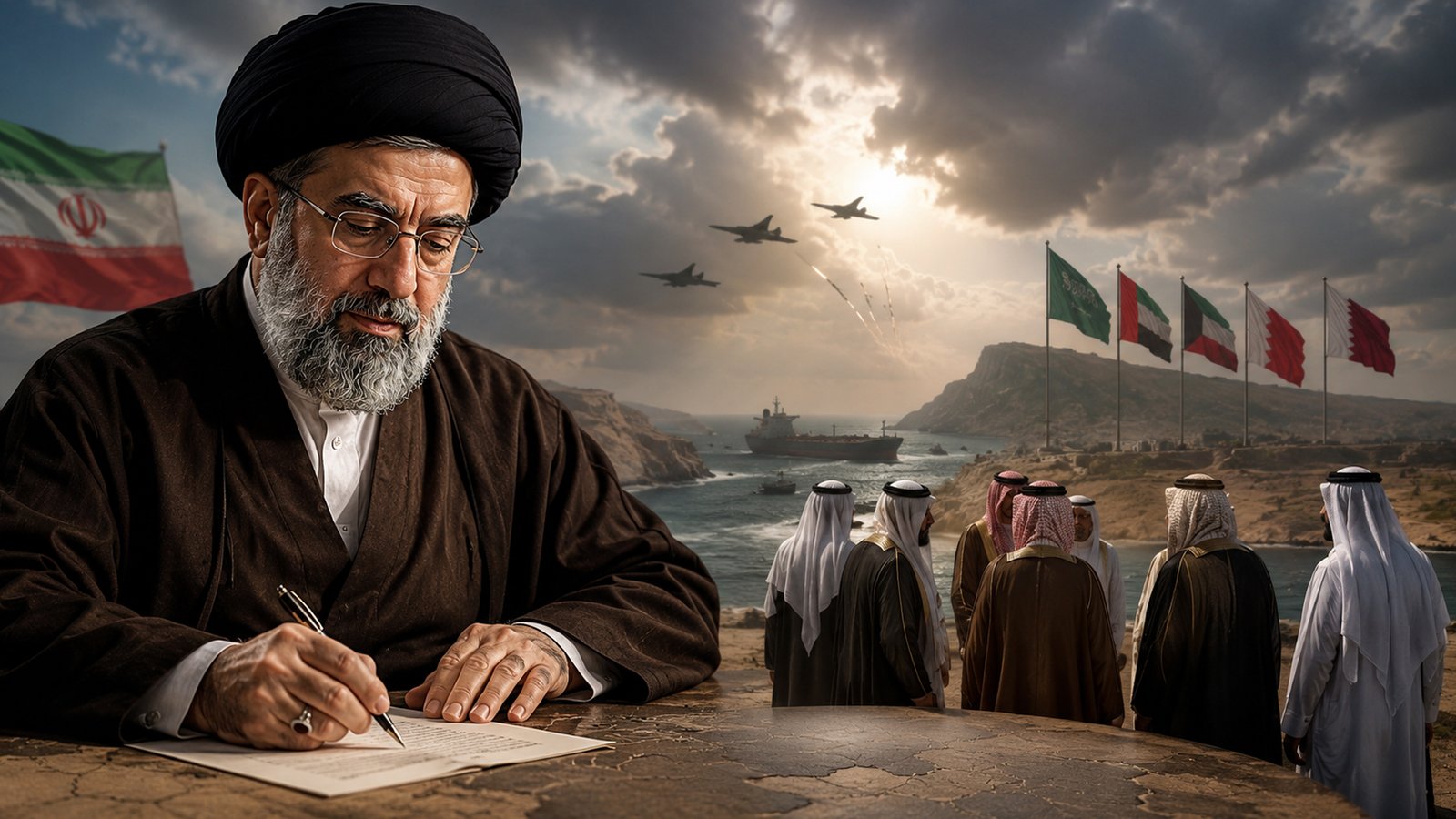
Iran’s Supreme Leader Mojtaba Khamenei has urged Gulf countries and other Muslim nations to set aside their differences and unite against what he described as the “real enemy” — the United States and Israel.
In a written message issued on Sunday during Islamic Unity Week, Khamenei called on governments across the Gulf and West Asia to strengthen cooperation, support one another and recognise what he considers common threats facing Muslim countries. He warned that divisions within the Muslim world could make the region more vulnerable to outside influence.
The appeal comes at a tense time for the Middle East, with Iran, the United States and Israel involved in an escalating confrontation. The situation has also increased pressure around the Strait of Hormuz, a vital route for global oil and gas shipments.
Addressing Gulf rulers directly, Khamenei questioned whether external powers would have been able to threaten the region to the same extent if its countries had remained united. He urged them to look beyond their political differences and work together on matters of regional security and defence.
The Iranian leader also connected his call to the wider issue of Muslim unity. He argued that Islamic countries need stronger cooperation and mutual support to protect their interests. According to his message, internal divisions weaken Muslim nations and create opportunities for their adversaries.
Khamenei referred to the situation in Palestine as an example of the consequences of division. He questioned whether Palestinians would have faced the same circumstances if Muslim countries had acted together. The reference reflects Iran’s longstanding opposition to Israel and its support for the Palestinian cause.
The message is particularly significant because Iran’s relationship with several Gulf Arab states has historically been complicated. Tehran has long opposed the presence of US military forces in the Gulf, while countries such as Saudi Arabia, the United Arab Emirates, Qatar, Bahrain, Kuwait and Oman maintain varying degrees of security and economic cooperation with Washington.
Several Gulf states also host US military personnel or facilities. This makes the current confrontation between Iran and the US especially sensitive for their governments.
The Gulf countries also have strong economic reasons to avoid a wider conflict. The region is a major centre for global energy production and trade, while the Strait of Hormuz serves as a critical passage for oil and liquefied natural gas shipments.
Any prolonged disruption in the waterway could affect international energy supplies, shipping costs and global markets. It could also create serious economic and security challenges for Gulf countries themselves.
Tensions around the strategic waterway have increased following recent military action. US forces carried out strikes against Iranian missile launchers on Larak Island, saying the weapons were being prepared for use in the Strait of Hormuz.
Iran subsequently launched ballistic missiles towards US forces in Jordan, with most of the missiles reportedly intercepted. The exchange has raised concerns that the confrontation could spread beyond the immediate battlefield and draw more countries into the crisis.
Gulf governments have established security partnerships with the United States but also share borders and important economic interests with Iran. A wider conflict could put their infrastructure, shipping routes and energy facilities at risk.
Khamenei’s message appears aimed at encouraging these countries to reconsider their dependence on external military powers. Iran has repeatedly argued that regional security should be managed by countries in West Asia, rather than by the United States or other outside powers.
However, a major shift in the Gulf’s strategic relationships is unlikely to be straightforward. Arab states have their own security concerns regarding Iran, including its missile capabilities, regional alliances and military activities. Their governments are therefore likely to weigh Khamenei’s appeal against their individual national interests.
The Iranian leader’s call for unity also comes as Tehran continues to deal with pressure from the wider conflict. Iran has sought to project a message of resilience while maintaining its opposition to US and Israeli military action.
Khamenei has remained largely out of public view since being injured in US-Israeli airstrikes that killed his father and predecessor, Ayatollah Ali Khamenei. His written messages have consequently become an important means of communicating his position during the ongoing crisis.
His latest appeal also echoes his calls for greater unity within Iran. The Iranian leadership has repeatedly stressed the importance of national cohesion and public support during the conflict.
A cooperation among Gulf countries is important for Tehran as this could reduce the influence of Washington in the region and create greater space for an alternative regional security framework. For Gulf governments, however, the immediate priority remains protecting their territory, economies and strategic interests.
The response from Gulf capitals to Khamenei’s message remains uncertain. While several countries may share concerns about regional instability and the situation in Palestine, their relationships with Iran, the US and Israel differ considerably.
Khamenei’s appeal nevertheless highlights a larger struggle over the future of Gulf security and regional power. Iran wants neighbouring countries to view security as a shared regional responsibility, while the Gulf states continue to balance relations with competing powers.