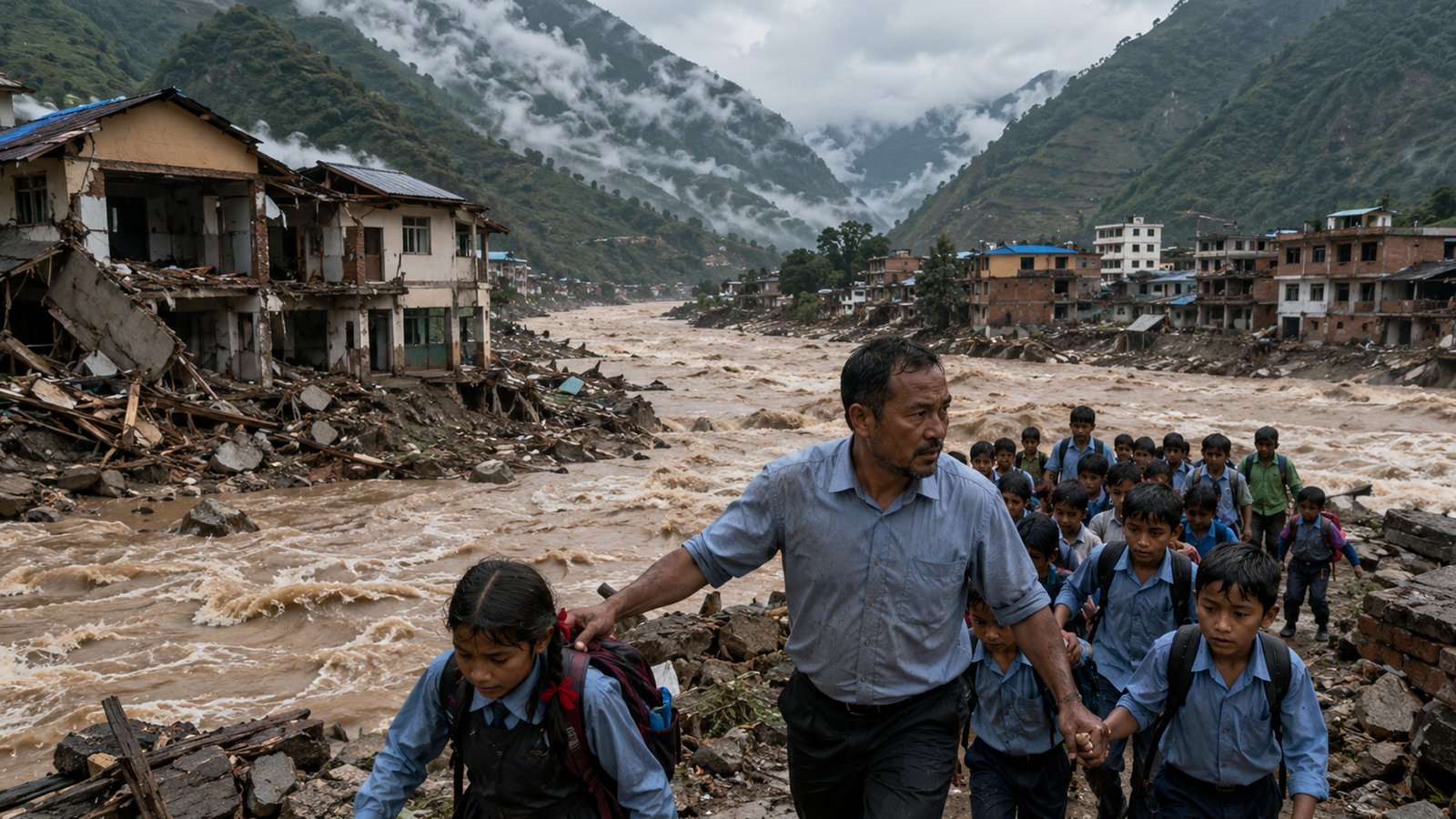
Nepal’s devastating flash floods have claimed at least 903 lives, with 4,247 people still missing, as rescue teams race against time to reach survivors and recover bodies from some of the worst-hit areas. The disaster has also triggered fresh flood warnings, raising fears that already battered communities could face another surge of water.
The latest figures from Nepal’s disaster authorities show the scale of the catastrophe has grown sharply since the floods struck. Thousands remain unaccounted for, including foreign nationals, security personnel, government workers and people believed to be stranded at hydropower projects. Rescue and relief operations are continuing across several districts, with difficult terrain, debris and unstable conditions slowing the search.
Among the most urgent rescue operations is the search for people believed to be trapped inside tunnels at hydropower projects. Authorities estimate that 933 people could be missing from 11 hydropower facilities in Nepal. Rescue teams are using heavy machinery, controlled blasts and other equipment to clear mud and debris blocking access to the tunnels.
More than 20,000 security personnel, along with civilians and volunteers, have been mobilised for rescue operations. India and China are also providing assistance, particularly technical support for difficult tunnel searches. The operation remains challenging because large amounts of mud, rocks and debris have blocked access to several locations.
While the search continues, one extraordinary story from the disaster has offered a rare moment of hope.
Rajendra Dawadi, the principal of Tribhuvan Trishuli Secondary School in Nepal’s Nuwakot district, acted within minutes after receiving warnings that rapidly rising floodwaters were heading towards the area. He immediately stopped classes, rang the school bell and ordered teachers to evacuate the students to higher ground.
His decision helped save 1,643 students just minutes before floodwaters swept through the area and destroyed the school building. The three-storey school was engulfed by a powerful mixture of water, mud, rocks and ice.
Dawadi initially believed the school was relatively safe because the building stood above the river. But warnings from people in the area and a concerned parent convinced him that there was no time to wait.
He told staff to get the children out of their classrooms and contacted school-bus drivers, asking them not to approach the school. Students ran towards higher ground, with some fleeing on foot and others being helped by staff. The evacuation was completed just before the floodwaters reached the school.
The children later watched from higher ground as the school they had been attending was swept away. Two school staff members were also killed after returning to dangerous areas, according to reports.
The story has become a powerful reminder of the importance of early warnings during natural disasters. A few minutes can make the difference between survival and tragedy, particularly in mountainous areas where floodwaters and landslides can arrive with little time for communities to react.
The disaster has caused widespread damage to Nepal’s education infrastructure as well. At least 69 schools have been destroyed or damaged, affecting nearly 19,000 children. For many families, the challenge will now extend beyond finding shelter and food to restoring children’s education and rebuilding schools in safer locations.
The floods have also severely damaged roads, bridges, communication networks and hydropower infrastructure. Several communities remain difficult to reach, forcing rescue teams to depend on helicopters and specialised equipment to transport people and supplies.
The threat has not disappeared. Authorities have issued fresh warnings after water levels in the Bhotekoshi River began rising again. Phone alerts have been sent to people in vulnerable areas, urging them to remain cautious and move to safer locations if conditions deteriorate.
The renewed warning has added to the anxiety of residents who have already lost homes, relatives and livelihoods. Many survivors are still living in temporary shelters while rescue workers continue searching for missing family members.
The disaster has also created a major challenge in identifying victims. Large numbers of bodies have been recovered from rivers and areas buried under mud and debris. Authorities are collecting DNA samples and other information to help identify victims whose remains cannot immediately be recognised.
The floods have been linked to a sudden collapse involving ice and rock in the Himalayan region near the Nepal-Tibet border. The resulting surge of water, mud and debris travelled through river valleys, destroying infrastructure and communities along its path.
The scale of the disaster has renewed concerns about the vulnerability of Himalayan communities to sudden floods, landslides and glacier-related events. Climate change and rising temperatures are increasing concerns about glacier instability and other hazards in the region.