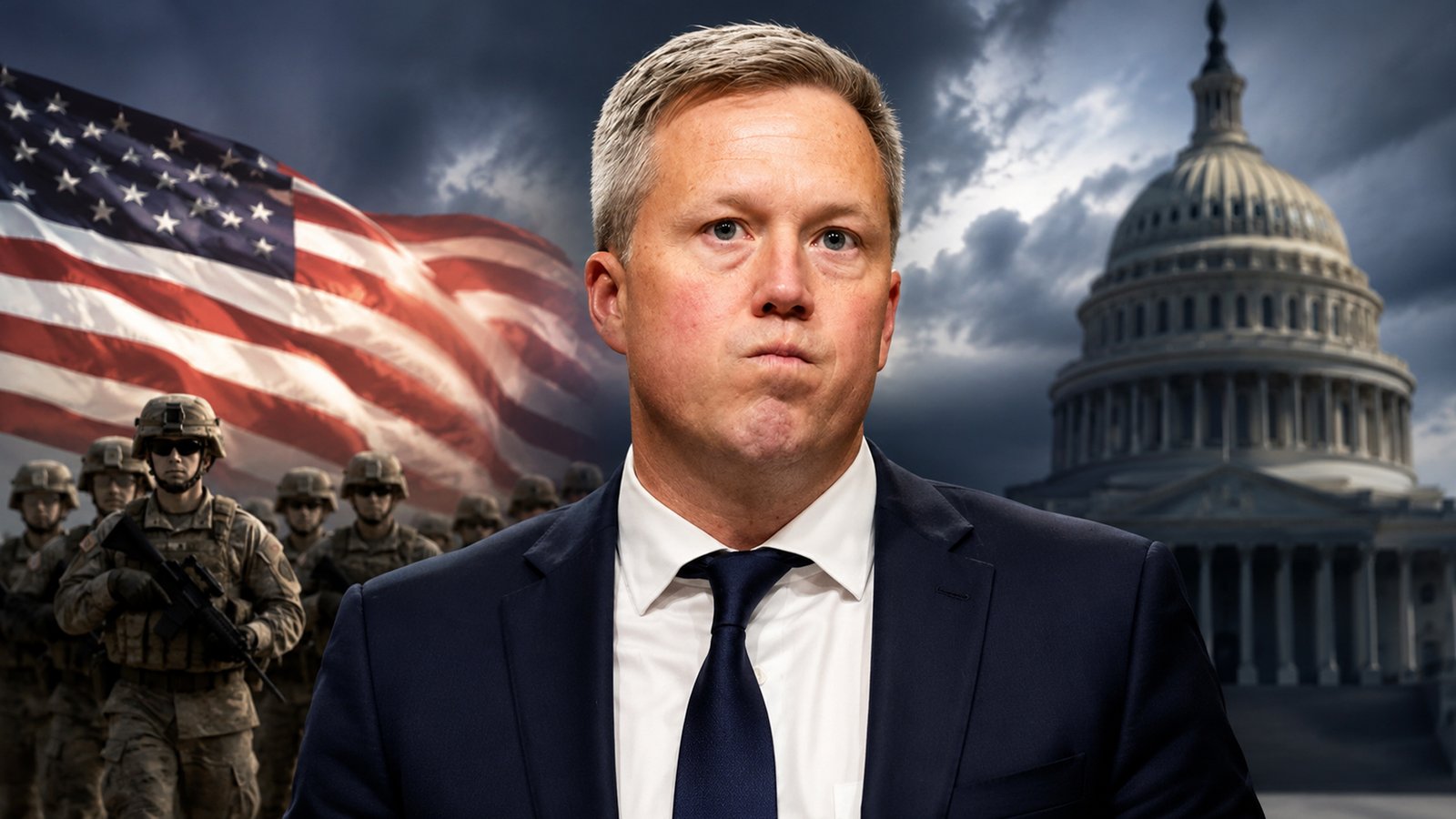
US Army Secretary Dan Driscoll has resigned from his post, adding to a period of significant leadership changes inside the Pentagon under President Donald Trump.
The White House confirmed that Driscoll had submitted his resignation to Trump but did not provide a specific reason for his departure. His exit comes amid reports of disagreements with Defence Secretary Pete Hegseth over the direction of the Army and changes involving senior military leadership.
Driscoll, 41, had served as Army secretary for around 18 months. During his tenure, he became closely associated with efforts to modernise the US Army, speed up weapons procurement and prepare American forces for a changing battlefield.
His departure comes at a sensitive time for the US military, which is dealing with security challenges across several regions while the Trump administration pushes changes to defence strategy, military readiness and procurement.
The White House praised Driscoll’s record in office, highlighting his work to strengthen Army readiness and combat capabilities. It also pointed to his involvement in diplomatic efforts related to the Russia-Ukraine conflict.
Driscoll’s tenure was marked by a strong focus on military modernisation. He supported faster development and acquisition of weapons and equipment and pushed for greater use of drones and other emerging technologies.
The Army has been reviewing how it prepares for future conflicts, particularly as recent wars have demonstrated the growing importance of unmanned systems, artificial intelligence, electronic warfare and precision weapons.
Driscoll also advocated changes to the Army’s procurement system, arguing that the military needed to move more quickly when developing and acquiring new technology. His approach reflected concerns that traditional defence acquisition processes can take too long to respond to rapidly changing battlefield requirements.
However, his time at the Pentagon was also accompanied by reported disagreements over senior Army appointments.
A major point of tension involved the removal of Army Chief of Staff General Randy George and two other senior generals earlier this year. Driscoll had worked closely with George and was reportedly concerned about the impact of sudden leadership changes on Army readiness and modernisation programmes.
The disagreement highlighted a broader debate within the Pentagon over how quickly senior military leadership should be changed as the administration seeks to implement its defence priorities.
Driscoll’s background was different from that of many senior Pentagon officials. He had served in the US Army and was an Iraq War veteran before moving into the private sector, where he worked in technology and investment.
He also had a close relationship with Vice President JD Vance, whom he knew from their time at Yale Law School. The connection gave Driscoll an important link to the administration’s senior leadership.
During his time as Army secretary, Driscoll also became involved in the administration’s diplomatic efforts surrounding the Russia-Ukraine war. His role included participating in discussions aimed at finding a possible path towards negotiations.
His resignation now leaves the Army facing another leadership transition.
The Under Secretary of the Army, Mike Obadal, is expected to serve as acting secretary until the administration appoints a permanent replacement. The next Army secretary will inherit an organisation undergoing major changes in its force structure, procurement strategy and approach to military technology.
The timing of the resignation is significant because the US Army is being asked to adapt to lessons emerging from modern conflicts. The widespread use of drones in Ukraine, advances in electronic warfare and the growing role of artificial intelligence have forced militaries around the world to reconsider how they organise troops and develop weapons.
The Trump administration has placed greater emphasis on combat readiness and military capability, while also seeking faster and more efficient defence procurement.
Driscoll had supported many of these objectives, particularly the push to make the Army more technologically capable. His departure could therefore raise questions about the future pace of some of the reforms he had championed.
At the same time, the Army must maintain continuity while the leadership transition takes place. Major programmes involving weapons development, force modernisation and military readiness require long-term planning and coordination across the Pentagon.
Driscoll’s resignation is unlikely to end the debate over the administration’s approach to military leadership. Instead, it adds another significant departure to a period of considerable change at the US Defence Department.
The White House has focused on Driscoll’s contribution and described his tenure positively, while reports of tensions with Hegseth have fuelled questions about what led to his decision to leave.
The immediate priority will be ensuring a smooth transition at the Army’s civilian leadership level. The incoming secretary will face the task of balancing the administration’s defence priorities with the Army’s long-term requirements for readiness, modernisation and technological advancement.
Driscoll leaves the Pentagon after about a year and a half in office. His tenure was defined by an effort to make the Army faster, more technologically advanced and better prepared for future conflicts.
His resignation marks another important change in the US military leadership and comes as the Trump administration continues its broader effort to reshape America’s defence establishment.