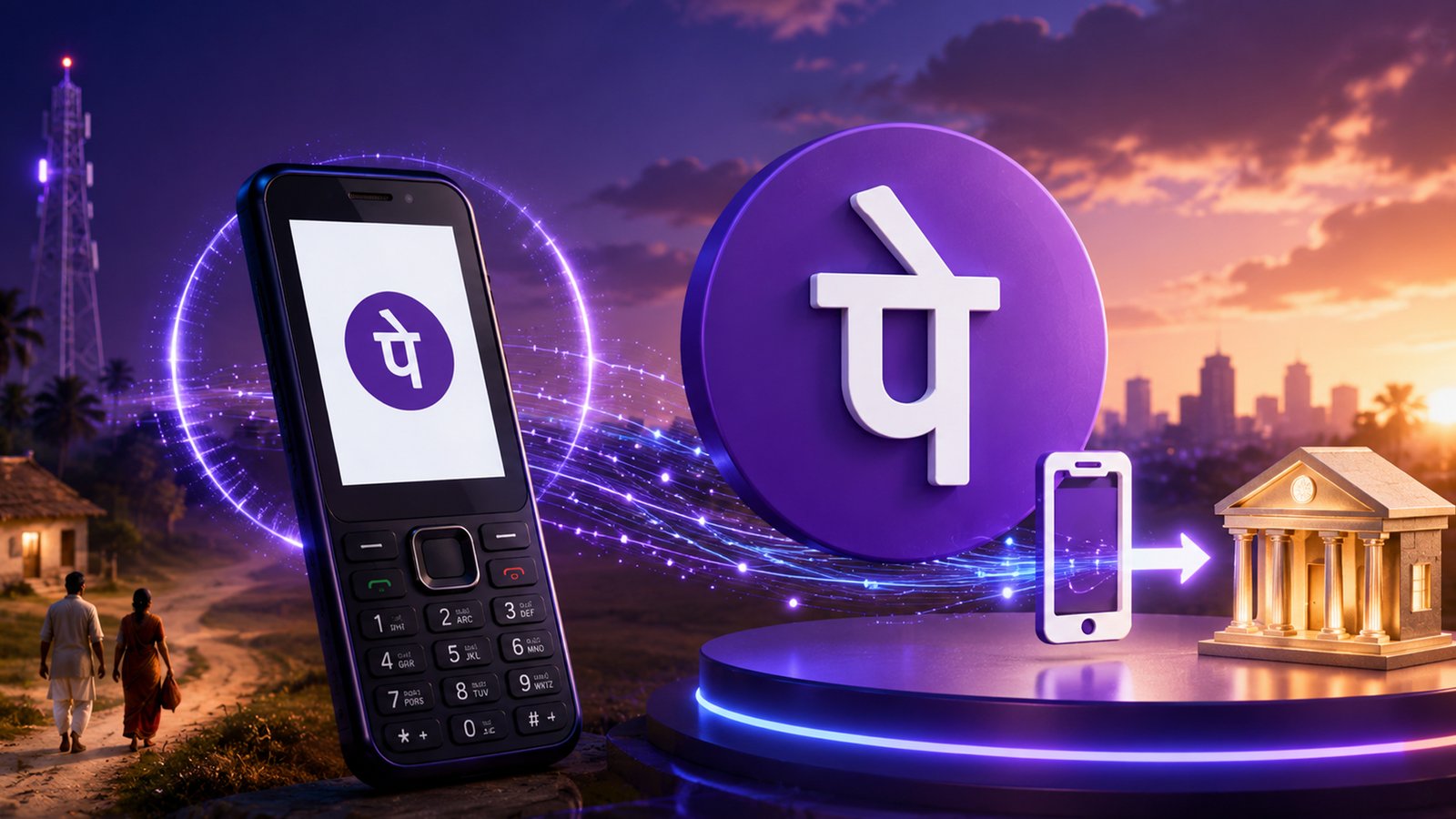
PhonePe has expanded the reach of digital payments beyond smartphones with the launch of PhonePe UPI 123Pay, allowing users of compatible feature phones to make UPI transactions without an internet connection.
The service, launched across India, is aimed at more than 200 million feature-phone users who may not own smartphones or have regular access to mobile internet. PhonePe said the move is designed to make digital payments more accessible, particularly in places where internet connectivity remains weak or unreliable.
For many Indians, UPI has become part of everyday life, from paying for groceries and medicines to sending money to family members. But most UPI apps have been built around smartphones and mobile data. People using basic keypad phones have therefore had fewer convenient options for digital transactions.
PhonePe’s new service attempts to close that gap.
PhonePe UPI 123Pay uses an SMS-based technology architecture, allowing transactions to work without mobile internet. The company says the system is designed to remain reliable even in areas with limited 2G connectivity. Users can make person-to-person transfers, pay merchants, check their bank balance and view transaction history using compatible feature phones.
The service supports both peer-to-peer (P2P) payments and peer-to-merchant (P2M) transactions. Users can make payments through mobile numbers or UPI IDs. Feature phones equipped with cameras can also be used to scan QR codes for payments, giving users a familiar way to pay at shops and other businesses.
PhonePe is initially rolling out the service on selected devices from HMD, Nokia, Lava International and Itel Mobile. The company plans to bring the service to more handset manufacturers and models over time.
Among the devices receiving support are the HMD 105 2G, HMD 110 2G, Nokia 105 Classic, Nokia 105 Single SIM, Nokia 105 Dual SIM, Nokia 106 and Nokia 123 Shield, according to details released around the launch.
For users, getting started is also designed to be relatively simple. The PhonePe application comes pre-installed on supported handsets. Users can activate the service by accepting the terms, selecting their bank and entering the last six digits and expiry date of their debit card before creating a UPI PIN.
This could be particularly useful for people who continue to use feature phones because they are affordable, have longer battery life or are easier to operate than smartphones. It may also help consumers in rural and remote areas where mobile internet can be inconsistent.
PhonePe has also added an AI-powered multilingual voice assistant to make the service easier to use. The assistant can help users activate the service and answer questions related to UPI transactions. It supports English and 12 Indian languages, potentially making digital payments easier for people who are more comfortable using regional languages.
The initial set of services is focused on essential banking and payment needs. Users can transfer money, make merchant payments, check balances and access transaction information. PhonePe plans to add bill payments, mobile recharges and Aadhaar-based UPI registration in future updates.
The move is significant for India’s broader financial inclusion efforts. While smartphone ownership and internet access have expanded rapidly, a large section of the population still relies on basic handsets. For these users, being able to make digital payments without upgrading to a smartphone could remove a major barrier.
It could also benefit small merchants. A shopkeeper who uses a basic phone may not need to purchase a smartphone simply to participate in digital payments. Customers using feature phones, meanwhile, could have another option besides cash when paying for everyday purchases.
PhonePe’s move comes as UPI itself continues to grow at an extraordinary pace. According to data released by the National Payments Corporation of India, UPI processed 24.51 billion transactions worth nearly ₹29.82 lakh crore in August 2026. The expansion of UPI to feature phones could help take this digital payment ecosystem to users who have so far remained on its edges.
The timing is also notable because digital payments in India are moving into new areas. While UPI is becoming increasingly sophisticated, with developments such as AI-assisted payments being explored, PhonePe’s feature-phone service addresses a much simpler need: enabling someone without a smartphone or internet connection to send or receive money.
PhonePe said it is the first major third-party application provider to extend UPI payments to India’s more than 200 million feature-phone users at this scale. The company sees the initiative as a way to bring the next wave of consumers into the digital economy.
The challenge now will be adoption. For first-time users, digital payments need to be simple, dependable and secure. The success of the service will depend on how easily people can use it in areas with limited connectivity and how confidently they adopt digital transactions on basic devices.
Still, the idea is straightforward and potentially significant. A person who owns a keypad phone and has no mobile internet can now access core UPI services without having to buy a smartphone.
With more than 200 million feature-phone users in its target market, PhonePe’s UPI 123Pay could mark another important step in India’s digital payments journey — one that brings the benefits of UPI to people who were not fully part of the smartphone-led revolution.