Nepal’s devastating flash floods have claimed 1,127 lives, while nearly 4,800 people remain missing, as rescue and relief operations entered their eighth day on Wednesday. Authorities are continuing to search through some of the worst-hit areas, with security personnel working to locate survivors, recover bodies and provide assistance to thousands of displaced people.
The latest figures underline the enormous scale of the Nepal flood disaster, which has left communities across affected regions facing widespread destruction and uncertainty. For families whose relatives are still unaccounted for, the search operation has become an agonising wait for any news.
According to the latest figures released by Nepal Police, 4,858 people are still missing. Rescue teams have so far managed to bring 6,541 people to safety, highlighting the scale of the emergency response underway across the country.
Nearly 7,912 police personnel have been deployed for search, rescue and relief operations. Their work includes reaching isolated communities, looking for missing people, recovering bodies and helping maintain order in areas affected by the floods.
The identification of victims has emerged as another major challenge. Authorities have recovered hundreds of bodies, but many remain unidentified. Nepal Police has made details of 911 unidentified bodies available to help families determine whether their missing relatives are among those recovered.
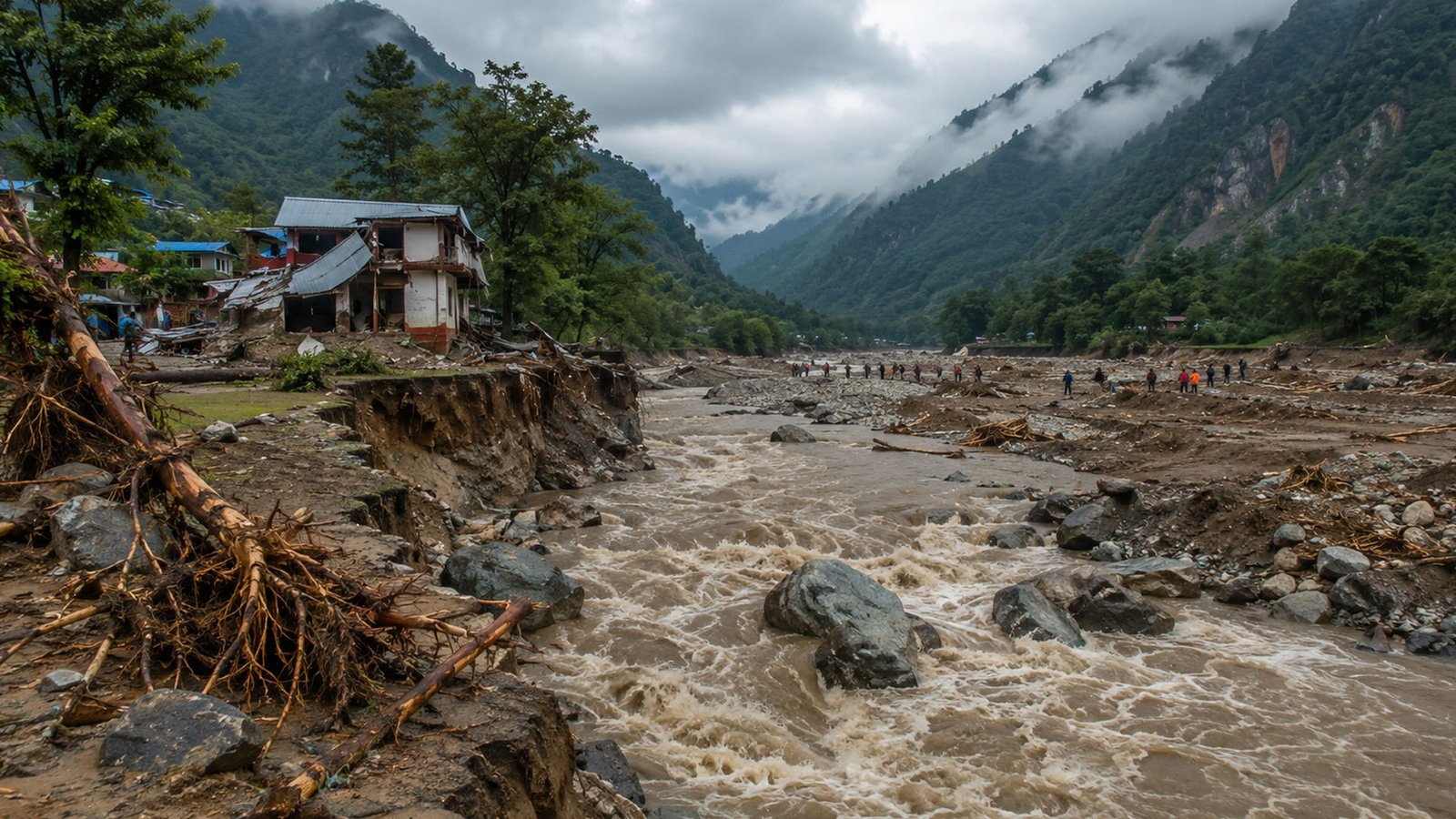
The Nepal flash floods caused extensive damage to homes, roads, bridges and other infrastructure. Several remote areas have remained difficult to access, complicating rescue efforts and slowing the delivery of relief supplies.
The disaster is believed to have been triggered by a massive release of water following a glacial event in the Himalayan region. The resulting torrent moved rapidly through downstream areas, leaving little time for people living near rivers and valleys to escape.
The mountainous terrain has made the response particularly difficult. Damaged roads and bridges have cut off communities, while disrupted communications have made it harder for authorities to establish contact with people in isolated areas.
Rescue workers are therefore having to combine ground searches with efforts to reopen access routes and reach communities that remain cut off. Every newly accessible area can bring fresh information about missing people and the extent of the destruction.
The humanitarian situation has also drawn attention to the vulnerability of Himalayan communities to extreme weather and climate-related disasters. Rising temperatures are contributing to changes in glaciers and the wider Himalayan environment, raising concerns about the risks from glacial lake outburst floods, landslides and flash floods.
Experts have increasingly stressed the importance of stronger early-warning systems in vulnerable mountain regions. Better monitoring of glaciers and unstable slopes, faster communication of warnings and improved evacuation plans could help communities respond more quickly when disaster strikes.
The latest tragedy has also highlighted the importance of resilient infrastructure in mountainous areas. Roads, bridges, telecommunications networks and power systems are vital during emergencies, but their destruction can leave affected communities isolated precisely when rescue and medical assistance are most urgently needed.
Despite the grim toll, the number of people rescued offers a measure of hope. More than 6,500 people have already been brought to safety, while rescue teams continue to search areas where survivors could still be found.
Authorities are also working to ensure that survivors receive food, shelter and other essential assistance. At the same time, the recovery of bodies and their identification remain important priorities for families waiting for answers.
The crisis has affected foreign nationals as well, with tourists and workers among those reported missing in the wider disaster zone. Efforts are continuing to establish the whereabouts of people from different countries who were in the affected region when the floods struck.
As the Nepal flood rescue operation enters its eighth day, hopes of finding survivors are being tested by the passage of time. Yet rescue teams continue to work through devastated areas, driven by the possibility that people may still be waiting to be found.
The scale of the disaster is reflected in the official figures, but behind every missing-person report is a family living with uncertainty. For those waiting, even a small piece of information can mean everything.
The coming days will be crucial for rescue and recovery efforts. Authorities must continue searching for the missing, identifying victims and supporting survivors while also assessing the long-term damage caused by the disaster.
Nepal now faces a difficult recovery ahead, but the immediate task remains deeply human, finding those who are still missing and helping families begin to rebuild their lives after one of the country’s most devastating flood disasters.