Nepal observed a national day of mourning on Monday, September 7, as the country remembered the victims of the devastating flash floods that swept through parts of the Himalayas nearly two weeks ago.
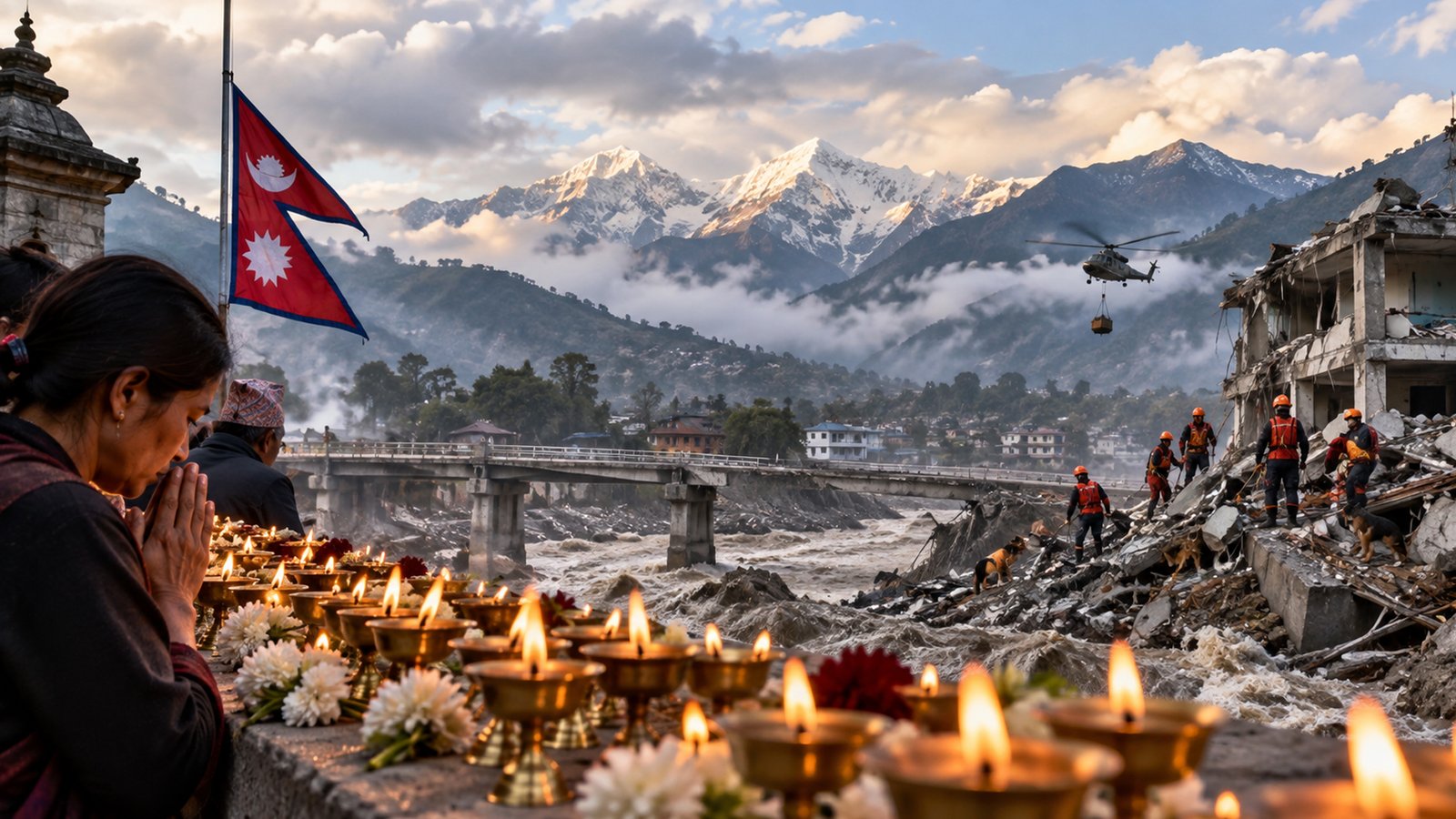
The mourning came on the 13th day since the disaster, a significant day in Hindu mourning traditions when families traditionally complete rituals for loved ones who have died. Nepal lowered its national flags at government offices as families and communities gathered to remember those who lost their lives.
The disaster has left a deep sense of grief across the country. The death toll in Nepal had climbed to 1,356 by Monday, according to authorities, while nearly 5,000 people remained missing. The floods also caused deaths and destruction across the border in Tibet, making the disaster a wider Himalayan tragedy.
The mourning has been particularly painful for many because bodies have not been recovered. Traditional funeral and remembrance rituals have been carried out in some places even without the remains of victims, giving families a way to mark the loss and seek some form of closure.
The floods struck on August 26 after an ice-rock avalanche in the high Himalayas triggered a huge surge of water and debris. The disaster hit Rasuwa and other districts near Nepal’s border with China, sweeping away homes, roads, bridges and other infrastructure.
The scale of the destruction has made the rescue operation extremely difficult. Thousands of people are still unaccounted for, while rescue teams continue to search through flooded areas, debris and damaged infrastructure.
Among those missing are hundreds of workers employed at hydropower projects. Nepal’s hydropower sector has been particularly badly affected, with rescue teams focusing on workers who may be trapped inside tunnels and other underground structures. Reuters reported that around 900 hydropower workers were among those missing, with as many as 121 feared to be inside tunnel networks.
Rescue teams have been working on the ground, from the air and inside tunnel systems. The difficult terrain, damaged roads and continuing risks have slowed operations, but authorities have said the search will continue to ensure that no one who may still be alive is left behind.
There have also been moments of hope amid the devastation. Rescue teams have managed to find survivors in recent days, including hydropower workers who had been trapped underground for several days. Such rescues have given families waiting for news a reason to continue hoping for missing relatives.
The disaster has also placed pressure on Nepal’s emergency response system. Questions have been raised over the availability of rescue equipment and the speed with which specialised assistance reached some of the worst-hit areas.
International teams and agencies have joined the rescue and relief effort. China, India, South Korea and other countries have provided assistance, while Nepal has sought additional equipment and support to deal with the scale of the emergency.
The floods have caused extensive damage to homes and critical infrastructure. Roads and bridges have been destroyed or damaged, while hydropower facilities in affected areas have suffered major disruption. The damage has added to the difficulties of reaching remote communities and restoring essential services.
The tragedy has also renewed concerns about the vulnerability of the Himalayan region to extreme weather and climate-related disasters. Nepal’s President Ram Chandra Paudel has highlighted the country’s exposure to the effects of a changing climate and called for stronger international action on climate justice.
Nepal contributes only a small share of global greenhouse gas emissions, yet its mountainous geography leaves it particularly exposed to climate risks. Scientists and officials have increasingly warned that rising temperatures can affect glaciers and snow cover, potentially increasing risks from glacial lake outbursts, landslides and sudden flooding.
The latest disaster has therefore raised questions not only about emergency response but also about long-term preparedness in vulnerable Himalayan communities.
In Kathmandu and other parts of Nepal, people gathered for prayers, candlelight vigils and other memorial events as the country observed the national mourning day. The atmosphere was one of grief, but also of solidarity with families still waiting for information about missing relatives.
That uncertainty remains one of the most painful aspects of the disaster. Nearly 5,000 people were still missing even as Nepal observed its national day of mourning, leaving thousands of families caught between hope and grief.
The national mourning may have marked the end of a traditional period of remembrance, but it does not signal the end of the crisis. Rescue teams are still searching, communities need assistance and damaged infrastructure will take time to rebuild.
As Nepal remembers those lost in one of its deadliest recent natural disasters, the country is also confronting a difficult question about the future: how to protect vulnerable communities from increasingly severe threats in the fragile Himalayan environment.