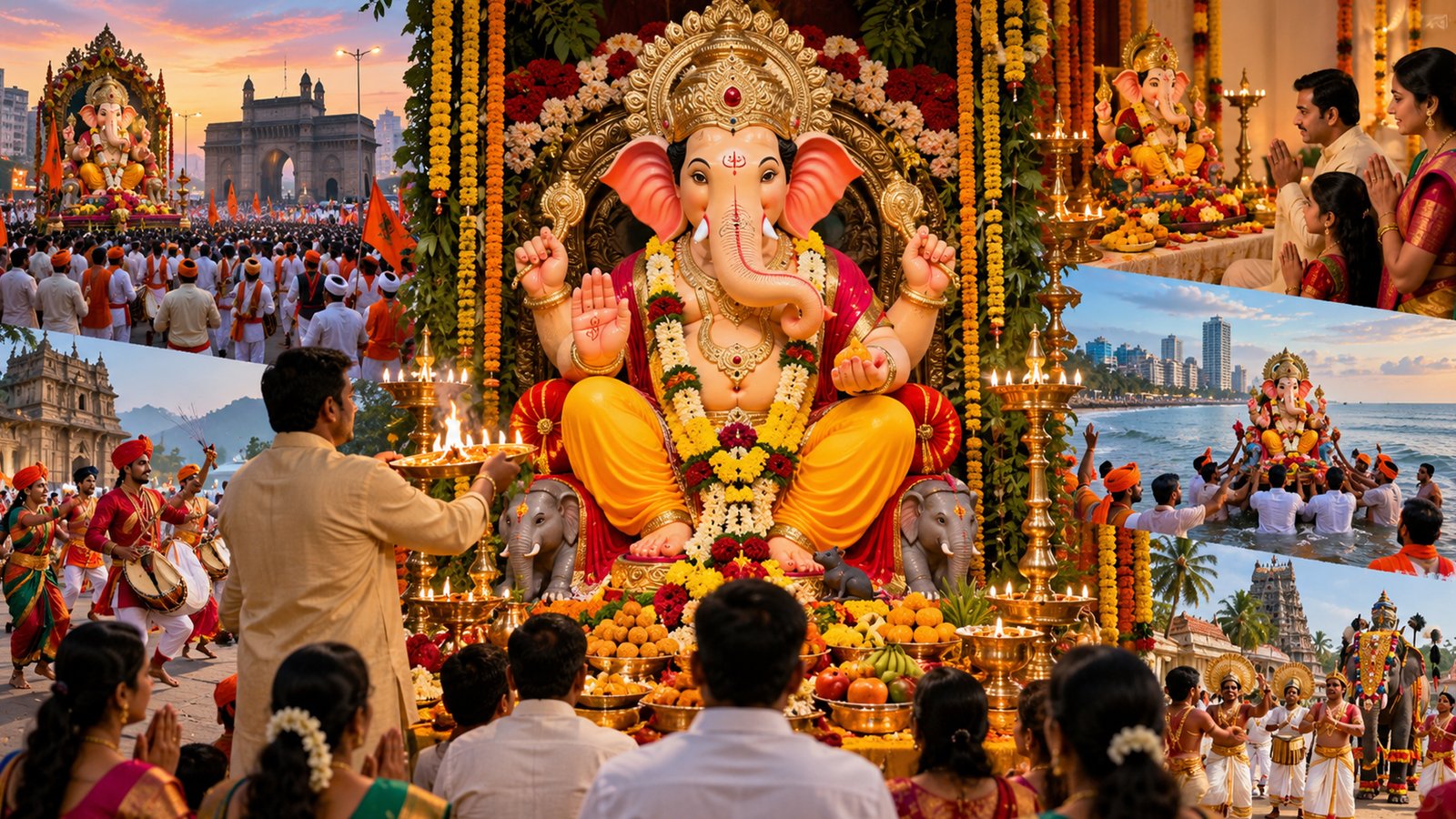
The sound of drums, the fragrance of incense and the familiar call of “Ganapati Bappa Morya” are filling streets across India as devotees welcome Lord Ganesha on Ganesh Chaturthi.
Homes have been cleaned and decorated, pandals have come alive and families have gathered around beautifully dressed idols of Ganesha. In many places, the celebrations have begun with Ganpati Sthapana, followed by prayers, aarti, bhajans and the sharing of modaks.
Ganesh Chaturthi is being celebrated across the country on Monday, marking the birth of Lord Ganesha, who is revered as the remover of obstacles and a symbol of wisdom, prosperity and good fortune. The festival begins a 10-day period of worship that will culminate in Ganesh Visarjan.
There is something deeply familiar about the festival. In one home, it may be the gentle ringing of a bell during the morning puja. In another, it may be children gathering around the idol, waiting for modaks. At a neighbourhood pandal, the quiet prayer can quickly give way to drums, devotional songs and the joyful chant of “Ganapati Bappa Morya”.
Traditional Ganesh aartis such as “Sukhkarta Dukhaharta” and “Jai Ganesh Deva” remain an important part of the celebrations. Their melodies have travelled across generations, giving the festival a sense of continuity even as every generation finds its own way of celebrating Ganpati.
Maharashtra continues to witness some of the country’s biggest Ganesh Utsav celebrations. Mumbai, in particular, has come alive with devotees visiting prominent pandals, including the iconic Lalbaugcha Raja. Across Maharashtra and other states, processions, cultural programmes, music and community gatherings have added to the festive mood.
The festival, however, is not only about grandeur. At its heart is the simple act of bringing Ganesha home and asking for blessings for the year ahead. Families pray for health, happiness and prosperity, while children often experience the festival through its colours, sweets, songs and stories.
That spirit of togetherness was reflected in Karnataka, where Chief Minister D.K. Shivakumar appealed to people to celebrate Gowri-Ganesha with peace, harmony and responsibility. He wished people happiness, prosperity and good health and urged devotees to maintain peace during the festivities and idol immersion.
CM Shivakumar also encouraged people to choose eco-friendly Ganesha idols. He sought the blessings of Lord Ganesha for good rainfall and a bountiful harvest, adding an agricultural hope to his festive message. He also paid tribute to the mothers of Karnataka, linking them with Goddess Gowri, who is worshipped alongside Ganesha during the festival.
Other Karnataka leaders also extended their greetings. Former Prime Minister H.D. Deve Gowda prayed for peace, prosperity and well-being, while Union Minister H.D. Kumaraswamy and BJP state president B.Y. Vijayendra wished people happiness, good health and prosperity.
The message of Ganesh Chaturthi has also travelled beyond India. Singapore’s High Commissioner to India, Simon Wong, joined the celebrations by preparing for Ganpati Sthapana at his residence. He marked the Madhyahna Puja Muhurat at 11:02 am and wished everyone peace and prosperity.
His participation offered a reminder of how Indian festivals have become part of cultural life far beyond the country. Ganesh Chaturthi is celebrated by Indian communities in several parts of the world, where temples, homes and community centres become spaces for prayers, bhajans and cultural gatherings.
Food is another part of the festival’s warmth. Modaks, considered a favourite offering for Lord Ganesha, find a place on many puja plates. Flowers, durva grass, fruits and sweets are offered as families sit together for aarti and prayers.
The festival also carries an environmental message. As Ganesh Visarjan approaches, more communities are turning to clay and other eco-friendly idols and adopting more responsible immersion practices. The idea is simple: celebrate with devotion while caring for the water bodies and surroundings that are part of the festival’s final ritual.
Ganesh Visarjan carries its own emotion. After days of prayers, songs and celebrations, devotees carry the idol in processions towards rivers, lakes or the sea. The chants grow louder, drums return and the familiar “Ganapati Bappa Morya” fills the air. The immersion symbolises the cycle of creation and dissolution, even as devotees look forward to welcoming Bappa again.
That is perhaps what makes Ganesh Chaturthi so enduring. It can be grand in a crowded Mumbai pandal and deeply intimate in a small family home. It can be marked by powerful drums or a quiet aarti. But beneath the colours, music and celebration is the same prayer — may obstacles disappear, may homes be filled with happiness, and may the year ahead bring peace and prosperity.