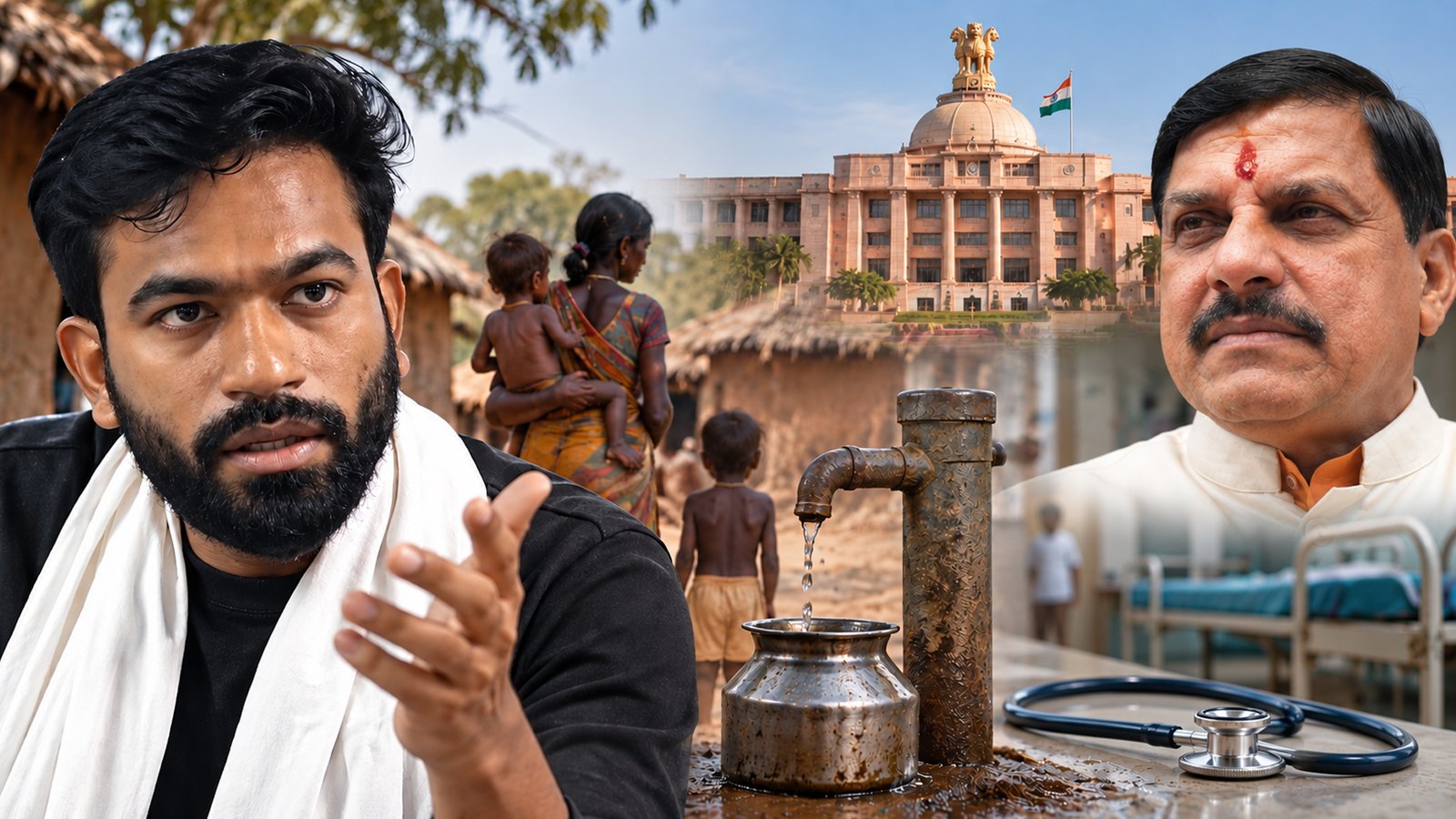
Cockroach Janta Party (CJP) founder Abhijeet Dipke has taken a satirical swipe at the Madhya Pradesh government over the deaths of more than 30 tribal children in Balaghat, posting a fake resignation letter in which he claimed to be stepping down as the state’s Chief Minister.
Dipke shared the letter on September 13, a day after visiting tribal villages in Balaghat to meet affected families and assess the situation on the ground. The post targeted Chief Minister Mohan Yadav’s government over its response to the deaths and the wider condition of healthcare and basic services in the tribal belt.
In the mock letter addressed to the Madhya Pradesh governor, Dipke said his “conscience” would not allow him to remain in office after the deaths. He sarcastically claimed responsibility for failing to provide timely medical care and support to the children and questioned whether the government’s response would have been the same if the victims had been children of ministers or legislators.
Dipke also targeted the compensation announced for the families. The state has provided ₹4 lakh each to the families of 24 deceased children, while the process of providing assistance to the remaining families is under way.
The CJP founder used the letter to raise broader concerns about tribal healthcare, drinking water, education and malnutrition in Balaghat. He alleged that some tribal families continue to depend on river water and questioned the condition of schools and other basic facilities in the affected villages.
The political controversy comes as Balaghat continues to deal with a serious health crisis involving tribal children. More than 30 children have reportedly died in the district amid infectious diseases, with the Baiga tribal community among those affected. Hospitals have continued to receive sick children from remote villages, keeping the focus on healthcare access and public health infrastructure.
The Madhya Pradesh High Court has also intervened in the matter. The Jabalpur bench has sought responses from the state government, Health Department, Women and Child Development Department, Balaghat collector and other authorities over the reported deaths.
The court action followed a public interest litigation that raised concerns about treatment facilities, drinking water and nutrition in the affected areas. The petition also alleged that around 400 children were being treated at a hospital with a capacity of only 50 beds. The court has directed the state to place relevant survey reports and other findings on record.
Health concerns in the region extend beyond the deaths. Reports from the affected villages have highlighted continuing hospitalisations and longstanding problems linked to healthcare access, sanitation, drinking water and child nutrition.
Dipke’s visit itself became controversial after a group of social media influencers confronted him and accused him of trying to politicise the deaths. Videos of the confrontation circulated on social media, with the group questioning his decision to visit the affected villages.
Dipke subsequently used the confrontation as another backdrop for his political criticism. His mock resignation letter said the deaths demanded accountability at the highest level and questioned the government’s record on tribal welfare.
During his visit, Dipke also highlighted the condition of a school serving tribal children. He alleged that several schools lacked adequate infrastructure and questioned whether children in these communities were receiving the same quality of education and facilities available elsewhere.
He also alleged that ASHA workers in the area had not received salaries for six months, raising another concern about the functioning of the rural healthcare system. He questioned the quality of drinking water available to tribal families and asked whether ministers or legislators would allow their own children to consume the same water.
The government has meanwhile continued its health response in the affected areas, with medical teams screening residents and treating children suffering from various illnesses. Authorities are also monitoring vulnerable children and strengthening medical facilities as the investigation into the deaths continues.
The exact medical reasons behind all the deaths remain under scrutiny. Reports have pointed to infectious diseases and other health complications, but the situation has not been attributed to a single cause.
The crisis has consequently moved beyond a debate over individual deaths. It has brought renewed attention to the condition of tribal healthcare in Madhya Pradesh, access to safe drinking water, nutrition, education and the ability of government services to reach remote communities.
Dipke’s satirical resignation has added a political dimension to the issue, but the court’s intervention and continuing health concerns have placed the focus firmly on accountability and the government’s response.
With the High Court seeking answers and children continuing to require medical care, the immediate challenge for authorities is to establish the causes behind the deaths, strengthen healthcare services in affected villages and ensure that vulnerable tribal families receive timely medical and nutritional support.