A jump in fuel prices has pushed people onto the streets across Syria, turning a government decision meant to address a supply problem into a wider public protest over the cost of living.
The demonstrations began after the interim government raised diesel prices by 40 per cent. Petrol prices also increased, adding pressure on families already dealing with high prices, shortages and years of economic hardship.
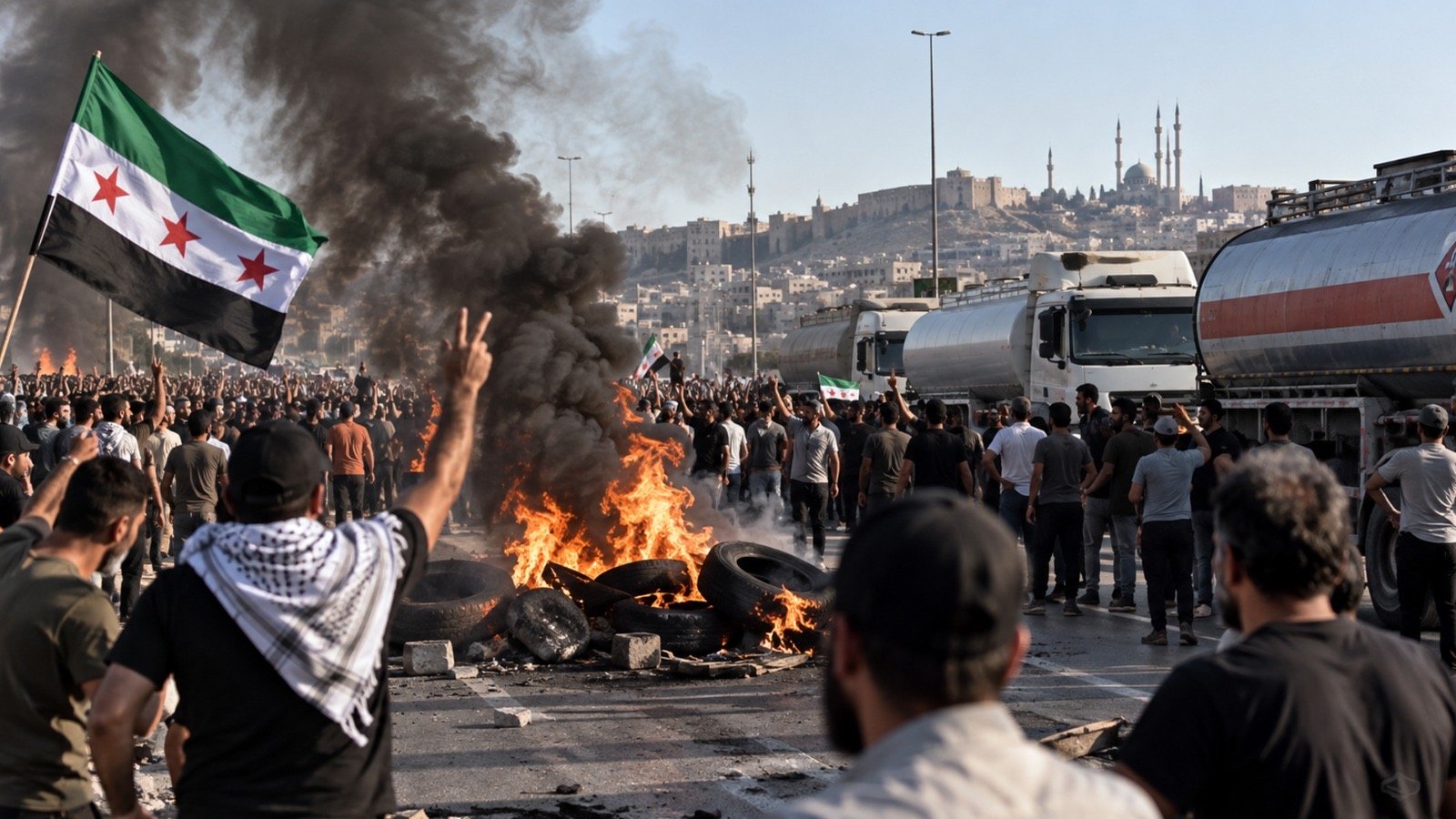
The anger quickly moved beyond fuel stations. Protesters blocked roads, burned tyres and stopped fuel tankers in several areas. Demonstrations were reported in Aleppo, Hama, Daraa, Raqqa, Deir ez-Zor and Hasakah, among other parts of the country.
Some protesters demanded that the fuel-price increases be cancelled. Others called for senior officials involved in energy and economic policy to resign. The demonstrations have been described as among the largest since the ousting of former president Bashar al-Assad.
The reason for the anger is easy to understand. Diesel is not simply another item on a household budget in Syria. It keeps taxis and buses moving, powers agricultural machinery, supports factories and helps bakeries produce one of the country’s most important staples — bread.
When diesel becomes more expensive, the cost rarely stays at the fuel pump.
A taxi driver faces a bigger daily bill. A farmer spends more to operate machinery. A truck operator pays more to transport goods. A bakery has to spend more to keep its ovens running. Those additional costs can eventually reach consumers through higher prices.
That chain of pressure is already visible in Hasakah.
Several public and private bakeries in Hasakah city and surrounding areas reportedly stopped operating after the diesel price increase. Bakeries in places including Tal Tamr, al-Hol, Tal Hamis, al-Shaddadi and Tal Barak were also affected.
Bakery owners said the higher diesel price made it difficult to continue production while keeping the price of bread unchanged. The disruption has raised concerns about bread supplies in a region where many families depend heavily on subsidised or affordable bread.
The situation shows how quickly a fuel decision can become a food issue.
Syria’s government has defended the increase, saying it is temporary and linked to higher costs for securing refined petroleum products. Officials have pointed to international market conditions as well as problems with domestic refining.
The Baniyas refinery, Syria’s largest refinery, is undergoing maintenance. With the facility operating below normal capacity, Syria has had to rely more heavily on imported refined fuel.
That has become increasingly expensive.
Syria‘s domestic oil production is not enough to meet its fuel requirements. The country therefore depends on imports to bridge the gap, leaving it exposed to changes in international oil prices, refining costs, shipping charges and insurance.
Global energy disruptions have made the situation even more difficult. Tensions across the Middle East have affected energy markets and shipping routes, while disruptions to Russian fuel supplies have added pressure to international refined-product markets.
The Syrian government says the current increase should not be viewed as a permanent change. Authorities have promised to review fuel prices as market conditions improve and domestic refining capacity returns.
Officials have also stressed the need to increase Syria’s own oil and gas production and rebuild energy infrastructure damaged during years of conflict.
Those explanations have not convinced many protesters.
This immediate issue is not the international fuel market or refinery maintenance for Syrians. It is whether they can afford to travel to work, transport their goods or buy enough food.
The country’s economic situation makes the impact particularly severe. Years of war, sanctions, destroyed infrastructure and economic disruption have left millions of people struggling to make ends meet. UN estimates indicate that around 90 per cent of Syrians live below the poverty line.
There is little financial room for families to absorb another increase.
The fuel protests therefore reflect a deeper frustration with economic conditions. People who have already lived through years of conflict are now facing another challenge: rebuilding their lives in an economy where basic necessities remain difficult to afford.
The demonstrations also create a major test for Syria’s interim government. The authorities are trying to restore public services, rebuild infrastructure and stabilise the economy after Assad’s removal. At the same time, they must respond to demands from a population that expects living conditions to improve.
The fuel-price decision has shown how difficult that balance can be.
Cutting or controlling fuel subsidies may help the government manage its finances and deal with expensive imports. But doing so suddenly can place a heavy burden on households and businesses.
Keeping fuel prices artificially low, meanwhile, can create shortages and put further pressure on government finances.
The challenge is particularly visible in Hasakah, where the closure of bakeries has turned an economic problem into a basic-services concern. If the disruption continues, the pressure on food supplies could become even more serious.
The government has said the price increase is temporary, but protesters are demanding action now.
The coming days will show whether the authorities can calm the streets while keeping fuel supplies moving. Any further rise in diesel or petrol prices could deepen public anger, particularly if it begins affecting bread, transport and other essentials.
What began as a 40 per cent diesel price increase has therefore become a much larger story about life in post-Assad Syria.
Behind the blocked roads and angry crowds are families trying to manage another rise in their daily expenses, workers worried about their livelihoods and businesses struggling to stay open.
The government may see the fuel hike as a temporary economic measure. On the streets, however, many Syrians are experiencing it as something much more immediate — another cost they simply cannot afford.