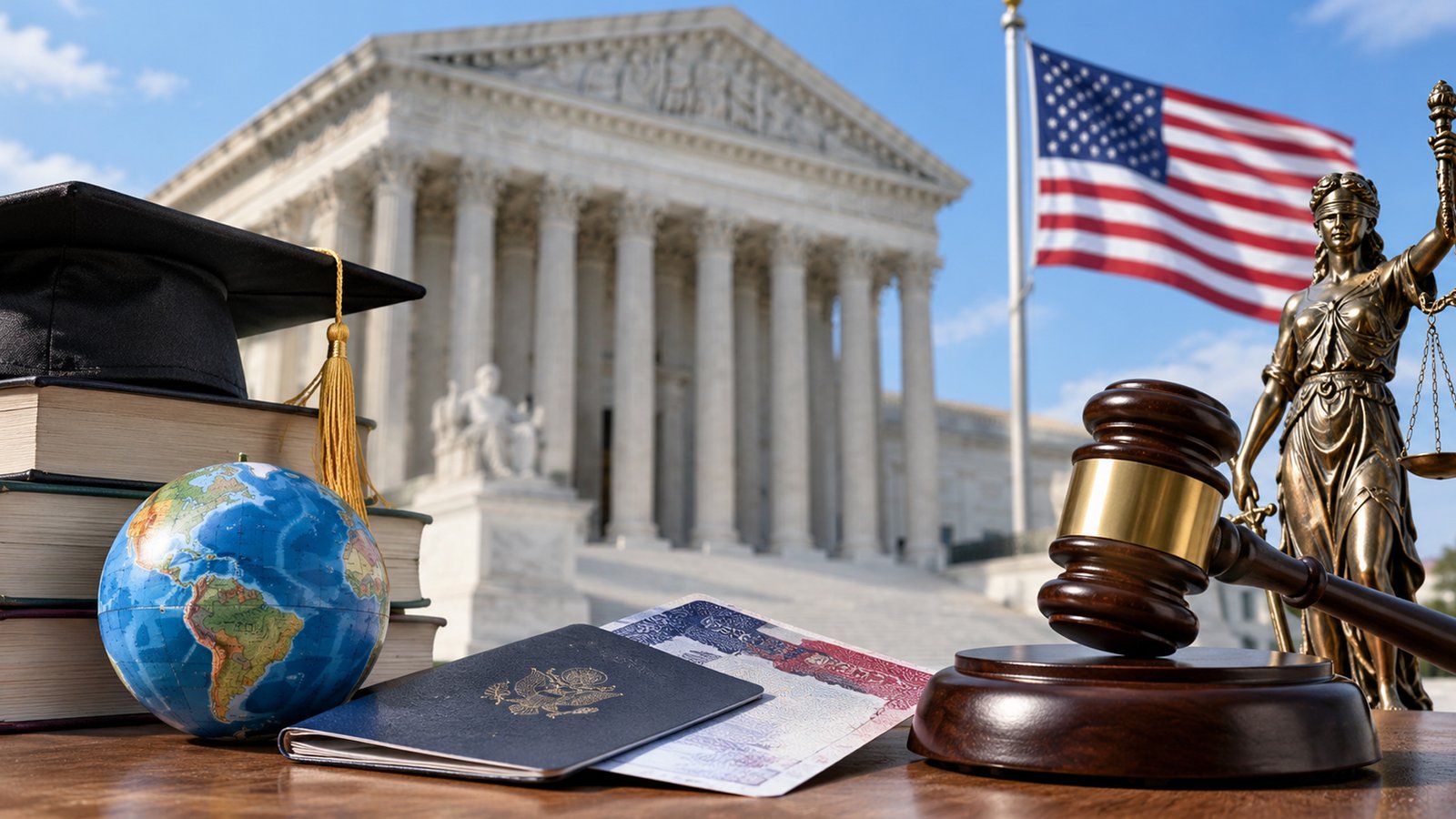
A US federal judge has blocked a Trump administration rule that sought to put new time limits on foreign students, exchange visitors and journalists staying in the country.
The decision by US District Judge F. Dennis Saylor in Boston came just before the new rule was due to take effect. The ruling means the existing visa system will remain in place while a legal challenge against the policy moves forward.
The Department of Homeland Security (DHS) had announced the new rules in July as part of the Trump administration’s wider effort to tighten immigration controls. The changes would have replaced the current system, under which many international students can remain in the US for the duration of their approved academic programme.
Under the proposed system, students entering the US on F-1 visas would generally have been allowed to stay for a maximum of four years. Students whose degrees, research or training required additional time would have had to apply for an extension.
The same four-year limit was proposed for many people entering under J-1 exchange visitor visas. The administration also proposed a separate limit of 240 days for foreign journalists working in the US on I visas, although they could seek an extension in certain circumstances.
The changes had raised concerns among universities, students and international education groups. They argued that fixed stay limits could create unnecessary uncertainty, particularly for postgraduate students and researchers whose programmes often take longer than four years.
Judge Saylor agreed that the government had not adequately justified such a major change to the existing system. In his ruling, he questioned the reasoning used by DHS and said the department had not properly considered concerns raised during the rule-making process.
The judge also highlighted the importance of international students and researchers to American universities and the wider economy.
Around 1.6 million people currently hold F visas, while roughly 500,000 people hold J visas. International students contribute significantly to US universities through tuition fees and also play an important role in research, science and technology.
The proposed changes could have created considerable financial and administrative pressure on universities. Institutions would have had to deal with more extension applications and potentially more students being forced to leave the US before completing their studies.
The court noted that some major universities could face costs running into hundreds of millions of dollars if the rule were implemented.
The legal challenge was filed by higher education organisations, unions and groups representing international educators and journalists. They argued that the government had not properly assessed the impact of the new restrictions before introducing them.
The groups also questioned the need to replace the existing “duration of status” system, which has been in place for decades.
Under the current system, international students are generally allowed to remain in the US while they maintain their academic status and continue their approved programme. This provides flexibility when students need additional time because of research, changes in coursework or other academic requirements.
The Trump administration has argued that the old system needs greater oversight. Officials have cited concerns about visa abuse, fraud and national security and said fixed periods of admission would make it easier for the government to track foreign visitors.
The court’s decision does not permanently strike down the new rule. Instead, it prevents the government from implementing the restrictions while the legal case continues.
That means the issue is likely to remain unsettled for international students hoping to study in the US.
The ruling is particularly important for students from countries such as India, China and other major sources of international enrolment in American universities. Many students plan their education several years ahead and depend on being able to remain in the country until their programmes and research are completed.
A sudden four-year limit could have forced some students to seek extensions or make costly changes to their academic plans.
Foreign journalists also received temporary relief from the decision. The proposed 240-day limit on their stay would have changed the way international media organisations operate in the US, particularly for journalists covering long-term assignments.
The ruling comes amid a broader push by the Trump administration to tighten US immigration and visa rules. The administration has introduced or proposed several measures affecting foreign nationals, including students, workers and other temporary visa holders.
International students can continue to follow the current F-1 visa rules, while exchange visitors and foreign journalists can continue under their existing arrangements, subject to the normal visa conditions.
The legal battle is not over, and the administration could appeal the ruling. A future court decision could determine whether the proposed four-year limit and other restrictions are eventually introduced.
The latest ruling therefore offers a temporary reprieve rather than a final resolution. For thousands of students, researchers and journalists already in the US, it provides some breathing room as the courts decide the future of the Trump administration’s proposed visa overhaul.