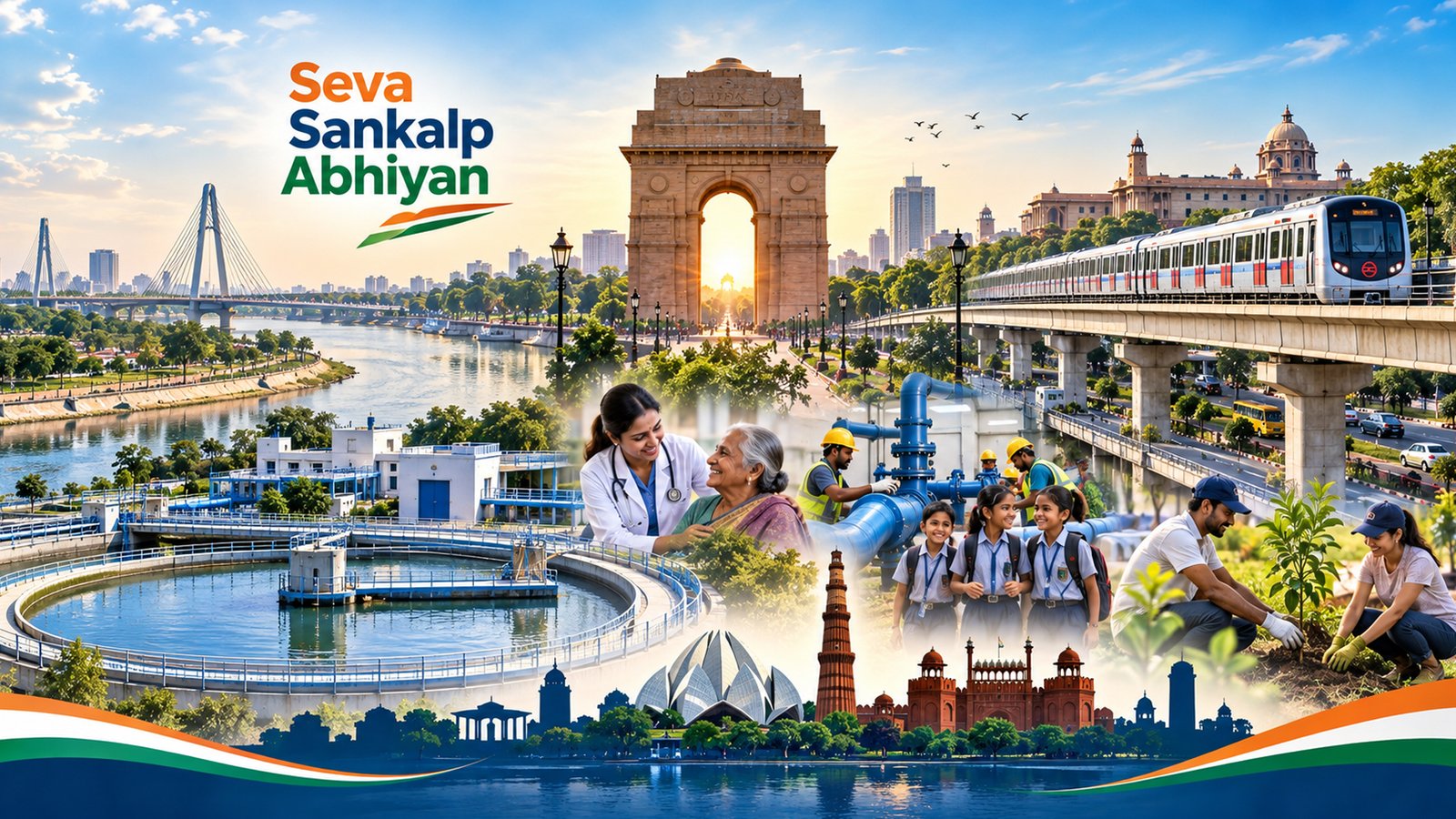
The Seva Sankalp Abhiyan will begin across India on September 17 and run until October 17. The month-long campaign will include development projects, welfare activities, blood donation drives and public outreach programmes.
Union Home Minister Amit Shah announced the campaign as part of programmes to mark Prime Minister Narendra Modi’s 25 years in public life. The campaign will begin on Modi’s birthday and will focus on the idea of public service, along with the government’s development and welfare work.
Several states have prepared their own programmes for the campaign. Activities will include health camps, blood donation drives, youth programmes, awareness campaigns and events linked to government welfare schemes.
Delhi is planning one of the biggest development programmes under the campaign. Projects worth around ₹13,800 crore are expected to be launched or receive foundation stones during the month.
The Yamuna revival programme will be a major part of the Delhi plans. Projects worth about ₹8,000 crore are expected to focus on improving sewage and water infrastructure and supporting efforts to clean the Yamuna.
The Delhi government has also identified projects in other sectors. The Public Works Department is expected to account for projects worth around ₹2,800 crore, while power projects are estimated at more than ₹1,500 crore. Irrigation and flood-control projects worth about ₹265 crore are also planned.
Public service activities will run alongside the development projects. A large blood donation camp is planned in Delhi on September 17, with a target of collecting around 2,500 units of blood. Health, sanitation and welfare programmes will also be organised in different parts of the capital.
The campaign will also focus on connecting people with government schemes and services. Local programmes are expected to highlight projects and initiatives that have directly affected communities.
Madhya Pradesh has also prepared a wide programme. Chief Minister Mohan Yadav reviewed the arrangements and asked officials to ensure participation across districts, villages, towns and cities.
The state plans to organise programmes in all 55 districts. Activities will cover health, education, welfare and social service, with special attention to reaching people at the grassroots level.
September 17 will see a major lamp-lighting programme in Ujjain. The main event will be held at Mahakal Lok, while people in other parts of the state will also be encouraged to participate. The state government is preparing for a large-scale lamp-lighting event.
Blood donation camps will be organised at hospitals, health centres and medical colleges. Schools and colleges will also take part in activities during the campaign.
Students will participate in painting and speech competitions based on the theme “Mere Sapnon Ka Bharat”, or “My India of Dreams”. Other programmes will use street plays and public events to explain government welfare schemes and their benefits.
The campaign will also give space to programmes involving women, children and senior citizens. Activities around nutrition, vaccination, health and sanitation are expected to be held in several areas.
Other states, including Haryana and Uttarakhand, are preparing similar programmes. These will include blood donation camps, community activities, school programmes and public outreach.
The campaign comes as Modi completes 25 years in public life. He became Gujarat chief minister in October 2001 and went on to serve as the state’s chief minister for more than 12 years. He became Prime Minister in 2014 and is now in his third consecutive term.
The Seva Sankalp Abhiyan 2026 will bring political outreach and public service activities together. While the campaign marks an important milestone in Modi’s political journey, its programmes will also showcase development projects and welfare initiatives across states.
The month-long exercise is expected to put the focus on public service, good governance, development and grassroots participation, with programmes ranging from major infrastructure projects to smaller community-level activities.