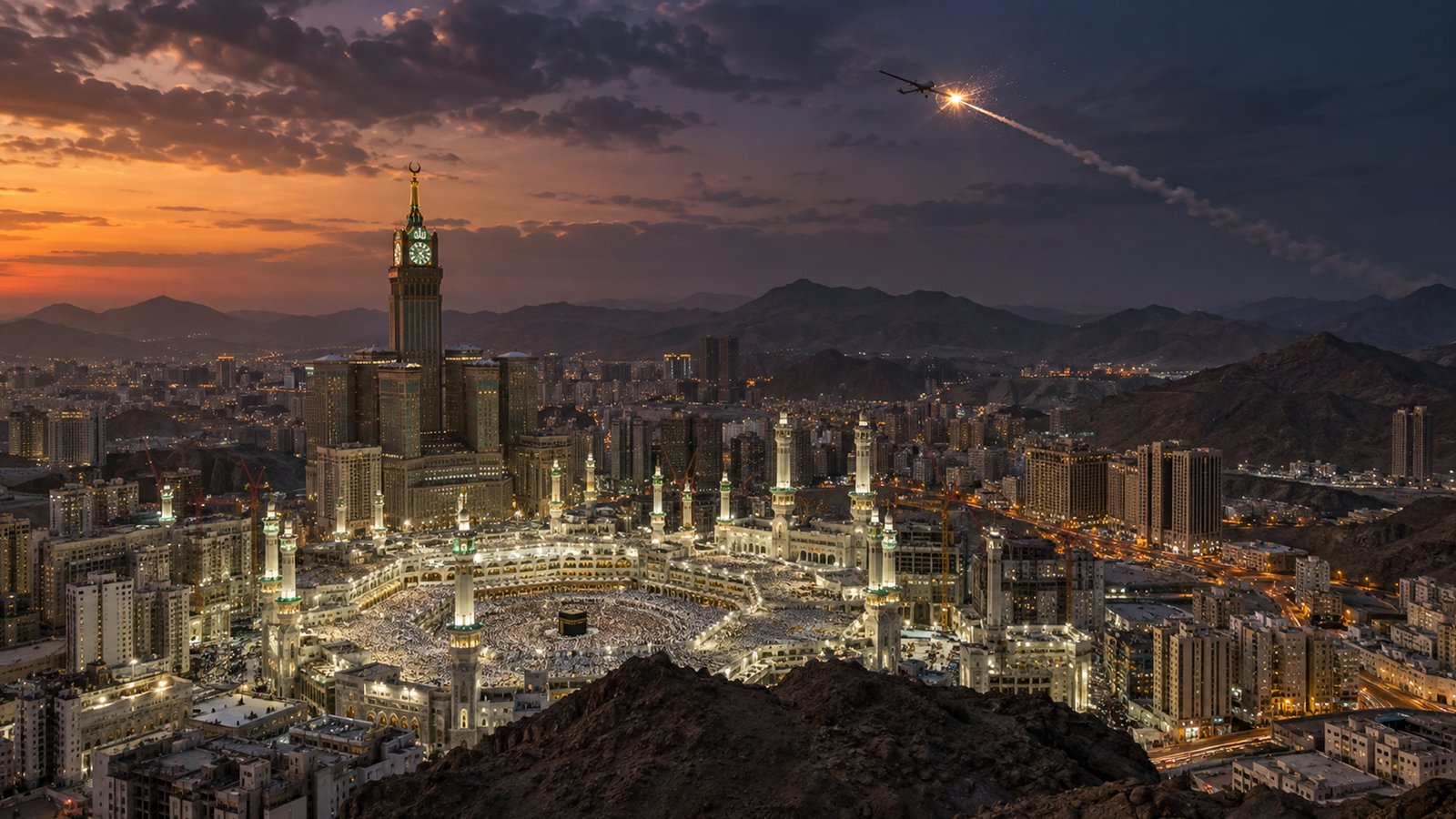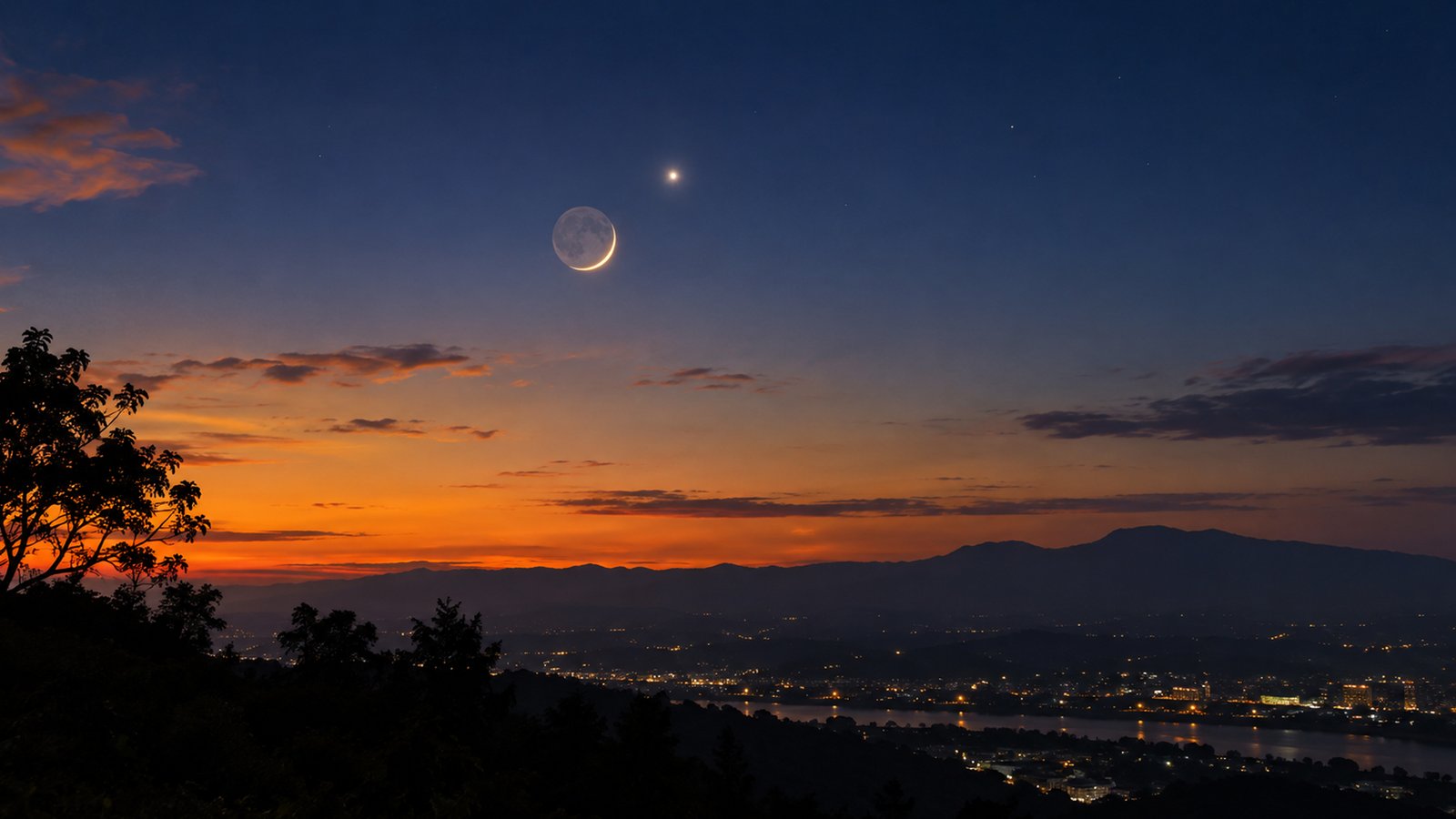
A bright planet and a slender crescent Moon came together in the evening sky on September 14, giving skywatchers a beautiful reason to look west after sunset.
Venus, often called the Evening Star, appeared close to the young Moon as twilight faded. The pairing was visible without a telescope in places with a clear view of the western horizon, turning an ordinary evening into a small but memorable celestial event.
The Moon was just a few days into its new cycle, with only about 14% of its surface lit by sunlight. Its thin crescent stood out against the darker sky, while Venus shone much more brightly beside it.
Finding the pair, however, was not always easy. Both objects were sitting fairly low in the sky, so buildings, trees and hills could get in the way. Skywatchers had only a short window after sunset to spot them before they sank towards the horizon. The Guardian described Venus as a “spotting challenge” because of its low position in the twilight sky.
The easiest way to find Venus was to look for the crescent Moon first. Once the Moon appeared, Venus could be spotted nearby as the much brighter point of light. No special equipment was needed, although binoculars could help observers pick out the pair against the remaining glow of sunset.
The close meeting was not simply an attractive photograph. In some parts of the world, the Moon actually passed in front of Venus, an event known as a lunar occultation. From those locations, Venus briefly disappeared behind the Moon before emerging again.
The occultation was visible from parts of Europe, Africa and Asia, although exactly what observers saw depended on their location. In some places, the event occurred during daylight or when the two objects were too close to the horizon, making it difficult or impossible to see.
The Moon and Venus only looked close from Earth. They were still separated by millions of kilometres in space. Their apparent meeting was the result of their positions lining up from our viewpoint.
That simple alignment can nevertheless produce some of the most striking sights in the night sky. A bright planet beside a thin Moon is particularly eye-catching because the two objects look so different. The Moon has a soft, curved glow, while Venus appears almost like a brilliant star.
Venus is one of the easiest planets to see from Earth because it reflects a large amount of sunlight. Its thick cloud-covered atmosphere makes it especially bright. Depending on where it appears, people often call it either the Evening Star or the Morning Star, although Venus is, of course, a planet rather than a star.
The September meeting also came at an interesting time for Venus. The planet has been a prominent feature of the evening sky this month, giving casual stargazers several opportunities to spot it without specialist equipment. NASA’s September skywatching guide highlighted Venus and the Moon among the month’s notable sights.
The Moon will not stay beside Venus. As it travels around Earth, its position against the background stars changes from night to night. That movement will take it past several other bright objects during September, creating more opportunities for stargazing and planetary observation.
The changing position of the Moon is one reason the night sky never looks exactly the same. A familiar planet can appear in a different part of the sky, while the Moon’s shape changes from a thin crescent to a half Moon and eventually a full Moon.
The September 14 display was therefore a brief moment in that constantly changing sky. People who missed the closest pairing can still watch Venus on subsequent evenings, although the Moon will move farther away.
For anyone new to astronomy, events like this offer an easy starting point. There is no complicated equipment to set up and no need to understand advanced astronomy before enjoying the view. All that is needed is a clear evening, an unobstructed western horizon and a few minutes of patience.
The sight also offers a useful reminder of how much is happening above us even on an ordinary evening. The Moon is constantly moving around Earth, Venus is following its own orbit around the Sun, and from the ground those enormous movements can occasionally come together as a simple, beautiful scene.
The Venus and crescent Moon pairing may have lasted only a short time, but it gave skywatchers something that astronomy often does best — a reason to pause, look up and appreciate the changing night sky.