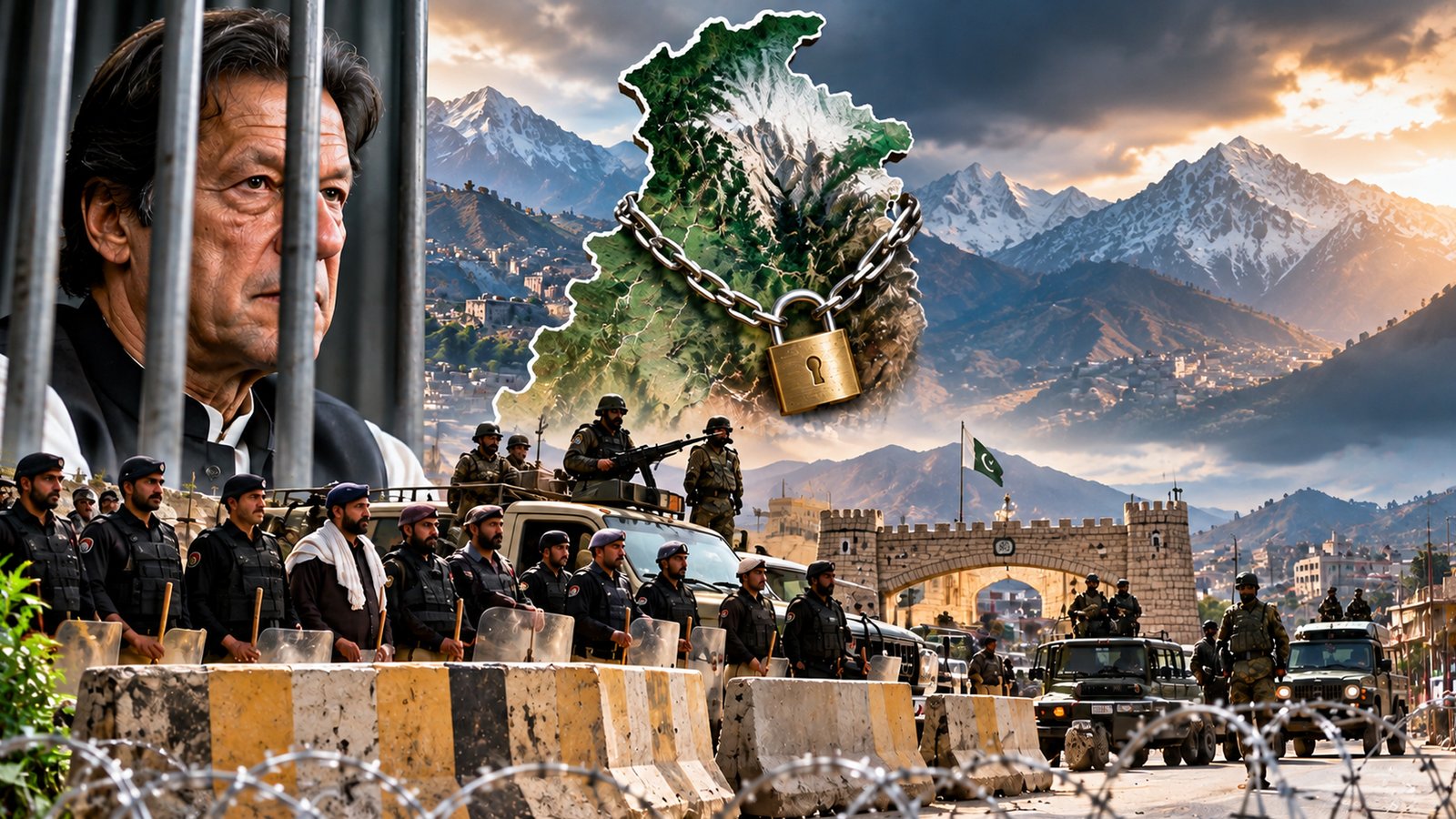
Pakistan has imposed emergency rule in Khyber Pakhtunkhwa, suspending the provincial government led by jailed former prime minister Imran Khan’s Pakistan Tehreek-e-Insaf (PTI) party and bringing one of the opposition’s strongest political bases under federal control. The decision, announced on October 11, marks a major escalation in the confrontation between Prime Minister Shehbaz Sharif’s government and Khan’s supporters.
President Asif Ali Zardari approved the emergency proclamation on the advice of the federal government, citing worsening security and a breakdown of constitutional governance. The move comes amid renewed protests demanding Khan’s release and growing disagreements over how to tackle militancy in the northwestern province bordering Afghanistan.
Under the arrangement, provincial Governor Faisal Karim Kundi will oversee the administration with the assistance of an 11-member advisory council. Pakistan’s federal government has taken over key executive and administrative responsibilities previously exercised by the elected provincial government. The emergency and governor’s rule are expected to remain in place for six months, according to government officials.
The decision was taken under Articles 232 and 234 of Pakistan’s Constitution, which provide for emergency measures and governor’s rule under specified circumstances. The provincial chief minister, ministers, advisers and other officials have been required to vacate their positions, effectively ending the PTI-led administration’s authority.
Islamabad has defended the intervention as necessary to restore order and strengthen counterterrorism efforts. The federal government has accused the provincial leadership of failing to cooperate adequately in the fight against militant groups operating in the region. Information Minister Attaullah Tarar has also alleged links between elements of the provincial administration and militants, claims the PTI has rejected.
Khyber Pakhtunkhwa has long faced attacks by armed groups, particularly the Tehreek-e-Taliban Pakistan (TTP). The group has targeted security personnel and civilians, contributing to persistent instability in the province. Its location along the Afghan border has made security cooperation and cross-border militancy major concerns for Islamabad.
Pakistan’s government has repeatedly accused militants of using Afghan territory as a base for attacks. It has called on Afghanistan’s Taliban authorities to prevent armed groups from operating across the border. Kabul has disputed Islamabad’s allegations, adding another layer of tension to an already volatile regional security situation.
However, the emergency declaration has exposed a deeper political divide over how the province should be governed and how militancy should be addressed. The PTI has opposed aspects of the federal government’s security strategy, including military operations in the region, and has argued that provincial authorities should have a greater role in decisions affecting local communities.
The political confrontation intensified after talks between the federal government and the PTI failed to produce an agreement. The opposition party has demanded Khan’s release and access to medical treatment, while the government has insisted that security concerns must be addressed. Protests and threats of a march towards Islamabad added to the pressure before the emergency was announced.
Khan, who served as Pakistan’s prime minister from 2018 to 2022, has been in prison since August 2023 and faces multiple legal cases. He and his supporters have maintained that the cases are politically motivated, while the authorities have rejected allegations of political persecution.
The emergency has dealt a significant blow to the PTI, which retained control of Khyber Pakhtunkhwa despite the wider political turmoil following Pakistan’s 2024 general election. The province was the party’s last major provincial stronghold, giving it an important institutional base from which to mobilise supporters and challenge the federal government.
The intervention has also raised concerns about provincial autonomy and democratic representation. The PTI has condemned the decision as politically motivated and said it intends to challenge the move through legal channels. A petition contesting the emergency and governor’s rule has been filed in the Peshawar High Court.
Pakistan Imposes Emergency in Imran Khan’s Stronghold
Security has been tightened in the provincial capital, Peshawar, with roadblocks and additional deployments reported around key government installations. Arrests of PTI leaders and disruptions in some districts have further heightened tensions, while school closures and examination postponements have affected daily life in parts of the province.
The federal government has also indicated that the military could play a greater role in supporting civilian authorities during security operations. The development has fuelled concerns among opposition supporters that the emergency could extend beyond counterterrorism and further weaken elected provincial institutions.
The immediate challenge for Islamabad is to contain militant violence while preventing the political confrontation from escalating. For the PTI, the suspension of its provincial government represents a serious setback as it continues to campaign for Khan’s release.
The coming weeks will test whether emergency rule improves security in Khyber Pakhtunkhwa or deepens Pakistan’s political divisions. The outcome could have wider implications for relations between the federal government and provincial administrations, the role of the military in domestic affairs, and the future of opposition politics in the country.