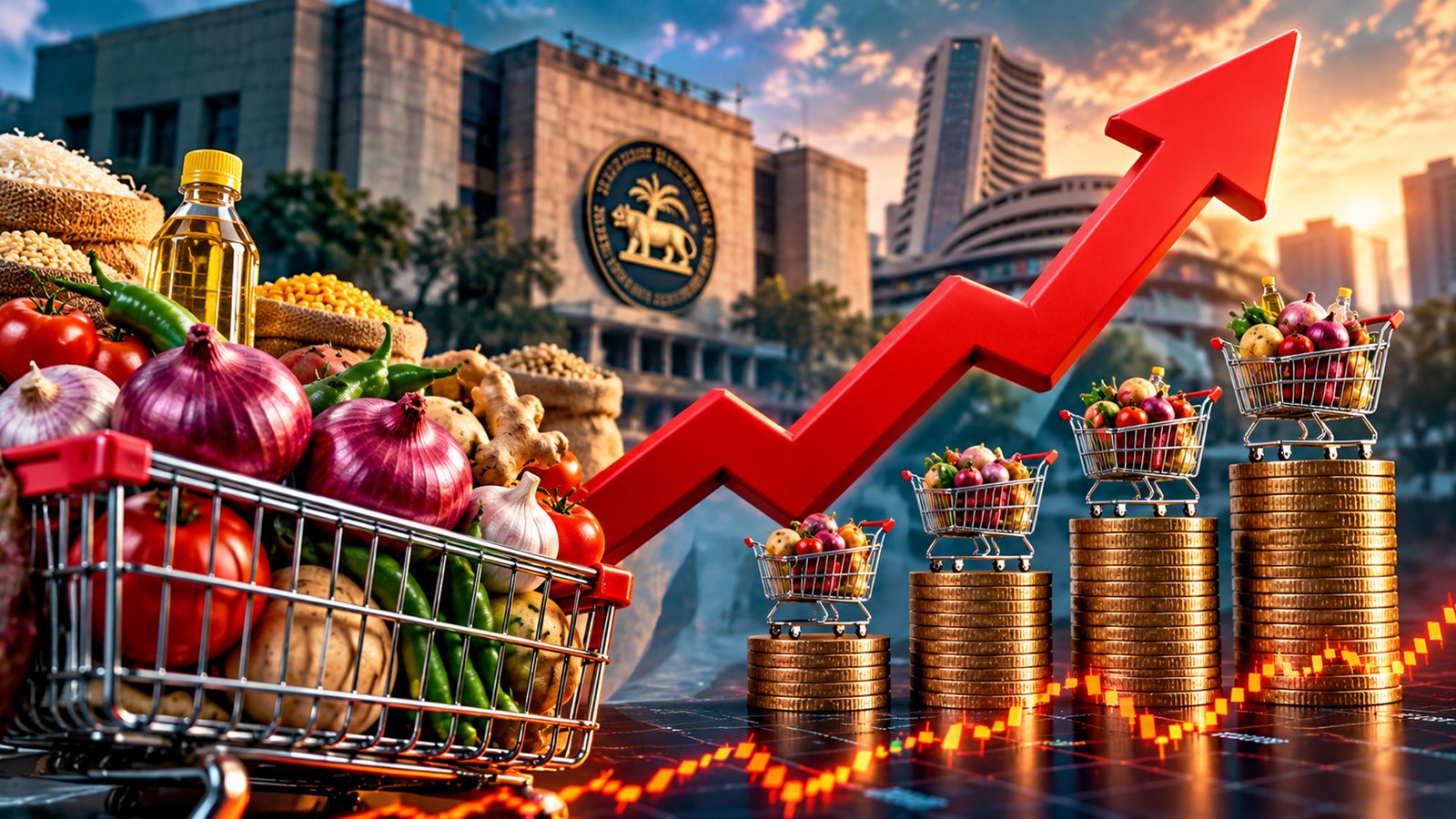
India’s inflation challenge is becoming more difficult to manage, with retail inflation rising to 5.54% in September and moving closer to the Reserve Bank of India’s (RBI) upper tolerance limit. The increase from 4.83% in August reflects mounting pressure from food prices, transport expenses and other household costs. The latest data has also intensified concerns about whether the central bank may need to raise interest rates further to prevent inflation from becoming entrenched.
The September reading is the highest since October 2024 under the comparable series and marks the fourth consecutive month that inflation has remained above the RBI’s 4% target. The increase comes shortly after the Monetary Policy Committee (MPC) raised the benchmark repo rate by 25 basis points to 5.50% on October 7, signalling a more cautious approach to monetary policy.
Food prices remain at the centre of the problem. Food inflation accelerated to 7.74% in September from 5.97% in August, putting pressure on household budgets and adding to the cost of running food-related businesses. The sharpest increases were recorded in essential ingredients such as onions, garlic and lemons, highlighting the effect of supply disruptions on everyday expenses.
Onion inflation surged to 108.09% year-on-year, compared with 48.78% in August. Garlic prices rose 54.62%, while lemon inflation reached 36.41%. Although potato and tomato prices remained below their year-earlier levels, the overall rise in food inflation suggests that cheaper items have not been sufficient to offset increases in other essentials.
The impact has been more pronounced in rural areas. Rural retail inflation climbed to 6.08% in September from 5.24% in August, crossing the RBI’s upper tolerance threshold of 6%. Urban inflation rose to 4.88% from 4.31%. Rural food inflation reached 8.06%, compared with 7.18% in urban areas.
Higher inflation can have wider economic consequences. When households spend more on groceries and other necessities, they have less money available for discretionary purchases. This can affect demand for consumer goods, retail, hospitality and other services. Businesses, meanwhile, may face higher procurement, transport and operating expenses, putting pressure on profit margins.
Energy prices pose another risk. India relies heavily on imported crude oil, making domestic prices vulnerable to global supply disruptions and geopolitical tensions. The conflict involving Iran has added uncertainty to the oil market, with the possibility of higher crude prices increasing the cost of fuel, freight and manufacturing. A sustained increase could also widen the import bill and place pressure on the rupee, potentially making imported goods more expensive.
Weather conditions and agricultural output will also influence the inflation trajectory. Uneven monsoon rainfall and concerns over crop production could affect supplies and keep food prices elevated. The arrival of fresh crops and the availability of vegetables in wholesale markets will be important in determining whether the recent price increases ease in the coming months.
The RBI has already responded to these risks by raising its inflation forecast for the 2026-27 financial year to 5.2% from 5% previously. It also expects inflation to reach 6% in the October-December quarter. This outlook suggests that the central bank sees price pressures persisting beyond the latest monthly increase.
A further repo rate hike remains a possibility if inflation continues to rise. Higher interest rates can help moderate demand and contain broader price increases, but they also increase borrowing costs. Businesses may postpone expansion plans, while households could face higher equated monthly instalments if lending rates rise. The challenge for policymakers is to bring inflation closer to the target without unnecessarily weakening economic activity.
The distinction between temporary supply shocks and persistent inflation will be crucial. A short-lived increase in vegetable prices may ease as supplies improve, but sustained increases in fuel, transport and services can spread through the economy. If businesses begin passing higher input costs on to consumers more widely, inflation could become harder to control.
The latest figures therefore place greater importance on the coming months. Food availability, global oil prices, the rupee’s movement and changes in consumer demand will help determine whether inflation stabilises or approaches the RBI’s upper tolerance limit again.
The central bank must now balance price stability with growth at a time when households and businesses are already dealing with higher costs. If inflation remains elevated, the scope for monetary easing could narrow, keeping borrowing costs under pressure. A sustained moderation in food and energy prices, however, would give policymakers more room to assess the outlook before taking further action.