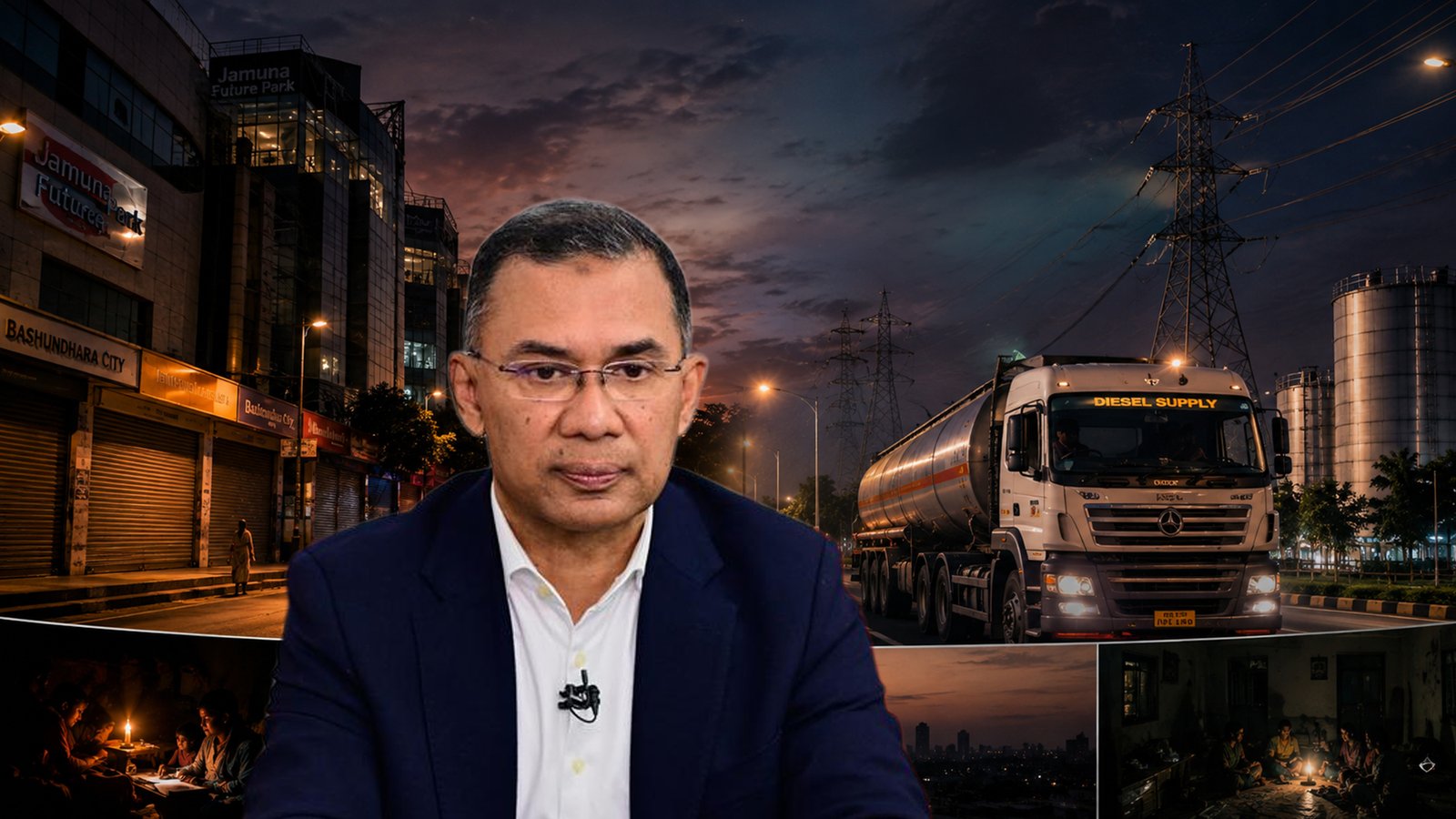
Bangladesh is turning to India for additional diesel supplies as a worsening natural gas shortage pushes its power sector deeper into crisis. With electricity shortages causing prolonged outages in several parts of the country, the government has ordered shops, markets and shopping malls to shut by 8 pm in an effort to cut power consumption.
The move marks a further tightening of Bangladesh’s energy conservation measures. Commercial establishments have been asked to reduce their operating hours, while trade fairs and cultural programmes must also end by 8 pm. Authorities have additionally called for billboards, decorative lights and other non-essential electricity use to be switched off.
The restrictions come as several parts of the country experience lengthy power cuts. Some areas have reported outages of 8 to 10 hours a day, with the problem particularly severe outside major urban centres. The prolonged load-shedding is affecting households as well as businesses, farmers and factories.
The main problem is a shortage of natural gas, which Bangladesh relies heavily on for electricity generation. Gas-fired power plants are receiving only a fraction of the fuel required to operate at normal capacity. Recent figures cited by Bangladeshi authorities showed demand from gas-based power plants at about 2,524 million cubic feet per day, compared with supplies of roughly 744 million cubic feet.
The gas shortage intensified after disruptions at the Moheshkhali LNG terminals reduced the flow of regasified liquefied natural gas into Bangladesh’s energy network. The disruption has left power producers struggling to obtain enough gas, forcing greater dependence on other fuels and contributing to electricity shortages.
The situation has been made more difficult by disruptions in global energy markets linked to the Iran crisis. Bangladesh, like several other Asian economies, is vulnerable to fluctuations in international fuel and LNG supplies. Rising costs and supply uncertainty have made it harder for the country to compensate for domestic gas shortages by simply increasing imports.
Against this backdrop, Dhaka has approached India for additional diesel. Bangladesh is seeking alternative fuel supplies to keep generators and power plants operating while gas availability remains constrained. It is also exploring supplies from other sources, including China, as it attempts to prevent the crisis from worsening.
The request puts India’s role as a regional energy partner in sharper focus. The two neighbours already have established energy links, including electricity trade and fuel supplies. Additional diesel deliveries could provide Bangladesh with some immediate relief, although they would not solve the underlying shortage of natural gas.
The impact is already visible across the economy. Small shops and businesses are losing operating hours, while industries are struggling with repeated interruptions to production. In some areas, gas shortages have affected transport infrastructure as well. In Narayanganj, reports said 30 of 33 CNG filling stations had stopped operating because of extremely low gas pressure.
The manufacturing sector is particularly exposed. Bangladesh is a major exporter of garments and other manufactured goods, and reliable electricity is essential for factories to meet production schedules. Earlier reports have indicated that small and medium enterprises have seen production fall sharply because of energy shortages, rising costs and frequent load-shedding.
The government’s early-closing order is therefore designed as an emergency measure to conserve electricity during peak evening hours. Lower commercial demand could help utilities manage the limited electricity available and reduce the strain on the national grid.
But the measure also shows how difficult the underlying energy situation has become. Closing businesses earlier can save electricity, but it cannot replace the gas required to run power plants. Bangladesh will need to restore LNG supplies, secure alternative fuels and strengthen its energy infrastructure if it wants to bring power shortages under control.
The immediate focus is on securing enough fuel to keep the power system running. The appeal to India could offer short-term support, but Bangladesh’s longer-term challenge is to reduce its exposure to sudden disruptions in imported energy.
For Bangladesh, the immediate priority is to restore stable gas supplies and prevent further disruption to electricity generation. While diesel imports from India could provide some short-term relief, the crisis underlines the need for stronger energy security, diversified fuel sources and greater resilience against global supply shocks.