
The Summaries

Google restores Telegram after brief restriction
Google has restored Telegram on its platforms after a temporary restriction linked to concerns over the NEET paper leak investigation. The messaging app resumed normal availability following a review, bringing relief to millions of users who faced brief disruptions.
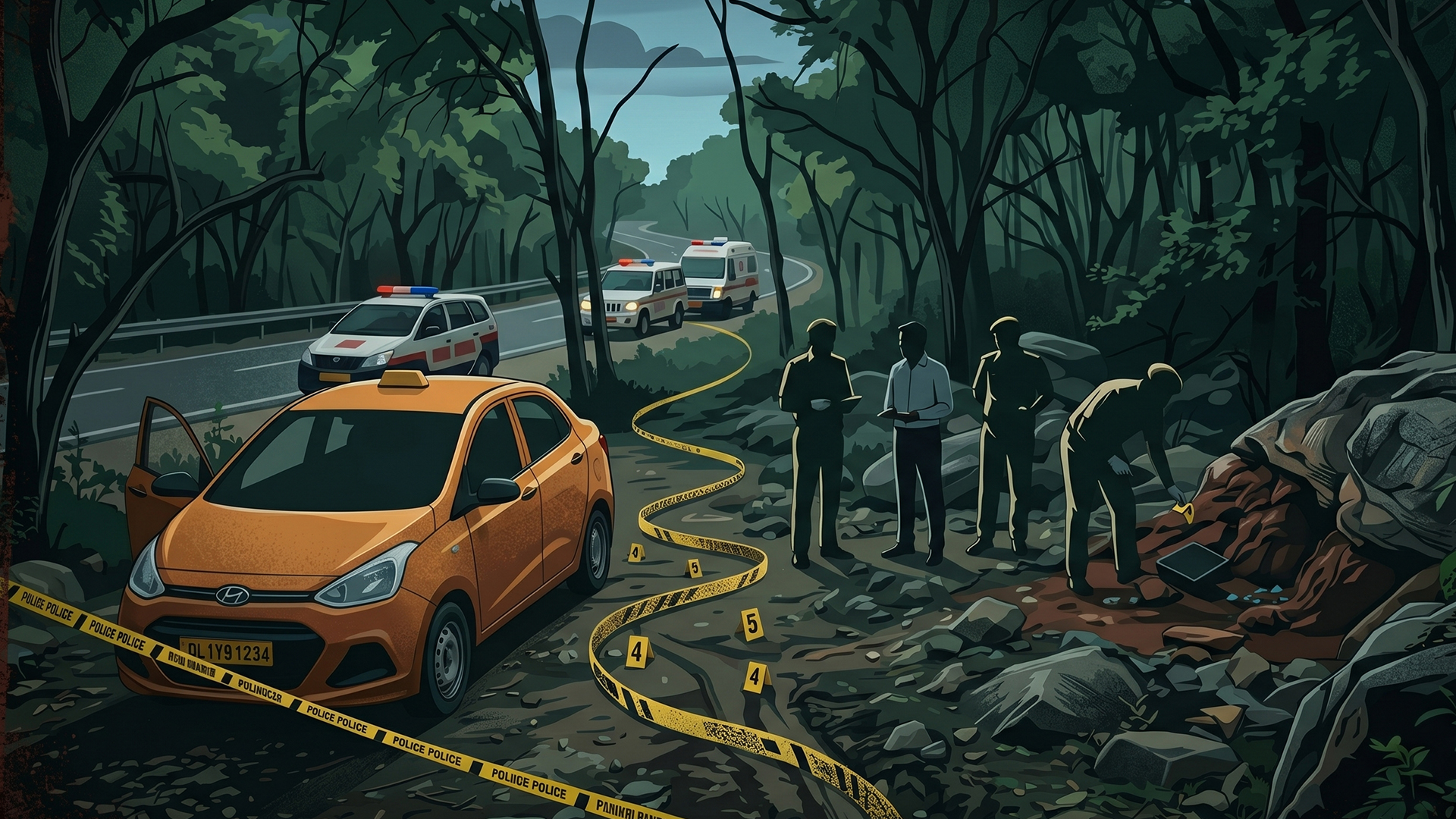
Delhi cab driver arrested in minor girl’s murder
Delhi Police have arrested a cab driver accused of abducting, sexually assaulting and killing a minor girl who was sleeping with her family on a footpath. Investigators say the accused hid the child’s body under stones before resuming work and picking up another passenger.

Colombia elects conservative president
Colombia has elected conservative leader Miguel Uribe as president, marking a major political shift. Campaigning on security and economic reforms, he defeated the ruling left’s candidate, reflecting growing voter concerns over crime, economic challenges and governance.

Larry The Cat survives another British PM change
Larry, the famous cat of 10 Downing Street, has outlasted his sixth UK prime minister. Adopted in 2011 as chief mouser, the 19-year-old feline has become a beloved symbol of stability, witnessing years of political upheaval and leadership changes.

Bihar police kill BJP leader’s alleged murderer
The Bihar Police killed Bharat Bhushan Tiwari, accused in BJP leader Surendra Kewat’s murder, after an encounter in Bhojpur. Police said he fired first. The case had sparked outrage, protests and demands for justice. Investigations continue into possible accomplices too.

US trade chief arrives India for key talks
US Trade Representative Jamieson Greer has arrived in India for crucial discussions on an interim trade agreement. Officials from both countries are expected to address tariff concerns, market access and investment issues as they seek to strengthen economic ties.
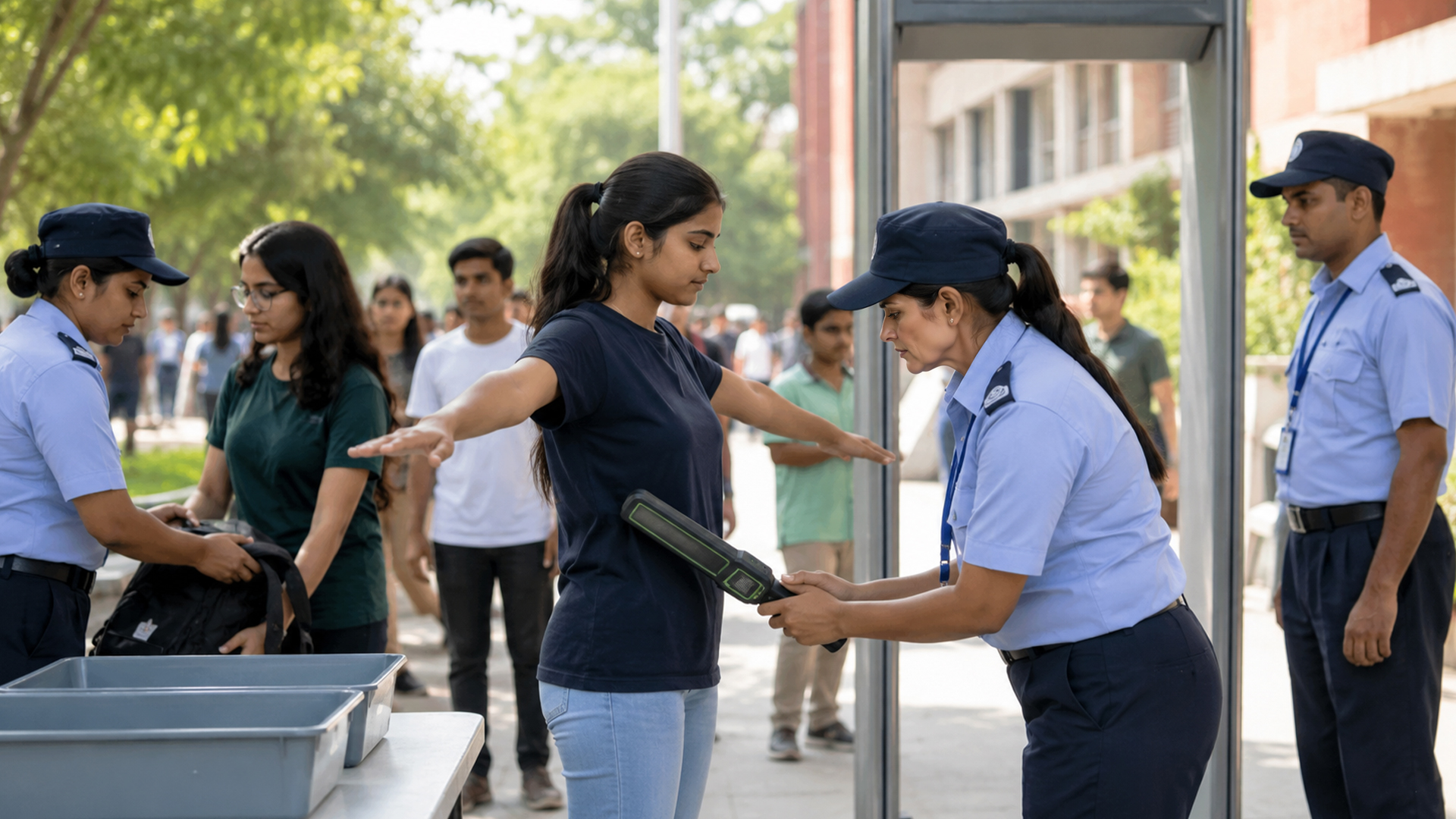
More than 22 lakh students take NEET re-exam
More than 22 lakh students appeared for the NEET-UG 2026 re-examination on Sunday. The test was conducted across India and overseas centres under strict security, with biometric verification, CCTV monitoring and AI-powered surveillance aimed at preventing malpractice and ensuring transparency.

Tesla autopilot crash kills elderly woman inside home
A 76-year-old woman was killed after a Tesla Model 3 operating in Autopilot mode crashed into her home in Katy, Texas. Authorities said the vehicle veered off the road, struck the house and fatally injured the resident. Investigators are examining the crash and the role of Tesla’s driver-assistance system.

Neeraj Chopra comes fourth at Doha Diamond League
India’s javelin ace Neeraj Chopra finished fourth in his season-opening event at the Doha Diamond League with a best throw of 84.52 metres. While he missed out on a podium finish, the Olympic champion used the competition to assess his form and build momentum for a packed season ahead.

Strait Of Hormuz reopens after landmark US-Iran deal
Oil tanker traffic through the Strait of Hormuz resumed following the US-Iran peace agreement, easing fears of supply disruptions. The reopening lifted market sentiment and reassured energy importers, though shipping firms remain alert to evolving security and regulatory conditions.

Jahangir Khan’s wife held after attack
Sarina Bibi, wife of gangster Jahangir Khan, was arrested after allegedly leading supporters who stormed a police station in West Bengal’s South 24 Parganas. The group reportedly attacked police personnel and damaged property while attempting to secure Khan’s release.

Central Park tragedy sparks carriage debate
A teenage visitor of Indian origin died after a horse-drawn carriage accident in New York’s Central Park. The tragedy has renewed calls to ban the carriage industry, with mayoral candidate Zohran Mamdani citing safety and animal welfare concerns. Authorities are investigating the incident.
About This Category
The Format Is the Editorial Argument
The name of this publication is The Summary. This section is where that philosophy is most directly expressed. The Summaries are not abbreviated versions of longer articles. They are complete pieces of journalism — reported, edited, and published at a length that respects both the story and the reader's time. The decision to keep them short is not a constraint. It is a position: that most news can be communicated clearly in 150 words, and that padding it to 600 words rarely improves it.
The editorial discipline required to produce a good summary is different from, and in some ways harder than, writing at length. Every sentence has to do real work. Nothing survives that doesn't belong there.
What Ends Up Here
The range is genuinely broad — and deliberately so. On any given day, The Summaries might carry a Karnataka cabinet resignation, a hospital fire in Bihar, a CBSE policy recommendation, a Kerala toddler death that has triggered public outrage, and a Cockroach Janta Party founder's plans to protest at Jantar Mantar. These are not thematically related stories. They are simply the news, treated with consistent brevity.
That breadth is the point. A reader who follows The Summaries doesn't need to choose a category to monitor. National politics, health research, civic tragedies, civil society, lifestyle news — it all comes through this section at a pace that doesn't require hours of reading to stay current.
The Judgment That Goes Into 150 Words
Selection is where the editorial work happens. Not everything becomes a Summary. Stories make it here when the core fact is clear, the significance is demonstrable, and the full picture can be honestly conveyed at short length without stripping context that the reader actually needs. A story like the Muzaffarpur hospital fire — four lives lost, a state inquiry ordered, families to be compensated — can be told completely in under two minutes. Stretching it doesn't add information; it adds length.
Some stories don't work as summaries because the context is too dense to compress responsibly. Those go elsewhere on the site. The Summaries is not a catchall; it's a format with specific requirements, and not every story meets them.
A Different Kind of Archive
Over time, The Summaries has become a reliable daily record of what happened in India and across the world — told concisely, sourced from official announcements and credible reporting, and published without the delay that often accompanies longer-form analysis. Readers who have followed the section consistently say it functions as a news briefing they can consume in a single sitting. That is more or less exactly what it was designed to do.
Frequently Asked Questions
Q1. What is The Summaries format and how is it different from other sections?
The Summaries are short, complete news pieces — typically under 150 words — covering a single event or development clearly and accurately. Unlike the full-length articles in sections like National, Business, or Health, these are written to be read in under a minute. The format is intentional: the goal is to report the news completely, not briefly for brevity's sake.
Q2. Does The Summaries cover all topics or only specific beats?
All topics. A single scroll through The Summaries on any given day might include political news, health research, a civic disaster, an education policy decision, and a human interest story. The connective thread is the format, not the subject. Readers who want to stay across multiple beats without tracking several sections will find everything here.
Q3. Are The Summaries just shortened versions of longer articles on the site?
No. They are standalone pieces written specifically for this format. Occasionally, a major developing story will have both a full article and a Summary — but they are written separately, for different purposes. The Summary version is complete on its own terms, not a teaser or a preview of something longer.
Q4. How does The Summary decide what becomes a Summary versus a full article?
If a story can be told accurately and completely at short length without stripping essential context, it's a candidate for The Summaries. If the background, timeline, or stakeholder complexity genuinely requires more room, it gets a full article. The test is whether the reader comes away informed — not whether the piece meets a word count.
Q5. How often is The Summaries section updated?
Throughout the day as news develops. There is no fixed publishing schedule — stories are published when they are ready. Readers who check in once or twice daily will typically find several new pieces each visit. The pace reflects the news cycle, not a content calendar.
Q6. Is The Summaries a good starting point for readers new to the site?
It is probably the most efficient way to understand the full scope of what The Summary covers. Because the section spans every beat — politics, business, health, lifestyle, science, national, world news — a few minutes in The Summaries gives a reader a clearer picture of the publication's range than browsing any single category section would.