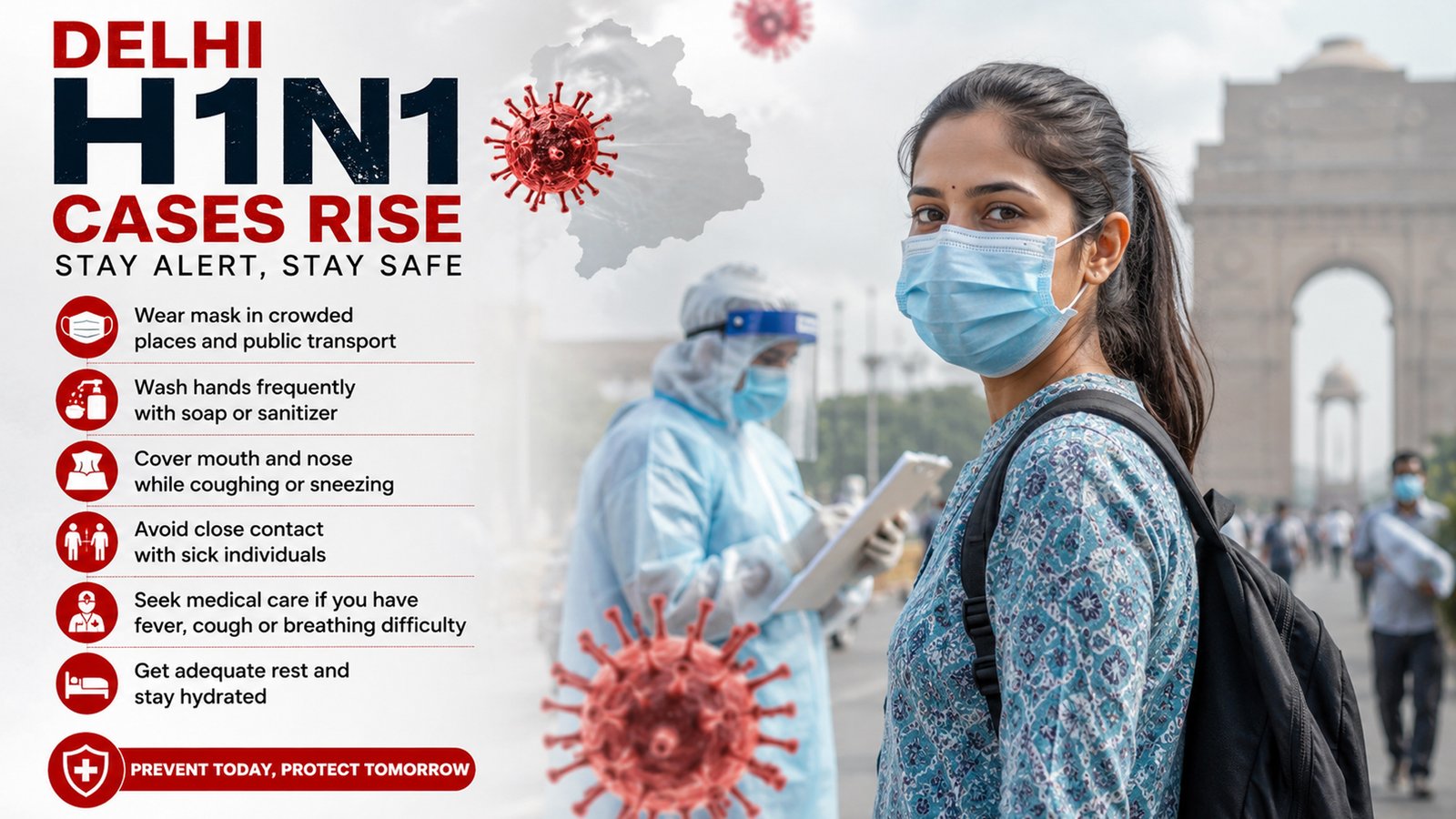
Delhi is witnessing a rise in H1N1 influenza infections, with 166 new cases reported in the latest 24-hour period. The fresh cases have pushed the city’s H1N1 tally to 2,612, while total Influenza-A infections have crossed 3,300. The increase has prompted the Delhi government to strengthen hospital preparedness and monitor the situation closely.
Delhi Health Minister Pankaj Kumar Singh has reviewed the preparedness of government hospitals as health officials track the growing number of influenza cases. The review focused on hospital beds, isolation facilities, testing arrangements, medicines, emergency services and the availability of doctors and other healthcare workers.
The government is preparing hospitals to manage a possible further increase in patients. Officials have asked hospitals to maintain adequate isolation capacity and ensure that people with suspected or confirmed influenza can be assessed and treated without unnecessary delays.
Government hospitals have been directed to keep at least five isolation beds available for influenza patients. Larger hospitals have been asked to maintain 10 or more beds depending on their capacity and patient load.
Hospitals are also strengthening dedicated flu corners and fever clinics. These facilities are intended to help medical teams identify patients with influenza-like symptoms at an early stage. Doctors can then decide whether a patient requires testing, isolation, observation or hospital admission.
The latest increase follows another rise reported the previous day, when Delhi recorded 138 new H1N1 infections. The continuing increase has made daily surveillance more important as health authorities assess whether the number of cases is likely to rise further.
Testing facilities are being closely monitored. Patients with symptoms that suggest influenza may undergo testing based on their clinical condition and medical assessment. Those showing signs of severe infection or pneumonia are being given greater attention because they may require hospital treatment.
Hospitals have also been asked to maintain adequate supplies of essential medicines and other medical equipment. Medical staff are being arranged through shift-based schedules to ensure that emergency services remain available around the clock.
What is H1N1 influenza?
H1N1 is a subtype of Influenza A virus that affects the respiratory system. It became widely known as swine flu during the 2009 influenza pandemic. It now circulates as one of the seasonal influenza viruses.
The virus can spread through respiratory droplets when an infected person coughs, sneezes or talks. It may also spread when people touch contaminated surfaces and then touch their eyes, nose or mouth.
Common H1N1 symptoms include fever, cough, sore throat, headache, body aches, tiredness and weakness. Some patients may also experience a runny or blocked nose.
The symptoms can resemble those caused by other respiratory infections. A doctor may therefore recommend testing depending on the patient’s symptoms, medical history and risk of complications.
Who is at greater risk?
Most healthy people recover from seasonal influenza without major complications. However, certain groups are more vulnerable to severe illness.
These include young children, older adults, pregnant women and people with chronic medical conditions or weakened immunity. People with existing respiratory diseases may also need closer monitoring because influenza can worsen their condition.
Patients should seek medical attention if symptoms become severe or continue to worsen. Difficulty breathing, chest pain, persistent high fever, severe weakness or increasing cough can indicate a more serious infection.
Influenza can sometimes lead to complications such as pneumonia. Severe cases may require hospitalisation, oxygen support or other medical treatment.
Preventing influenza transmission
With cases increasing in Delhi, health experts are encouraging residents to follow basic measures to reduce the spread of respiratory infections.
People who develop flu-like symptoms should avoid close contact with others and stay away from crowded places as much as possible while they are unwell. Regular handwashing and proper respiratory hygiene can also reduce transmission.
People should cover their mouth and nose while coughing or sneezing and dispose of tissues safely. Wearing a mask can provide additional protection when a person has respiratory symptoms or needs to visit a crowded healthcare facility.
People are also advised against self-medication. Antibiotics do not treat viral infections such as H1N1 and should only be used when prescribed by a doctor for a confirmed or suspected bacterial infection.
Those at higher risk of complications should seek medical advice earlier if they develop symptoms.
No evidence of a new H1N1 strain
The rise in cases has raised questions about whether a new H1N1 strain is responsible. Current health assessments, however, indicate no evidence of a new H1N1 strain driving the increase.
The viruses circulating in India are understood to be seasonal influenza strains that have been present since 2025. The current rise is therefore being treated as an increase in seasonal influenza activity rather than the emergence of a new pandemic strain.
Delhi’s health authorities are also monitoring other seasonal diseases, including dengue and malaria. The simultaneous circulation of several infections can increase the pressure on hospitals, making early preparedness important.
The health department’s current approach is focused on surveillance and hospital readiness rather than restrictions. Officials are tracking infection numbers while ensuring medical facilities have sufficient beds, medicines, testing capacity and staff.
For the public, the rise in cases is a reason to remain alert but not panic. An H1N1 infection does not necessarily lead to severe illness, and many patients recover with appropriate care. However, symptoms that become serious or fail to improve should not be ignored.
With the Delhi H1N1 tally now at 2,612, the immediate priority is early identification of serious cases and timely treatment. Strengthening isolation facilities, testing services and emergency care will help hospitals manage the increase while continuing their routine medical services.
Health authorities are expected to keep monitoring the situation in the coming days. Residents can reduce their risk by following basic hygiene measures, avoiding close contact when sick and seeking medical advice when symptoms become severe or persistent.