We typically take more than 20,000 breaths a day. Most of us rarely notice this life-sustaining rhythm or stop to think about how wonderful each breath is. We just keep breathing, in and out, in and out. It is only when breathing is interrupted or becomes difficult that we begin to appreciate how remarkable and how essential this automatic process is.
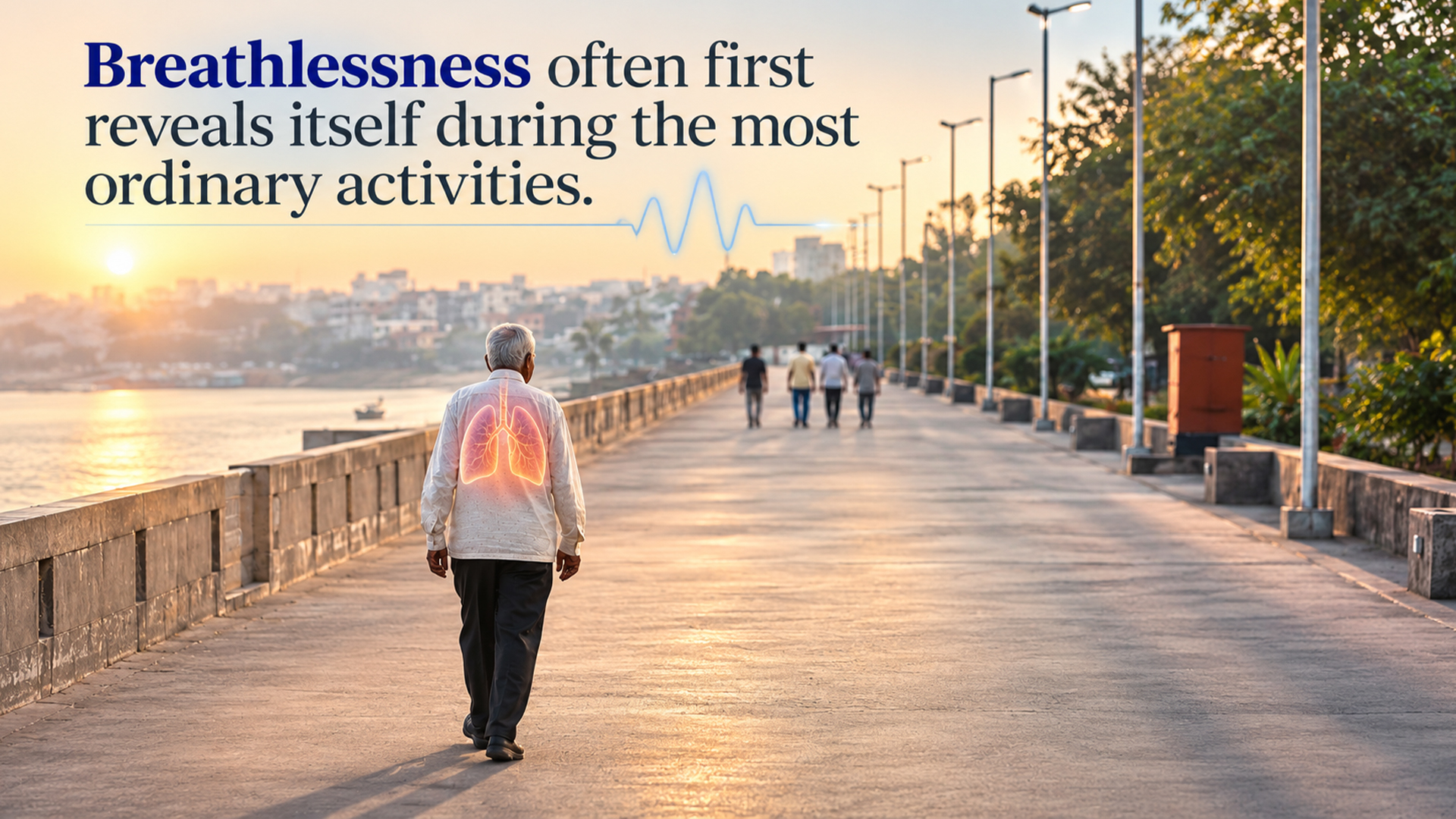
Most of us have experienced breathlessness after climbing stairs, running to catch a train or exercising more vigorously than usual. In such situations, breathing becomes faster because the body temporarily needs more oxygen. It should begin returning to normal once we stop and rest.
But breathlessness that is new, unexplained, disproportionate to the activity you are engaged in or steadily worsening should not be dismissed as “just getting older” or “my fitness is poor”.
Persistent breathlessness after little or no exertion is considered a warning sign.
It may be the body’s earliest indication that the lungs, heart, blood or another part of the oxygen-delivery system is not functioning as it should.
The medical term for breathlessness is dyspnoea. Patients describe it in various ways — “I cannot take a deep breath,” “My chest feels tight,” “I am breathing harder than usual,” or simply, “I am not getting enough air.” Some people might feel breathless only while walking. Others might notice it while speaking, lying flat or even sitting still.
This is far from a rare complaint. A 2025 review of international research found that, using one commonly accepted definition, approximately 12.5 per cent of adults in general populations — around one in eight — experienced clinically significant breathlessness. Yet many people do not volunteer the symptom to a doctor. They quietly reorganise their lives around it.
When is breathlessness abnormal?
It is not possible to quantify a universal amount of activity that should make every person breathless. A trained athlete and a sedentary person will surely have different exercise capacities. What should matter most to you is any clear change from your own baseline.
Ask yourself:
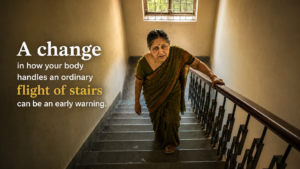
Do I pause on one flight of stairs?
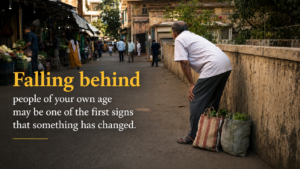
Am I walking more slowly than people my age?
Do bathing, dressing or carrying groceries make me stop?
Am I avoiding activities because I know they will leave me short of breath?
Am I now breathless doing something I managed comfortably a few weeks ago?
These questions matter because people adapt almost invisibly. They begin taking the lift. They walk shorter distances. They ask someone else to carry their bags. They blame a shrinking routine on age. By the time they report “breathlessness” to a doctor, they may already have surrendered a significant part of their normal life.
The cause may not be in the lungs.
Ageing can reduce exercise capacity, but marked or progressive breathlessness is not an inevitable tax on growing older.
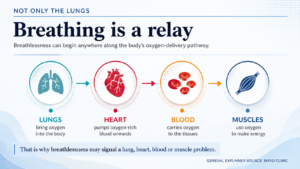
Breathing is an intricate partnership between the lungs, heart, circulation, muscles and brain. The lungs bring oxygen into the body, the heart pumps oxygen-rich blood to the tissues, red blood cells transport it and muscles use it to produce energy. A problem anywhere along this pathway can leave a person short of breath. In fact, most cases of breathlessness are related to conditions affecting the heart or lungs.
The lungs themselves are an extraordinary piece of engineering. They contain hundreds of millions of microscopic air sacs called alveoli. Spread out, their gas-exchange surface would cover roughly half a tennis court. Across this enormous surface, oxygen enters the blood and carbon dioxide leaves it — breath after breath, day and night. The Canadian Lung Association offers an easily digestible explanation of this largely invisible process.
Common pulmonary causes of breathlessness include asthma, chronic obstructive pulmonary disease (COPD), pneumonia, tuberculosis and interstitial lung disease, in which lung tissue becomes inflamed or scarred. Fluid around the lungs, a collapsed lung and, less commonly, lung cancer may also cause it. A useful overview of the possible causes of sudden and longer-term breathlessness is available from the NHS.
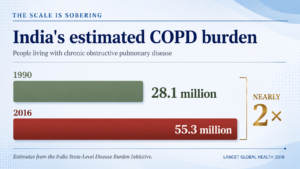
The scale is sobering. COPD was the world’s third leading cause of death in 2023, causing approximately 3.4 million deaths. A major India state-level disease burden study estimated that 55.3 million Indians were living with COPD as far back as 2016 — nearly twice the 1990 estimate. 55 million is more than the population of Andhra Pradesh! Numbers on that scale make it dangerous to casually assume that persistent breathlessness is merely a fitness issue.
In India, exposure history is especially important. Cigarette and bidi smoking remain major causes of chronic lung disease, but they are not the only ones. Second-hand smoke, cooking with biomass fuels, vehicular traffic emissions, construction dust and occupational exposure to silica, coal, chemicals or other fine particles can damage the lungs over time. In lower-income and middle-income countries, the WHO identifies household air pollution as a major COPD risk factor.
Air pollution is not simply an environmental inconvenience. An India-wide burden study published in The Lancet Planetary Health estimated that air pollution contributed to 1.67 million deaths in 2019 — 17.8 per cent of all deaths in the country that year — through respiratory and cardiovascular diseases and other conditions. It can aggravate asthma and COPD and harm people who have never smoked.
The heart is another frequent source of breathlessness. Coronary artery disease, heart failure, valve disorders and abnormal heart rhythms can reduce the circulation’s ability to meet the body’s oxygen needs. In some people, particularly older adults and those with diabetes, breathlessness may even be a symptom of a heart attack without the classic crushing chest pain.
Anaemia can produce breathlessness when the blood contains too little haemoglobin to transport oxygen efficiently. Fatigue, weakness, pallor or a racing heartbeat may accompany it. Obesity, thyroid disorders, loss of physical conditioning and certain neuromuscular conditions can also contribute.
Anxiety and panic attacks can cause very real and frightening breathing difficulty. However, anxiety should not become a convenient explanation before important heart and lung conditions have been considered. Physical illness and anxiety can also coexist, each intensifying the other.
Clues that help identify the cause
The circumstances surrounding breathlessness often provide useful clues. Wheezing, cough or chest tightness may suggest asthma or another airway disorder. Fever, phlegm and chest discomfort could point towards infection. Persistent cough, fever, night sweats or unexplained weight loss warrants investigation for tuberculosis and other illnesses.
Difficulty breathing while lying flat — or waking at night gasping for air — can occur in heart failure, particularly when accompanied by swollen feet or ankles. Sudden breathlessness with sharp chest pain, a rapid heartbeat or coughing up blood may indicate a clot in the lungs. Risk rises after prolonged immobility, major surgery or a long journey, and in people with certain cancers or a previous clot.
The speed of onset matters. Breathlessness developing over months suggests a different range of conditions from severe breathing difficulty that begins within minutes.
When is it an emergency?
Seek emergency medical care if breathlessness begins suddenly and is severe, if breathlessness occurs at rest, if breathlessness makes speaking in full sentences difficult or if breathlessness is accompanied by chest pressure or pain, fainting, confusion, profuse sweating, blue-grey lips, choking, facial or throat swelling, or coughing up blood.
Sudden breathlessness with pain or swelling in one leg also requires urgent attention. A person struggling to breathe should not drive himself or herself to hospital. The right approach is to call for emergency medical assistance.
A pulse oximeter can provide useful information, particularly for someone with known respiratory disease, but the displayed number is not a diagnosis. According to the US Food and Drug Administration, factors including poor circulation, skin pigmentation, skin temperature and fingernail polish may affect accuracy. More importantly, a person can be seriously unwell despite an initially acceptable reading. Symptoms and clinical assessment matter.
What will the doctor look for?
There is no single test for breathlessness because it is a symptom, not a disease. The doctor’s evaluation begins with when it started, what brings it on, how quickly it settles and whether cough, wheezing, fever, chest pain, palpitations, swelling or weight loss accompanies it. Smoking, household and workplace exposures, recent travel, medicines and previous illness are also relevant.
The medical examination may include breathing rate, pulse, blood pressure, oxygen saturation and assessment of the heart and lungs. Depending on the suspected cause, the tests could include a blood count, chest X-ray, electrocardiogram, spirometry, echocardiogram or specialised imaging.
The NHS diagnostic pathway for adult breathlessness illustrates why several different investigations may be required. Sometimes an exercise-based assessment reveals an abnormality that is not apparent at rest.
Early evaluation matters because asthma, COPD, heart disease, anaemia and infection require entirely different treatment. Buying an inhaler, taking antibiotics without advice or repeatedly using cough syrup can delay the correct diagnosis.
Can breathlessness be improved?
Treatment begins with identifying the cause. Protect lung health by avoiding tobacco and second-hand smoke and limiting exposure to dust and fumes. During severe pollution, people with heart or lung disease should reduce strenuous outdoor activity and follow local air-quality guidance.
Regular, graded activity helps preserve cardiovascular fitness and muscle efficiency, but unexplained breathlessness should be assessed before intensive exercise begins.
For chronic lung disease, pulmonary rehabilitation — a supervised programme combining exercise, breathing strategies and education — can help people breathe more easily and improve their quality of life. Appropriate vaccination, a healthy weight and correct use of prescribed medicines also matter.
Above all, do not normalise a shrinking life. If you have quietly stopped walking, travelling, exercising or joining family activities because breathing has become difficult, the symptom is already affecting your independence.
All day and all night, breathing happens without asking for our attention. So, when it begins to demand attention, we should listen. Breathlessness is not a diagnosis, but it is one of the body’s most important alarms. That means timely investigation can be life-changing, even lifesaving.
This article provides general health information and is not a substitute for individual medical assessment.
(The author is an interventional pulmonologist and respiratory medicine consultant in Bengaluru.)