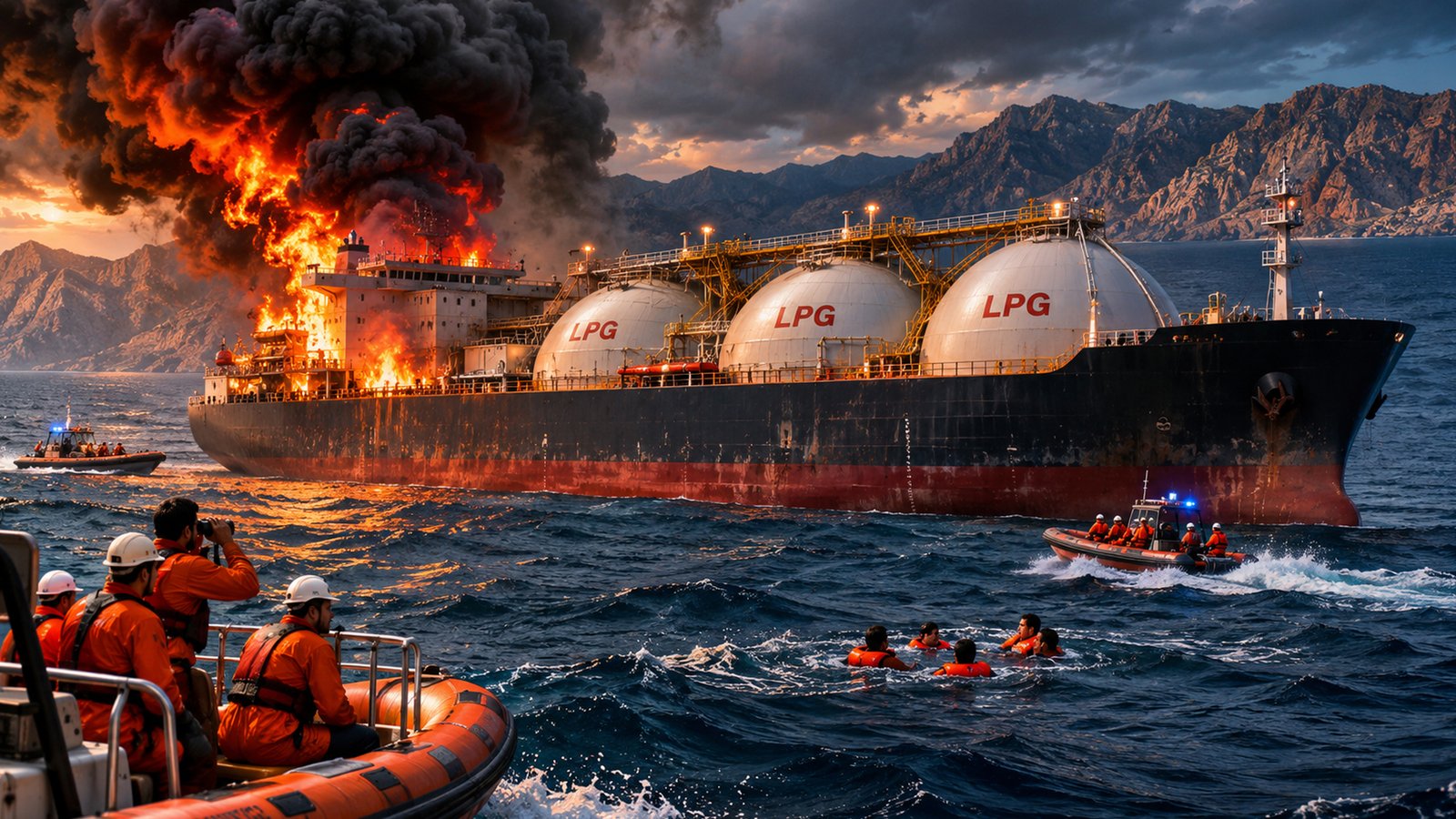
India has strongly condemned the attack on a liquefied petroleum gas (LPG) tanker in the Strait of Hormuz after one Indian sailor went missing and two others suffered injuries. The incident, involving the Panama-flagged vessel MT Tara Gas, took place on November 16 and has raised fresh concerns about the safety of commercial shipping and Indian seafarers in the region.
According to the Ministry of External Affairs (MEA), 24 Indian nationals were aboard the tanker when it came under attack. While 21 crew members were safely rescued, two sustained injuries and were taken to a hospital for treatment. One Indian sailor remains missing, with search and rescue operations continuing to locate him.
The rescued crew members were brought ashore at Khasab in Oman, following the incident near the country’s Musandam Peninsula. The Indian Embassy in Oman is coordinating with local authorities and monitoring the situation closely. It is also extending assistance to the rescued sailors and their families.
India has thanked the Government of Oman for its timely support in evacuating the crew and providing assistance to those affected. The search for the missing Indian national remains the immediate priority.
The attack reportedly involved a projectile striking the tanker, forcing the crew to abandon the vessel. The incident has once again highlighted the risks faced by commercial ships operating in the strategically important Strait of Hormuz, particularly amid continuing regional tensions.
India calls for protection of commercial vessels
Reacting to the attack, the Ministry of External Affairs expressed serious concern over the growing threats to maritime security in the region. It said commercial shipping and civilian infrastructure should not be targeted under any circumstances.
India also called for the restoration of safe, free and uninterrupted navigation through international waterways in accordance with international law. The government stressed that civilian seafarers should not be made vulnerable to conflicts and security-related incidents.
The latest attack has drawn attention to the risks faced by Indian nationals working in international shipping. Indian seafarers form a significant part of the global maritime workforce, with thousands employed on cargo vessels, oil tankers and other commercial ships operating across major international trade routes.
The government has been closely following developments and remains in touch with the relevant authorities to ensure the safety of Indian nationals in the region.
Oman assists in rescue efforts
Omani authorities played a key role in the evacuation of the tanker crew. The rescued sailors were brought to Khasab, where arrangements were made to provide the necessary assistance.
The Indian Embassy is maintaining contact with the Omani government and other agencies involved in the operation. Its efforts are focused on locating the missing sailor, ensuring proper medical care for the injured crew members and assisting those who have been rescued.
The incident also underlines the importance of regional cooperation in responding to maritime emergencies. With commercial vessels continuing to face security threats in the area, timely coordination between governments and maritime agencies remains essential.
Why the Strait of Hormuz is strategically important
The Strait of Hormuz is one of the world’s most important shipping corridors. Connecting the Persian Gulf with the Gulf of Oman and the Arabian Sea, the narrow waterway serves as a major route for global energy shipments.
Large quantities of crude oil, petroleum products and liquefied natural gas pass through the strait, making it critical to international energy markets and trade. Any disruption to shipping in the area can have wider consequences, including delays in deliveries, higher freight charges and increased insurance costs for vessels.
The waterway is particularly important for India, which relies heavily on energy imports from West Asia. A substantial share of the country’s energy supplies is transported through routes linked to the Persian Gulf.
Consequently, any escalation in maritime tensions around the Strait of Hormuz remains a concern for India’s energy security, trade and shipping interests.
Attacks on commercial vessels also put the lives of sailors at risk, regardless of their nationality. The latest incident has renewed calls for stronger maritime security measures and the protection of civilian crews navigating international waters.
For India, the immediate concern remains the safe recovery of the missing sailor and the well-being of the rescued crew members. The government has reiterated that commercial vessels must be allowed to operate without threats and that international shipping routes should remain open, safe and accessible.