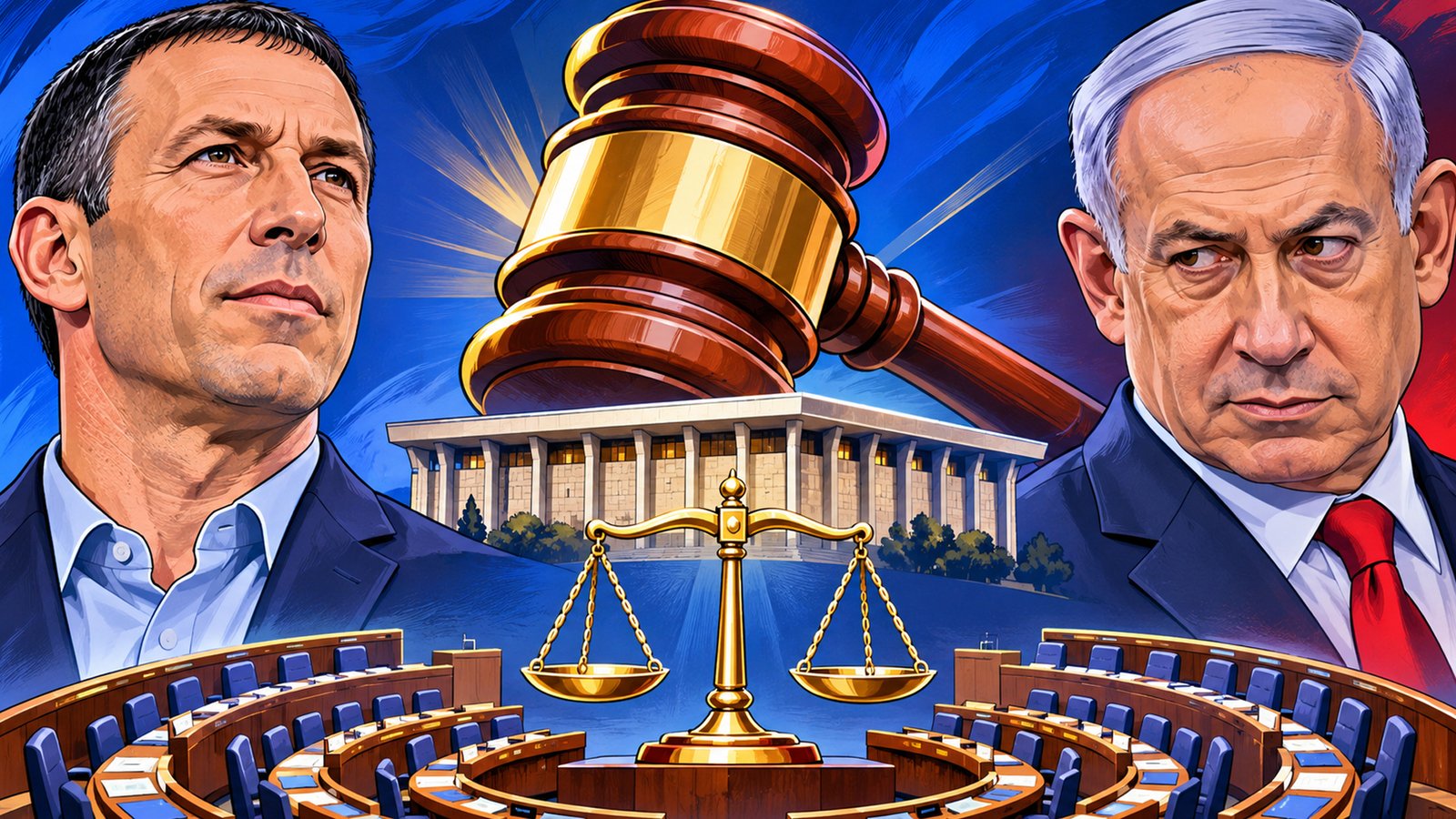
Israel’s parliament has elected opposition-backed Matan Kahana as its new speaker, marking a significant development in the country’s political landscape and shifting the balance of power within the Knesset. The appointment is a setback for Prime Minister Benjamin Netanyahu’s Likud party and gives opposition leader Gadi Eisenkot and his allies greater influence over parliamentary proceedings.
Kahana, a member of Eisenkot’s Yashar party, secured 66 votes in the 120-member Knesset on Tuesday, November 17. He defeated Likud candidate Ofir Katz, who received 52 votes. The election followed several hours of heated debate and procedural delays as lawmakers from Netanyahu’s political alliance attempted to postpone the vote.
Kahana replaces Amir Ohana, a member of Netanyahu’s Likud party, who previously held the position. His election is being viewed as an important political gain for the opposition, which is attempting to establish a new government following Israel’s parliamentary elections on October 27.
The result was made possible by cooperation among several opposition parties. These included Eisenkot’s Yashar, Naftali Bennett’s B’Yachad, Avigdor Liberman’s Yisrael Beytenu and Yair Golan’s Democrats. The Arab-led Ra’am and Joint List parties also backed Kahana, helping the opposition secure the numbers needed to defeat Netanyahu’s candidate.
The six parties together hold 67 seats in parliament, although one Ra’am lawmaker was absent during the vote. Their combined support demonstrated that parties with different political positions could work together on a common parliamentary objective.
Netanyahu’s Likud party criticised the outcome, particularly the opposition’s reliance on support from Arab-led parties. The party described the result as a disgrace and questioned the political understanding behind Kahana’s election. The opposition, meanwhile, sees the development as an opportunity to challenge policies introduced during Netanyahu’s time in office.
The speaker’s position carries considerable influence over the functioning of the Knesset. Apart from presiding over parliamentary sessions, the speaker plays an important role in determining the legislative agenda, scheduling debates and overseeing the movement of bills through parliament. The position also provides influence over the parliamentary Presidium, which helps decide the business taken up by lawmakers.
For Eisenkot and his allies, controlling the speaker’s office could help advance several proposals that had faced resistance under Netanyahu’s government. Among their priorities is reversing parts of the judicial overhaul introduced by the previous administration.
The proposed judicial changes sought to increase the government’s influence over judicial appointments and limit certain powers of the courts. The plans triggered widespread protests across Israel, with critics arguing that they threatened judicial independence and weakened democratic checks and balances. The opposition has consistently opposed the changes and wants to restore the existing balance between the government and the judiciary.
Another important issue is the demand for an independent commission of inquiry into the Hamas attack on Israel on October 7, 2023. The attack exposed major security and intelligence failures and remains a central issue in the country’s political debate. Netanyahu’s opponents have repeatedly called for an independent investigation to establish responsibility and examine the circumstances that allowed the attack to take place.
The opposition is also seeking legislation to introduce term limits for the prime minister. Such a proposal could have significant implications for Netanyahu, who has been a dominant figure in Israeli politics for years. However, these initiatives will still need parliamentary support and must pass the required legislative procedures before becoming law.
Despite the speaker’s election, the larger challenge for the opposition remains forming a government. The October 27 election did not produce an outright majority for either of the main political blocs. Netanyahu’s Likud-led alliance holds 53 seats, while Eisenkot’s opposition bloc has 48. Arab-led parties account for the remaining 19 seats, making their support important in the coalition negotiations.
Israeli President Isaac Herzog has given Eisenkot the first opportunity to form a government after he received recommendations from a majority of lawmakers. He has 28 days to assemble a coalition, with the possibility of an additional 14-day extension. However, bringing together parties with different ideological positions and political priorities could prove difficult.
Netanyahu continues to serve as caretaker prime minister while the negotiations are under way. If Eisenkot fails to secure the necessary support, Herzog could give Netanyahu another opportunity to form a government. If neither leader succeeds, Israel could face another election.
In his first remarks after being elected, Kahana sought to emphasise that the Knesset represented all Israeli citizens, irrespective of religion, race or gender. He pledged to serve all sections of society and underlined the importance of respecting judicial decisions.
His election gives the opposition greater influence over parliamentary business, but it does not automatically guarantee the passage of its proposed reforms. The coming weeks will test whether the parties that united behind Kahana can maintain their cooperation during the more complicated process of government formation.