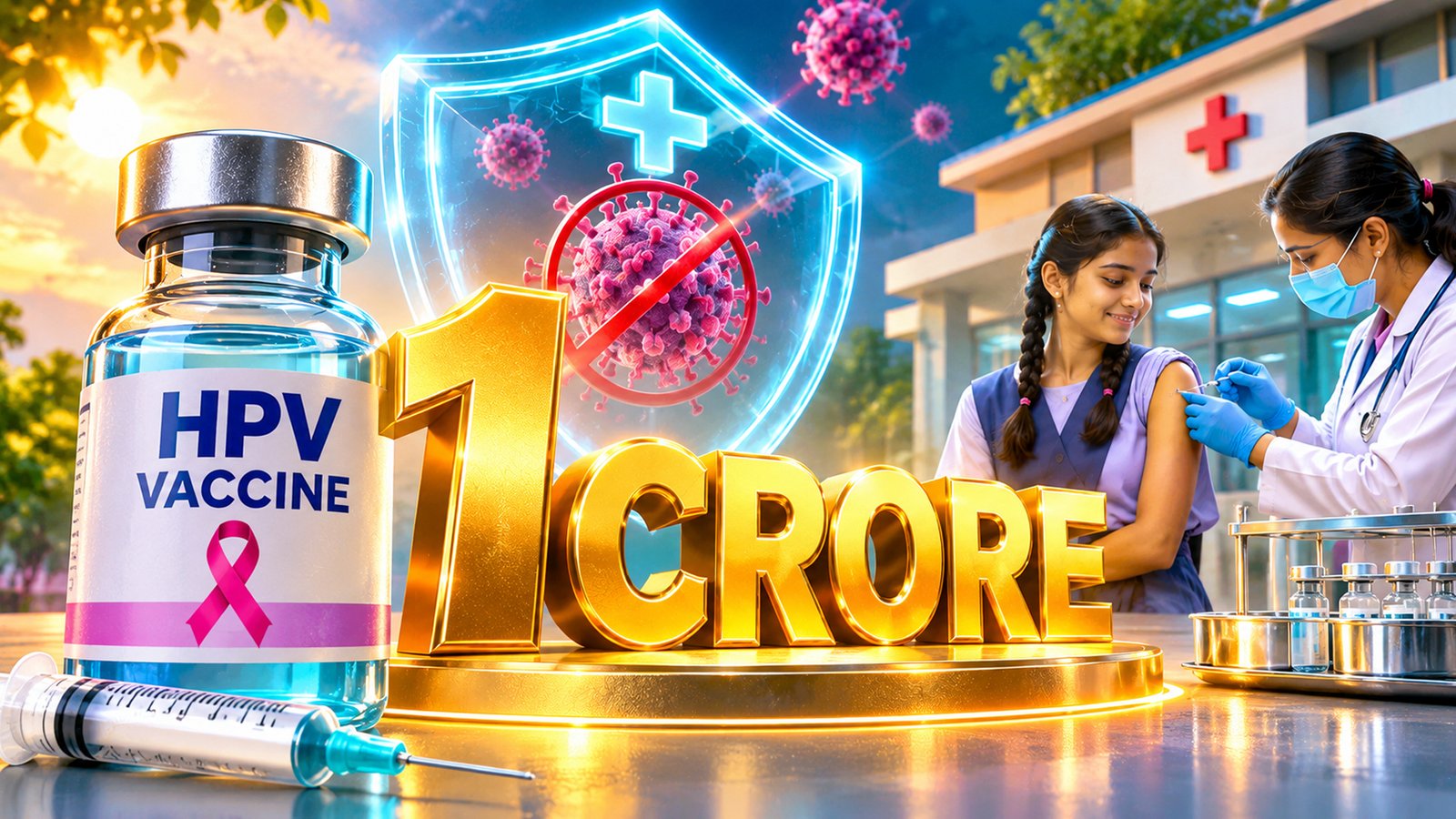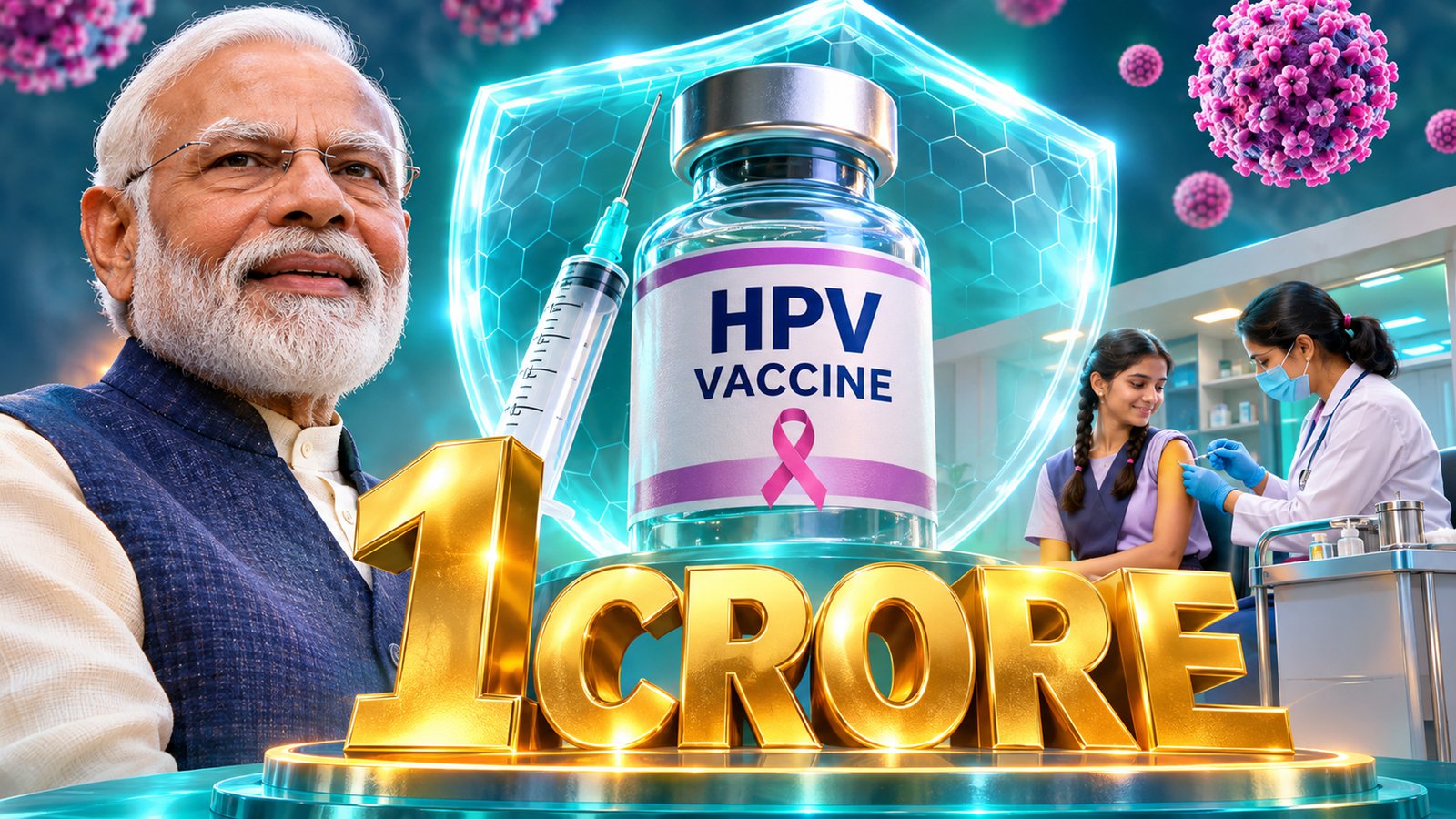
India has administered more than one crore doses of the Human Papillomavirus (HPV) vaccine in less than nine months. Prime Minister Narendra Modi has welcomed the achievement. He described it as a major milestone in India’s efforts to strengthen preventive healthcare and protect adolescent girls from cervical cancer.
In a message posted on X on November 23, Modi praised the collective efforts behind the nationwide vaccination campaign. He said every dose brought the country closer to protecting girls against cervical cancer and securing a healthier future for them.
The Prime Minister also thanked the healthcare professionals, government agencies and other stakeholders who helped achieve the milestone. His remarks came after the Union Health Ministry announced that the National HPV Vaccination Campaign had crossed the one-crore-dose mark.
The campaign has achieved nearly 87% of its annual target. The target covers approximately 1.2 crore 14-year-old girls across the country, based on the Registrar General of India’s 2021 population estimates.
The achievement marks an important step in India’s fight against cervical cancer. It also reflects the growing focus on disease prevention and early protection through vaccination.
Six states achieve 100% coverage
Six states have vaccinated their entire identified target populations under the national campaign. They are Gujarat, Uttar Pradesh, Andhra Pradesh, Mizoram, Madhya Pradesh and Bihar.
Uttar Pradesh leads the country in the number of girls vaccinated. More than 29.33 lakh girls have received the vaccine in the state. Bihar follows with over 13.70 lakh doses, while Gujarat has covered more than 7.75 lakh girls.
Several other states have also reported strong progress. Assam has achieved 95.63% coverage, followed by Telangana at 95.28%. Karnataka has recorded 93.16%, while Uttarakhand has reached 90.17%.
Chhattisgarh has achieved 86.21% coverage and Rajasthan 85.23%. Both states have crossed the 80% mark.
Among southern states, Telangana and Karnataka have recorded coverage above 90%. Kerala has reached 77.02%, while Tamil Nadu stands at 76.12%. Odisha has reported 74.90%.
Overall, 12 states have crossed 80% coverage. The figures show the campaign’s growing reach, although vaccination levels continue to vary across regions.
The Health Ministry has credited coordination between the Centre and state governments for the progress. District administrations, doctors, nurses, teachers, frontline health workers and local communities have also supported the drive.
Free vaccine for 14-year-old girls
Prime Minister Narendra Modi launched the National HPV Vaccination Campaign on February 28, 2026, in Ajmer, Rajasthan.
The programme provides free and voluntary single-dose HPV vaccination to 14-year-old girls at designated government health facilities. Parents or guardians must provide consent before vaccination.
The government aims to make the vaccine accessible to girls across urban and rural areas. Providing it free of cost also helps reduce financial barriers for families.
The HPV vaccine protects against human papillomavirus infections. HPV is a common virus that spreads mainly through intimate skin-to-skin contact. Most infections clear naturally. However, persistent infection with certain high-risk HPV types can lead to cervical cancer.
Vaccination before exposure to the virus offers strong protection against these infections. Health experts consider HPV immunisation one of the most effective ways to prevent cervical cancer.
The initiative is particularly important for India. Cervical cancer remains a major public health concern and is among the leading cancers affecting women in the country. Many cases develop over several years following persistent HPV infection.
Early vaccination can reduce the risk of future infections and lower the burden of cervical cancer. It also gives the country an opportunity to protect a large section of its next generation before they become exposed to the virus.
Digital platform supports vaccination drive
The government is using digital health infrastructure to improve the campaign’s reach and monitoring. The U-WIN platform plays an important role in tracking vaccination coverage and identifying girls who are yet to receive the vaccine.
Parents can use the platform to obtain information, book vaccination slots and download digital vaccination certificates. Health officials can also monitor progress at district level and identify areas where coverage needs improvement.
The system helps authorities plan vaccination sessions and reach eligible beneficiaries more effectively. It also improves transparency and makes vaccination records easier to access.
Government stresses vaccine safety
The Health Ministry has also highlighted safety arrangements under the programme. Trained medical officers supervise vaccination sessions at designated government health facilities.
The vaccination sites are linked to healthcare centres that provide round-the-clock support. These facilities can assess and manage any rare adverse events following immunisation.
Doctors, paediatricians and gynaecologists have also helped build awareness about HPV vaccination. Frontline workers, including ASHAs and auxiliary nurse midwives, have reached out to parents and communities to explain the benefits of early vaccination.
The World Health Organization’s South-East Asia Region has congratulated India on crossing the 10-million-dose milestone. It acknowledged the combined efforts of the government, healthcare workers and communities.
Focus turns to remaining eligible girls
With more than one crore doses administered, the government is now focusing on reaching the remaining eligible girls. The Health Ministry plans to continue working with state governments, district administrations and healthcare professionals to improve coverage.
Parents and guardians can approach designated government health facilities or use the U-WIN platform for information about vaccination.
The latest milestone gives India’s cervical cancer prevention programme fresh momentum. However, reaching every eligible girl remains the larger challenge.
Sustained awareness, easy access and public participation will determine the campaign’s long-term success. The one-crore-dose achievement is an important beginning in India’s effort to reduce cervical cancer and strengthen preventive healthcare for future generations.