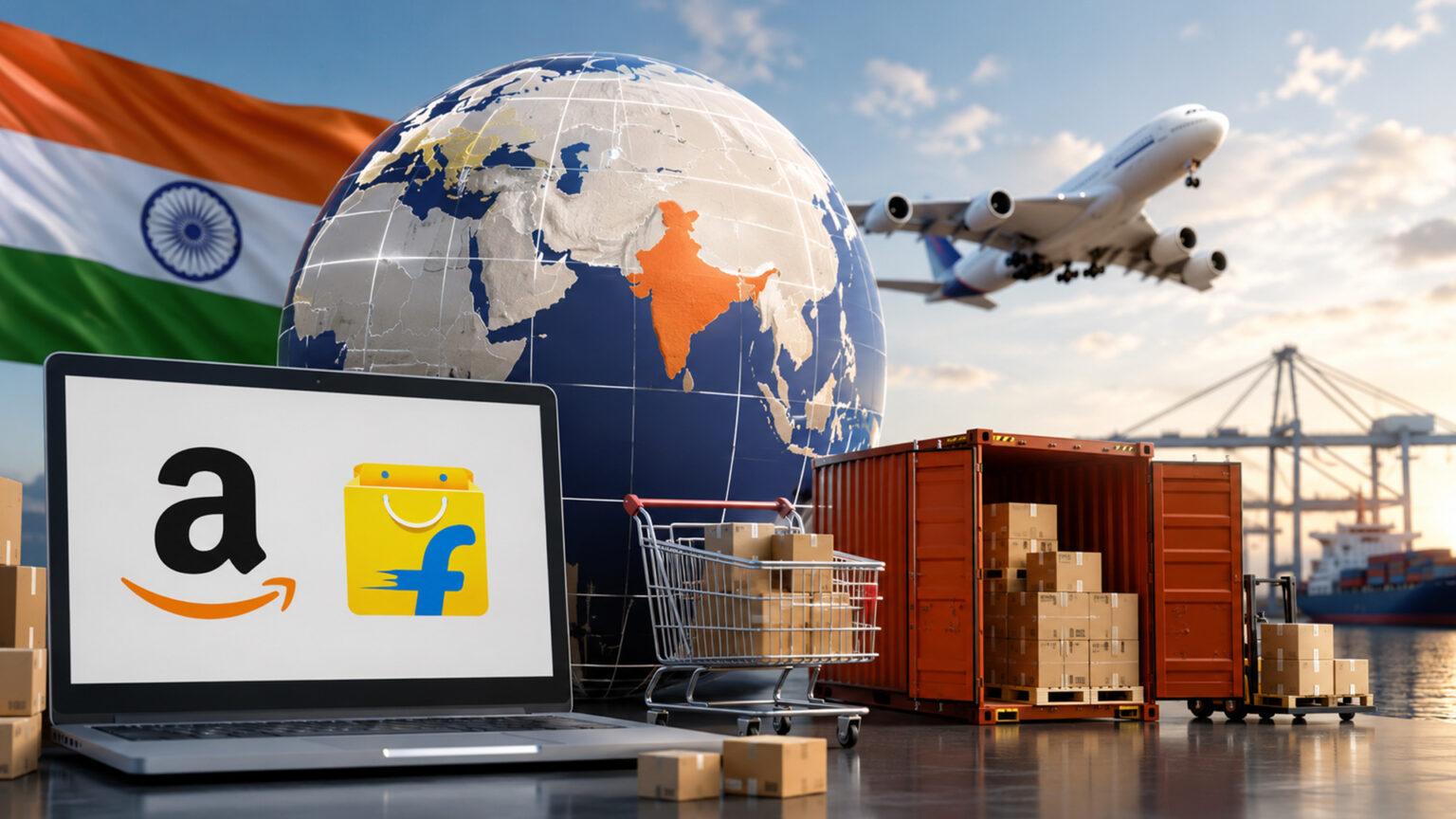
In a significant policy shift aimed at boosting India’s exports, the Centre has relaxed foreign direct investment (FDI) rules for e-commerce companies, allowing foreign-funded online marketplaces to own inventory exclusively for exports. The decision marks the biggest overhaul of India’s e-commerce FDI framework in years and is expected to strengthen the country’s ambitions of becoming a global export hub.
Under the revised policy, e-commerce companies with foreign investment can now directly procure, warehouse and export goods manufactured in India. Until now, such firms were restricted to operating under the marketplace model, where they could connect buyers and sellers but were barred from owning inventory.
The government has made it clear that the relaxation applies only to export-oriented operations. Existing rules governing domestic online retail remain unchanged, meaning foreign-funded e-commerce companies still cannot own inventory for products sold within India. They must continue to function as marketplace platforms for the domestic market.
The move is expected to make India’s export ecosystem more efficient by simplifying supply chains and reducing operational hurdles. Companies can now source products directly from Indian manufacturers, store them in warehouses and fulfil overseas orders more quickly, cutting delivery timelines and improving customer experience in international markets.
The policy is likely to benefit global e-commerce giants such as Amazon and Flipkart, both of which have invested heavily in India’s digital commerce sector. The new framework enables them to leverage their global logistics networks to take Indian-made products directly to international consumers, eliminating several intermediary processes.
Industry observers believe the biggest winners could be India’s micro, small and medium enterprises (MSMEs), artisans and local manufacturers. Many smaller businesses face challenges in accessing overseas markets due to high logistics costs and limited global reach. By using the infrastructure and international customer base of large e-commerce platforms, these businesses could find it easier to expand exports and scale their operations.
The reform aligns with the government’s broader strategy of increasing India’s share in global trade and integrating domestic manufacturers into international supply chains. Demand for Indian products—including textiles, handicrafts, home décor, engineering goods and electronics—has been rising globally, making e-commerce an increasingly important export channel.
The revised norms are also expected to simplify compliance for online platforms. Earlier, companies often had to depend on third-party exporters or complex business structures to meet FDI regulations. The new rules allow them to directly manage export inventories, making operations more streamlined, cost-effective and transparent.
Amazon welcomed the government’s decision, describing it as a positive step that will help thousands of Indian exporters, manufacturers and entrepreneurs reach customers worldwide. The company said the policy would strengthen India’s export ecosystem and accelerate the growth of global e-commerce exports from the country.
Not everyone, however, is convinced. The Confederation of All India Traders (CAIT) has urged the government to ensure that the relaxation remains strictly limited to exports and is not misused to influence India’s domestic retail market. The traders’ body has called for robust monitoring mechanisms to safeguard the interests of local retailers.
Experts say the policy reflects a balanced approach. While it provides greater operational flexibility for export-oriented businesses, it preserves the government’s long-standing restrictions on inventory-based e-commerce for domestic sales. This dual framework is intended to encourage exports without disrupting India’s traditional retail ecosystem.
The announcement also comes at a time when India is seeking to attract more investment into manufacturing, logistics and supply chains while positioning itself as a reliable alternative in global production networks. By enabling foreign-funded e-commerce companies to play a larger role in exports, the government hopes to improve India’s competitiveness and create new opportunities for businesses across sectors.
As India’s digital economy continues to grow, online marketplaces are expected to become increasingly important in connecting local producers with consumers around the world. With fewer regulatory hurdles, improved logistics and easier access to international markets, the latest FDI reform is expected to give a fresh push to export-led growth while opening new doors for Indian manufacturers and entrepreneurs.