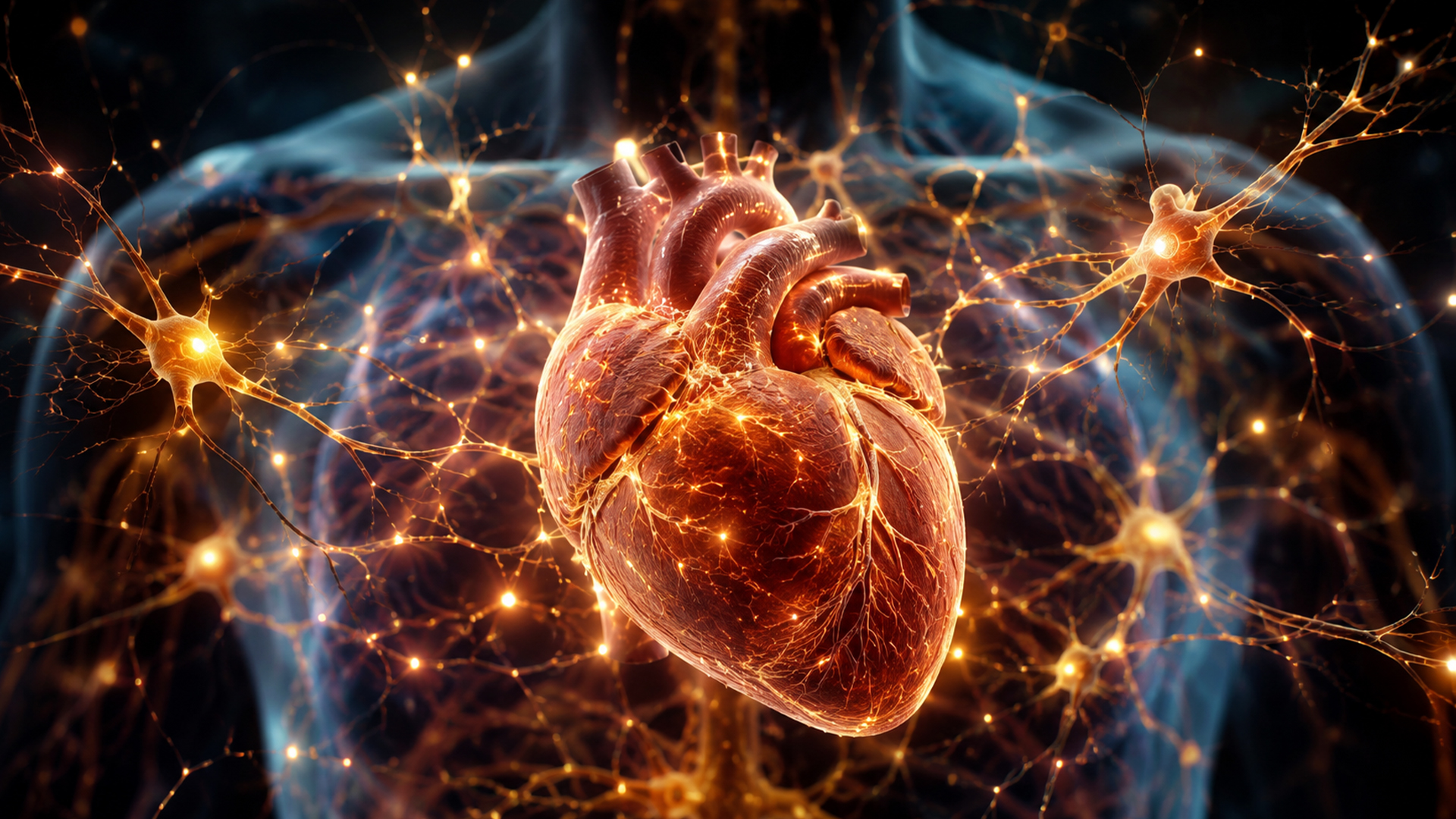
The human heart has long been seen as a powerful muscle that tirelessly pumps blood through the body, taking its cues from the brain with every beat. But scientists have now uncovered something remarkable—our heart has a “little brain” of its own.
In a discovery that is changing the way researchers understand one of the body’s most vital organs, scientists have identified a complex network of neurons within the heart that helps regulate its rhythm and protects it during moments of physical and emotional stress. The findings suggest the heart does much more than simply follow instructions from the brain.
The study, led by researchers at Karolinska Institute in Sweden in collaboration with Columbia University in the US, was published in the journal Nature Communications. Scientists say the research could pave the way for new treatments for irregular heartbeats and other cardiovascular disorders.
For decades, biology textbooks described the heart as an organ that faithfully obeys commands sent from the brain through the nervous system. While that remains true to a large extent, the latest research shows the heart also has its own built-in control centre—a network of specialised nerve cells that can process information and fine-tune how the heart functions.
Researchers have nicknamed this network the “little brain” because it is made up of interconnected neurons that communicate with each other rather than simply passing along messages. These nerve cells continuously monitor the heart’s activity and help ensure every beat remains steady and well-coordinated.
To understand how this hidden network works, scientists turned to the zebrafish, a tiny freshwater fish widely used in medical research because its heart functions in ways that closely resemble the human heart. Using advanced imaging techniques, genetic analysis and electrical mapping, the researchers created one of the most detailed maps yet of the heart’s internal nervous system.
What surprised the team most was discovering that some of these neurons act as local controllers. Instead of waiting for instructions from the brain, they help generate and regulate the electrical signals that keep the heart beating. This allows the organ to make rapid adjustments when the body suddenly needs more oxygen or blood flow.
Think about what happens when you’re startled, sprint to catch a bus or feel anxious before an important meeting. Within seconds, your heartbeat changes to match the situation. Scientists now believe the heart’s own neural network plays a key role in making those rapid adjustments, helping the organ respond almost instantly while remaining in constant communication with the brain.
The researchers say this internal system acts like an additional safety mechanism. During stressful situations, it helps maintain a stable heartbeat and ensures blood continues reaching the body’s organs efficiently. Rather than relying entirely on signals travelling from the brain, the heart can make certain fine-tuned adjustments on its own.
The discovery could have major implications for treating heart rhythm disorders, also known as arrhythmias. Millions of people worldwide live with irregular heartbeats, which can increase the risk of stroke, heart failure and sudden cardiac arrest. Current treatments often involve medications, catheter procedures or implanted pacemakers.
By understanding how the heart’s own neurons influence its rhythm, scientists hope future therapies could target these nerve cells directly. Such treatments may offer more precise ways to restore normal heart function while reducing the need for invasive procedures.
The findings could also deepen scientists’ understanding of how stress affects heart health. Emotional stress has long been linked to heart attacks, high blood pressure and abnormal heart rhythms, but exactly how the body manages these responses has remained unclear. The newly identified neural network may hold some of those answers.
Experts, however, caution against taking the phrase “little brain” too literally. The heart does not think, remember or experience emotions the way the brain does. Instead, the term refers to a sophisticated collection of neurons that independently regulate certain heart functions while remaining closely connected to the brain through the nervous system.
Although the research was carried out in zebrafish, scientists say mammals, including humans, possess similar cardiac nerve networks. The next step will be to study these neurons more closely in people to understand how they change with ageing, heart disease and chronic stress.
Researchers believe this is only the beginning. The discovery opens up an entirely new field of investigation into how the heart and brain work together to keep the body alive and healthy. It also challenges the long-held idea that the heart is simply a mechanical pump.
Every day, the human heart beats around 100,000 times, quietly adapting to every emotion, movement and challenge the body experiences. This study reveals that behind those countless heartbeats lies an intricate network of neurons working around the clock. While the brain remains firmly in charge, the heart’s newly discovered “little brain” shows that this remarkable organ is far more intelligent, responsive and resilient than scientists ever imagined.
Also Read: Don’t ignore breathlessness